If you’ve ever spent a weekend planting flowers only to watch your backyard go green and boring by midsummer, you’re not alone. Most casual gardeners make the same mistake — they pick plants that put on a gorgeous show for three weeks and then call it quits.
The good news? There are plenty of long-blooming flowers that keep producing color for months on end, not just weeks. Some of the best backyard flowering plants will start blooming in spring and keep going strong until the first frost arrives in fall.
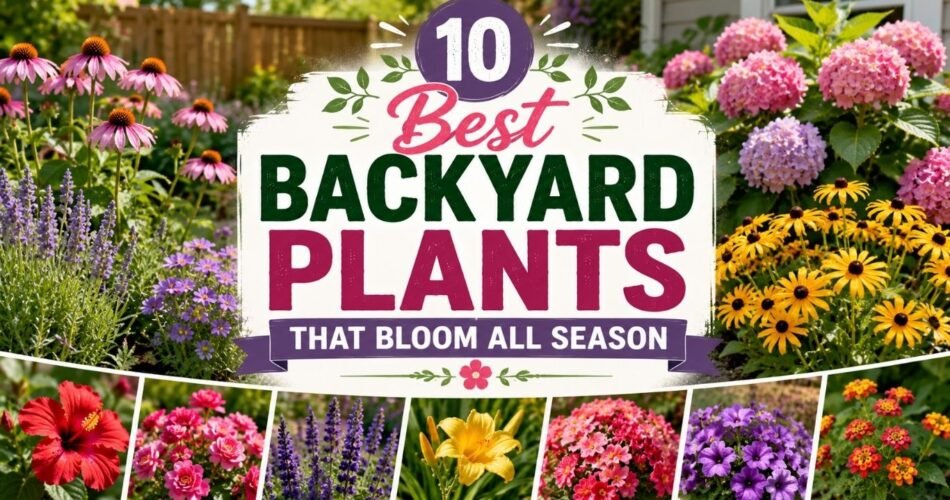
In this guide, I’m sharing the 10 best backyard plants that bloom all season — plants I’ve grown, tested, and genuinely love. Whether you’re working with a sunny border, a shaded corner, or a pollinator garden, there’s something on this list that’ll work for your space.
Let’s dig in.
What Makes a Plant “All-Season”?
Before we get into the list, it’s worth clarifying what “blooms all season” actually means. We’re talking about plants that:
- Start blooming in spring or early summer and continue through fall
- Require minimal intervention to keep flowering (or reward deadheading with a fresh flush of blooms)
- Stay visually interesting even between bloom cycles
- Are adaptable to a range of climates and garden conditions
A true all-season bloomer doesn’t necessarily mean every single flower is open from April to October. It means the plant is consistently producing new buds and blooms throughout the growing season — and that’s exactly what you want in a backyard garden.
The 10 Best Backyard Plants That Bloom All Season
1. Coneflower (Echinacea purpurea)
The workhorse of the summer garden
If I had to recommend just one plant to a beginning gardener, it would be coneflower. It’s tough, beautiful, drought-tolerant once established, and absolutely beloved by bees and butterflies. I’ve had coneflowers blooming in my garden from late June all the way into October without doing much more than a little deadheading.
Bloom Details
- Bloom Season: June through October
- Flower Colors: Purple, pink, white, orange, yellow (depending on variety)
- USDA Hardiness Zones: 3–9
Common Pests and Diseases
- Aster yellows (a phytoplasma disease — infected plants should be removed and discarded, not composted)
- Powdery mildew in humid conditions
- Japanese beetles can be problematic in summer
Expert Care Tips
- Deadhead spent blooms regularly through midsummer to encourage continuous flowering
- In late summer, leave a few seed heads in place — goldfinches absolutely love them, and it adds winter interest
- Divide clumps every 3–4 years in spring to keep plants vigorous
- Plant in well-draining soil; coneflowers hate wet feet
Pro tip: The newer ‘Magnus Superior’ and ‘PowWow Wild Berry’ varieties hold their petals longer than older cultivars, which means less deadheading and more color.
2. Black-Eyed Susan (Rudbeckia fulgida)
Golden color from summer to frost
Black-eyed Susans are one of those continuous blooming plants that make gardening look easy. Once they settle in, they don’t ask for much — just sun and occasional water — and they deliver cheery golden-yellow blooms from July well into October.
Bloom Details
- Bloom Season: July through October
- Flower Colors: Golden yellow with dark brown centers
- USDA Hardiness Zones: 3–9
Common Pests and Diseases
- Fungal leaf spot (mostly cosmetic, rarely fatal)
- Aphids on new growth in spring
- Slugs in wet conditions
Expert Care Tips
- Plant in full sun for the most prolific blooming — partial shade results in fewer flowers and leggier stems
- Cut back by one-third in mid-June to encourage bushier growth and more blooms
- ‘Goldsturm’ is the classic variety worth growing; it’s reliable, compact, and extremely floriferous
- Self-seeds readily, so you’ll naturally get more plants over time
These pair beautifully with purple coneflowers — the yellow and purple combination is a classic for good reason, and both are powerhouse pollinator-friendly plants.
3. Salvia (Salvia spp.)
A heat-loving, hummingbird magnet
Salvias are dramatically underused in backyard gardens, which is a shame because they bloom for an incredibly long time and attract hummingbirds like magnets. Depending on the species, you can find salvias for almost any climate.
Bloom Details
- Bloom Season: Late spring through hard frost (varies by species)
- Flower Colors: Purple, blue, red, pink, white
- USDA Hardiness Zones: 4–11 (varies by species; ‘May Night’ hardy to zone 4, ‘Mystic Spires’ best in zones 7–11)
Common Pests and Diseases
- Very few serious pest problems — one of the cleanest plants in the garden
- Root rot in poorly drained soil
- Spider mites in hot, dry conditions
Expert Care Tips
- Cut back by half after the first big flush of bloom to trigger a second and even third wave of flowers
- Annual salvias like ‘Victoria Blue’ and ‘Sizzler Series’ bloom non-stop without any deadheading
- Perennial varieties like ‘May Night’ need a harder cutback in midsummer
- Plant in groups of three or more for the biggest visual impact
If you enjoy planning around planting timing the way rose growers do, you might find value in reading about 7 Secrets to Planting Roses at the Perfect Time — many of the same principles about seasonal timing apply across different flowering plants.
4. Catmint (Nepeta x faassenii)
Soft, lavender-blue clouds all season long
Catmint is one of those plants that looks effortlessly beautiful, even when you haven’t touched it in weeks. The silvery-green foliage is attractive on its own, and the soft lavender-blue flower spikes bloom heavily in spring, take a brief summer pause, and then rebloom with vigor in late summer and fall.
Bloom Details
- Bloom Season: Late spring through fall (with a midsummer lull unless cut back)
- Flower Colors: Lavender-blue, soft purple
- USDA Hardiness Zones: 3–8
Common Pests and Diseases
- Virtually pest-free — deer and rabbits tend to avoid it
- Root rot in waterlogged soil
- Powdery mildew in humid, crowded conditions
Expert Care Tips
- After the first big spring bloom, cut the whole plant back by two-thirds — it looks brutal, but it’ll rebloom beautifully in 4–6 weeks
- Plant it along path edges or borders where you’ll brush against it and release the lovely fragrance
- ‘Walker’s Low’ (despite the name, it grows 24–36 inches tall) is the most popular variety and an excellent garden performer
- Excellent as a front-of-border plant paired with roses or ornamental grasses
5. Lantana (Lantana camara)
Tropical flair with relentless blooming
Lantana might be the single best plant for non-stop summer color in warm climates. I’ve grown it in containers and in the ground, and it rarely disappoints. The multicolored flower clusters shift from one color to another as they age, which creates a constant tapestry of warm tones.
Bloom Details
- Bloom Season: Late spring through frost (year-round in frost-free climates)
- Flower Colors: Yellow, orange, red, pink, purple, white — often multicolored within a single cluster
- USDA Hardiness Zones: 8–11 as a perennial; grown as an annual in colder zones
Common Pests and Diseases
- Lace bugs can cause stippled, bleached-looking foliage
- Whiteflies in hot, humid conditions
- Root knot nematodes in sandy soils
Expert Care Tips
- Lantana thrives on heat and neglect — overwatering is the most common mistake
- Trim lightly every few weeks to keep plants compact and blooming heavily
- Important note: Lantana berries are toxic to pets and children — site accordingly
- In zones 7 and below, treat as an annual or overwinter rooted cuttings indoors
6. Coreopsis (Coreopsis spp.)
Cheerful yellow daisies that never quit
Coreopsis earns its nickname “tickseed” honestly — once you grow it, you’ll find seedlings popping up everywhere. But that’s a small price to pay for one of the most reliably blooming easy flowering plants in the perennial world. It’s drought-tough, deer-resistant, and blooms from early summer until frost with minimal fuss.
Bloom Details
- Bloom Season: Early June through October
- Flower Colors: Yellow, gold, orange, pink, bicolor (depending on variety)
- USDA Hardiness Zones: 3–9 (varies by species)
Common Pests and Diseases
- Generally very pest-resistant
- Root rot in heavy, wet soils
- Aster yellows (less common than in echinacea)
Expert Care Tips
- Deadhead regularly for the longest bloom season — this is one plant that really rewards the effort
- ‘Moonbeam’ (pale yellow) and ‘Zagreb’ (golden yellow) are two of the most popular and reliable varieties
- Shear the whole plant back by half after the main summer bloom to encourage a fresh flush of fall color
- Excellent in combination with ornamental grasses for a naturalistic look
7. Calibrachoa (Calibrachoa spp.)
A million little blooms in containers
Also called “million bells,” calibrachoa is the undisputed queen of the container garden. These trailing plants produce hundreds of small, petunia-like flowers all season long without the deadheading that petunias require. They’re truly among the best low-maintenance garden plants for pots, hanging baskets, and window boxes.
Bloom Details
- Bloom Season: Spring through frost
- Flower Colors: Pink, purple, red, yellow, orange, white, bicolor — enormous range
- USDA Hardiness Zones: Grown as an annual in most zones; perennial in zones 9–11
Common Pests and Diseases
- Aphids (especially early in the season)
- Iron deficiency (shows up as yellowing between leaf veins) — common in alkaline soils or with hard water
- Root rot from overwatering or poorly draining containers
Expert Care Tips
- Use a slow-release fertilizer at planting time and supplement with liquid fertilizer every 2 weeks through summer
- If plants look tired in midsummer, trim back by one-third and give them a dose of fertilizer — they’ll bounce back quickly
- Choose a premium, well-draining potting mix with a slightly acidic pH (5.5–6.0)
- Pair with sweet potato vine and trailing verbena for a stunning combination
8. Agastache (Agastache spp.)
The hummingbird mint that keeps giving
Agastache is one of those plants that experienced gardeners love but beginners often overlook. It’s incredibly drought-tolerant once established, smells wonderful (leaves have an anise-like fragrance), and produces tall spikes of tubular flowers that hummingbirds and bees find irresistible from midsummer into fall.
Bloom Details
- Bloom Season: Midsummer through frost
- Flower Colors: Orange, pink, purple, blue, salmon (depending on variety)
- USDA Hardiness Zones: 5–10 (varies by species; ‘Blue Fortune’ is among the hardiest)
Common Pests and Diseases
- Very few pest problems — the aromatic foliage deters most insects
- Crown rot in wet winter soils (ensure excellent drainage)
- Some powdery mildew in humid climates
Expert Care Tips
- Cut back by half after the first flush of bloom to encourage more branching and flowers
- Excellent for hot, dry spots where other plants struggle
- ‘Blue Fortune’ (soft blue-purple) is an outstanding variety for cold climates
- ‘Kudos Mandarin’ and ‘Kudos Coral’ are beautiful shorter varieties for front-of-border use
9. Perovskia (Russian Sage, Salvia yangii)
Silver and lavender from summer to fall
Russian sage is a plant that looks delicate but is absolutely iron-tough. The silvery-white stems and soft lavender-blue flower spikes create an airy, almost cloud-like effect in the garden that works beautifully as a backdrop for bolder flowers. It blooms from midsummer through fall with very little care.
Bloom Details
- Bloom Season: July through October
- Flower Colors: Soft lavender-blue
- USDA Hardiness Zones: 4–9
Common Pests and Diseases
- Extremely pest and disease resistant
- Root rot in poorly drained soils (the main weakness)
- Verticillium wilt in some regions
Expert Care Tips
- Cut plants back hard in early spring — to within 6 inches of the ground — to prevent the center from becoming woody and open
- Plant in the driest, sunniest spot in your garden — it thrives where other plants struggle
- Pairs magnificently with ornamental grasses, black-eyed Susans, and coneflowers
- Deer-resistant and drought-tolerant once established — a truly low-maintenance garden plant
10. Geranium (Pelargonium spp. and Hardy Geranium spp.)
Two great options: one classic, one tough
There are actually two different plants commonly called geraniums, and both belong on this list.
Zonal geraniums (Pelargonium) are the classic container and bedding plant with big, bold flower clusters. They bloom from spring through frost and tolerate heat better than most people think.
Hardy geraniums (Cranesbill) are true perennials with delicate flowers and attractive, deeply cut foliage. Varieties like ‘Rozanne’ bloom from late spring through fall with barely any attention.
Bloom Details
- Zonal Geranium Bloom Season: Spring through frost
- Hardy Geranium Bloom Season: May through October (Rozanne)
- Flower Colors: Red, pink, salmon, white, purple, lavender, magenta
- USDA Hardiness Zones: Pelargonium — annual in most zones, perennial in 10–11; Hardy Geranium — zones 4–8 (varies)
Common Pests and Diseases
- Botrytis (gray mold) in wet, cool conditions — good air circulation prevents this
- Geranium budworm (Pelargonium) — small caterpillar that eats flower buds
- Powdery mildew on hardy geraniums in dry conditions
Expert Care Tips
- For zonal geraniums: deadhead regularly and trim back leggy stems in midsummer for a fresh flush of fall blooms
- For Hardy Geranium ‘Rozanne’: minimal deadheading needed — just cut back in fall after blooms finish
- Both types benefit from a consistent fertilizing schedule through the growing season
- Zonal geraniums overwinter beautifully as houseplants or can be stored bare-root in a cool, dark location
Just as some plants thrive with the right indoor humidity, plants like hardy geraniums also appreciate stable moisture levels. If you’re curious about managing moisture around plants in other settings, check out our guide to 8 Best Moisture-Absorbing Bathroom Plants — it offers useful perspective on how plants interact with their environment.
FAQ: 10 Best Backyard Plants That Bloom All Season
Q1: What is the easiest flowering plant that blooms all summer?
Calibrachoa (million bells) is arguably the easiest. It blooms continuously from spring through frost without any deadheading, handles heat well, and comes in an enormous range of colors. For a true perennial option, black-eyed Susan is equally low-maintenance and reliably returns year after year.
Q2: Can I grow these plants in partial shade?
Most plants on this list prefer full sun, but a few tolerate partial shade reasonably well. Hardy geranium ‘Rozanne,’ catmint, and salvia can manage in 4–5 hours of direct sun, though they’ll produce fewer flowers than in full sun. For deeper shade, you’ll need to look beyond this list — most long-blooming flowers are sun lovers.
Q3: Which of these plants come back every year?
The true perennials on this list include: coneflower, black-eyed Susan, catmint, coreopsis, agastache, Russian sage, and hardy geranium. These will return reliably year after year in appropriate hardiness zones. Lantana is perennial only in zones 8–11 but is often grown as an annual. Calibrachoa and zonal geraniums are typically treated as annuals in most climates.
Q4: How do I keep my garden blooming from spring to fall?
The key is layering plants with different peak bloom times. Start with early-season bloomers like catmint and salvia, layer in midsummer stars like coneflower and lantana, and finish with late-season stalwarts like agastache and Russian sage. Combine this approach with regular deadheading and a midseason cutback for plants that need it, and you’ll have continuous color from late spring through frost.
Q5: Are these plants safe for pets?
Lantana is toxic to dogs and cats and should be planted where pets cannot access it. Most of the other plants on this list have low toxicity concerns for pets, but it’s always worth checking the ASPCA’s Animal Poison Control database for specific plants if you have animals that graze in the garden.
Q6: Which plants on this list are best for attracting butterflies?
Coneflower, black-eyed Susan, lantana, and coreopsis are the top butterfly magnets on this list. Butterflies are particularly drawn to flat or slightly domed flower heads that give them a stable platform to land on while feeding. Planting these in a sunny, sheltered spot with a water source nearby will create an irresistible butterfly habitat.
Q7: Do these plants need a lot of fertilizer?
Most of the plants on this list are not heavy feeders. In fact, too much fertilizer (especially nitrogen) tends to produce lush foliage at the expense of flowers. Amending the soil with compost at planting time and adding a balanced slow-release fertilizer once in spring is usually sufficient. Calibrachoa in containers is the exception — it benefits from regular liquid feeding every 1–2 weeks through the growing season.
Key Takeaways
Here’s a quick summary of the most important points from this guide:
✅ Choose plants with different bloom times to create seamless seasonal color from spring through fall
✅ Most long-blooming plants prefer full sun — 6+ hours of direct sunlight daily
✅ Deadheading extends bloom time for coneflower, coreopsis, black-eyed Susan, and salvia
✅ Calibrachoa and lantana are self-cleaning — no deadheading required
✅ A midseason cutback (late June–July) reinvigorates plants like catmint and salvia for a strong fall showing
✅ Overwatering is the most common mistake — most of these plants prefer slightly dry conditions once established
✅ Planting in drifts (groups of 3–5) is more effective than single plants for visual impact and pollinator attraction
✅ Lantana is toxic to pets — site it carefully if you have dogs or cats
✅ Perennials save money long-term — coneflower, black-eyed Susan, and Russian sage return every year without replanting
Conclusion
Creating a backyard garden that stays colorful all season doesn’t require endless effort or an advanced horticulture degree. It really just comes down to choosing the right plants — ones that are genuinely built for long-term performance — and giving them the basic conditions they need to thrive.
The 10 best backyard plants that bloom all season covered in this guide represent a solid foundation for any colorful backyard garden. Mix perennials like coneflower and Russian sage (which come back every year) with reliable annuals like calibrachoa (which bloom without stopping from day one), and you’ll have a garden that earns compliments from neighbors every time someone walks by.
Start small if you need to. Pick three or four plants from this list that appeal to you, get them in the ground with proper soil preparation, and see how they perform in your specific conditions. Gardening is always a learning process, and every season teaches you something new.
The best time to plant was last spring. The second-best time is right now.