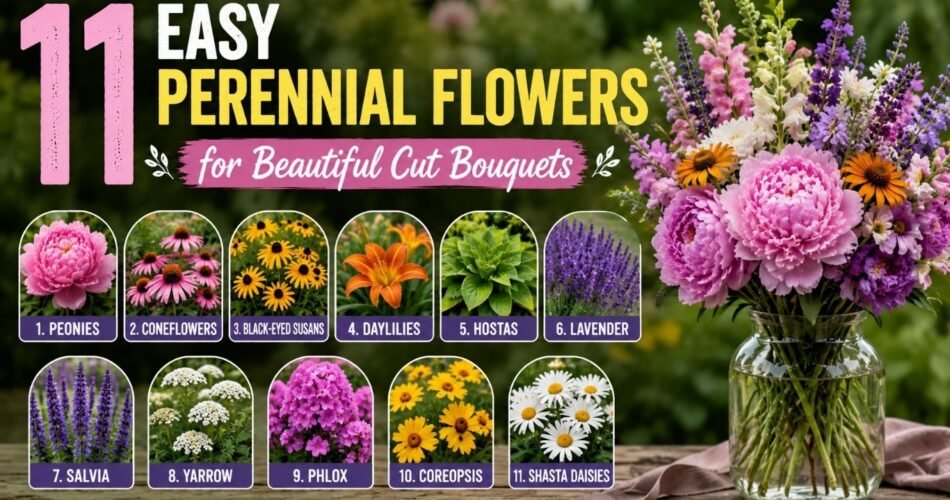
There’s something deeply satisfying about walking into your own garden with scissors in hand, knowing you’ll have fresh flowers on your kitchen table within minutes. After years of growing cut flowers in my own backyard, I’ve learned that you don’t need acres of land or a fancy greenhouse to enjoy gorgeous homegrown bouquets all season long.
The secret? Growing easy perennial flowers that come back year after year, require minimal fuss, and look stunning in a vase. Unlike annuals that need replanting every spring, these reliable bloomers establish themselves in your garden and reward you with armfuls of flowers season after season.
I’ve spent countless mornings cutting flowers for my home and for friends, and I’ve learned which perennials truly excel as cut flowers. The best ones combine beauty with practicality—they’re easy to grow, produce abundant blooms, last well in a vase, and don’t demand constant attention. Whether you’re creating a dedicated cut flower garden or simply want to grow flowers that pull double duty as landscape plants and bouquet material, these 11 perennial blooms will transform your gardening experience.
Let me share the perennial flowers that have never let me down, along with everything you need to know to grow them successfully and harvest them at their peak.
1. Peonies (Paeonia)
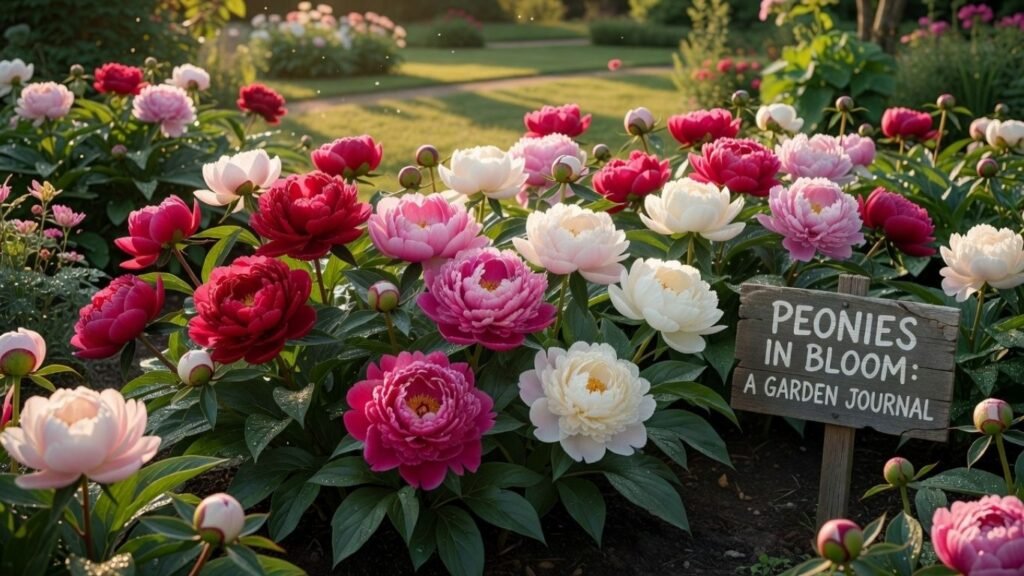
Why Peonies Are Exceptional Cut Flowers
Peonies are the queens of the cut flower garden, and for good reason. Their massive, often fragrant blooms create show-stopping arrangements that look expensive but cost you nothing once the plants are established. A single peony stem can anchor an entire bouquet. I’ve had dinner guests ask if I’d raided a florist shop when they see peonies on my table.
Bloom Season: Late spring to early summer (May-June in most regions)
USDA Hardiness Zones: 3-8
Mature Height and Spread: 24-36 inches tall, 24-36 inches wide
Flower Colors Available: White, cream, pink, coral, red, yellow, and burgundy
Vase Life After Cutting: 5-7 days (sometimes up to 10 days with proper care)
Sunlight Requirements: Full sun (6-8 hours minimum); tolerates light afternoon shade in hot climates
Soil Type and pH: Rich, well-draining soil; pH 6.5-7.0 (slightly acidic to neutral)
Watering Needs: Moderate water once established; water deeply during bud formation
Fertilizer Recommendations: Low-nitrogen fertilizer in early spring; bone meal or compost in fall
Best Harvesting Stage: Cut when buds show color and feel like soft marshmallows—they’ll open in the vase
Companion Flowers for Arrangements: Iris, catmint, bleeding heart, campanula, and early roses
Pollinator Benefits: Excellent for bees during their bloom period
Common Pests and Diseases: Botrytis blight (gray mold), ants on buds (harmless), and occasionally thrips
Common Growing Mistakes to Avoid: Planting too deep (eyes should be only 1-2 inches below soil surface), overwatering, and expecting blooms the first year—peonies need 2-3 years to establish before producing abundantly.
2. Garden Phlox (Phlox paniculata)
Why Garden Phlox Makes Gorgeous Bouquets
Garden phlox fills the midsummer gap when spring bloomers have faded and fall flowers haven’t started yet. Their fragrant, clustered blooms add volume and a cottage garden charm to any arrangement. The scent alone is worth growing them—it’s sweet without being cloying.
Bloom Season: Midsummer to early fall (July-September)
USDA Hardiness Zones: 4-8
Mature Height and Spread: 24-48 inches tall, 18-24 inches wide
Flower Colors Available: White, pink, lavender, purple, red, and bicolors
Vase Life After Cutting: 5-8 days
Sunlight Requirements: Full sun to partial shade (at least 6 hours of sun for best flowering)
Soil Type and pH: Rich, moist, well-draining soil; pH 6.0-7.0
Watering Needs: Consistent moisture; water at the base to prevent powdery mildew
Fertilizer Recommendations: Balanced fertilizer (10-10-10) in spring and mid-summer
Best Harvesting Stage: When half to two-thirds of the florets on the cluster are open
Companion Flowers for Arrangements: Coneflowers, black-eyed Susans, salvia, and grasses
Pollinator Benefits: Butterflies and hummingbirds love phlox
Common Pests and Diseases: Powdery mildew (choose resistant varieties), spider mites, and occasionally phlox bugs
Common Growing Mistakes to Avoid: Overhead watering (causes mildew), planting too close together (poor air circulation), and neglecting to deadhead (reduces rebloom).
3. Coneflowers (Echinacea)
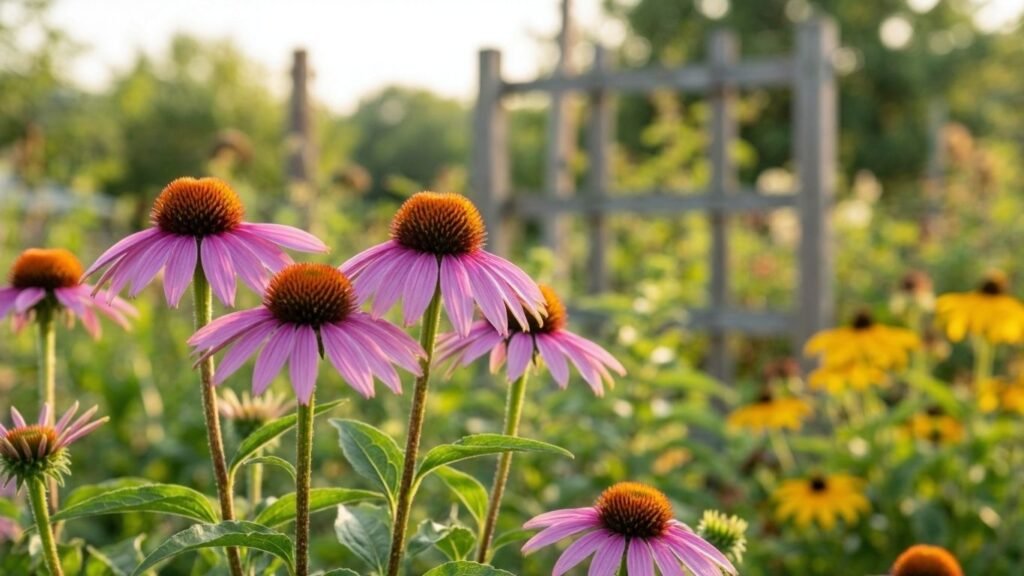
Why Coneflowers Are Perfect for Cutting Gardens
Coneflowers are workhorses in the cut flower garden. They produce blooms continuously from midsummer through fall, handle heat without wilting, and their sturdy stems make arranging easy. I love that they look equally at home in casual mason jar bouquets or more formal arrangements.
Bloom Season: Early summer through fall (June-October with deadheading)
USDA Hardiness Zones: 3-9
Mature Height and Spread: 24-48 inches tall, 18-24 inches wide
Flower Colors Available: Purple, pink, white, yellow, orange, red, and many bicolors
Vase Life After Cutting: 7-10 days
Sunlight Requirements: Full sun (at least 6 hours)
Soil Type and pH: Well-draining soil; tolerates poor soil; pH 6.0-7.0
Watering Needs: Drought-tolerant once established; water during establishment and extended dry periods
Fertilizer Recommendations: Light feeding only; too much nitrogen produces weak, floppy stems
Best Harvesting Stage: Cut when petals have fully reflexed and the center cone is firm
Companion Flowers for Arrangements: Rudbeckia, yarrow, ornamental grasses, salvia, and Russian sage
Pollinator Benefits: Outstanding for bees, butterflies, and goldfinches (who eat the seeds in fall)
Common Pests and Diseases: Generally pest-free; occasionally Japanese beetles and aster yellows disease
Common Growing Mistakes to Avoid: Overwatering (causes root rot), planting in heavy clay without amending, and harvesting too early (petals will droop).
4. Black-Eyed Susans (Rudbeckia)
Why Black-Eyed Susans Are Reliable Cut Flowers
These cheerful golden flowers practically grow themselves while producing armloads of blooms. Black-eyed Susans bring sunshine to every bouquet and last remarkably well in water. They’re one of the first perennials I recommend to beginning gardeners because failure is nearly impossible.
Bloom Season: Midsummer through fall (July-October)
USDA Hardiness Zones: 3-9
Mature Height and Spread: 18-36 inches tall (depending on variety), 12-24 inches wide
Flower Colors Available: Golden yellow, orange-yellow, and varieties with mahogany markings
Vase Life After Cutting: 7-12 days
Sunlight Requirements: Full sun to partial shade (best flowering in full sun)
Soil Type and pH: Adaptable to most soils; pH 6.0-7.5
Watering Needs: Moderate water; drought-tolerant once established
Fertilizer Recommendations: Minimal feeding needed; compost in spring is sufficient
Best Harvesting Stage: Cut when flowers are fully open but centers are still tight
Companion Flowers for Arrangements: Coneflowers, phlox, asters, sedum, and ornamental grasses
Pollinator Benefits: Excellent for bees and butterflies; seeds feed birds in winter
Common Pests and Diseases: Generally trouble-free; occasionally aphids and powdery mildew
Common Growing Mistakes to Avoid: Planting in shade (reduces blooming), overwatering, and ignoring them completely (they may self-sow aggressively if not deadheaded).
5. Shasta Daisies (Leucanthemum × superbum)
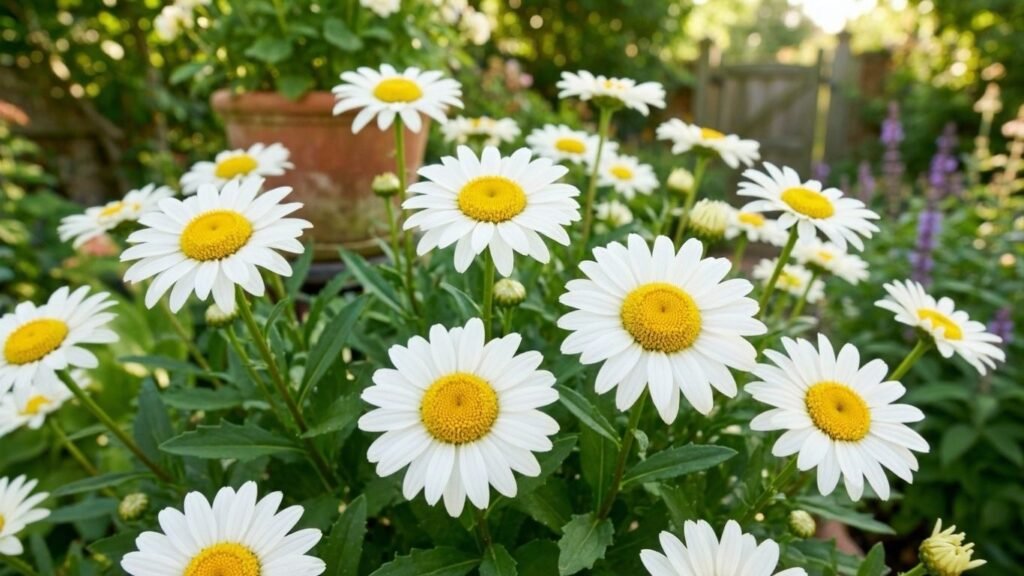
Why Shasta Daisies Are Classic Cut Flowers
Shasta daisies embody the simple beauty that makes wildflower bouquets so appealing. Their crisp white petals and sunny centers brighten any arrangement, and they’re surprisingly long-lasting once cut. I use them as foundational flowers in nearly every summer bouquet.
Bloom Season: Early to midsummer (June-August; rebloom with deadheading)
USDA Hardiness Zones: 5-9
Mature Height and Spread: 12-36 inches tall (varies by cultivar), 18-24 inches wide
Flower Colors Available: White with yellow centers (classic)
Vase Life After Cutting: 7-10 days
Sunlight Requirements: Full sun (6-8 hours minimum)
Soil Type and pH: Rich, moist, well-draining soil; pH 6.0-7.0
Watering Needs: Regular watering; don’t let soil completely dry out
Fertilizer Recommendations: Balanced fertilizer monthly during growing season
Best Harvesting Stage: Cut when flowers are fully open; avoid buds (they rarely open in water)
Companion Flowers for Arrangements: Delphiniums, salvia, yarrow, baby’s breath, and roses
Pollinator Benefits: Attracts bees and beneficial insects
Common Pests and Diseases: Aphids, leaf spot, and crown rot in poorly drained soil
Common Growing Mistakes to Avoid: Planting in poorly drained soil (causes rot), not dividing every 2-3 years (centers die out), and letting them dry out completely during bloom.
6. Yarrow (Achillea)
Why Yarrow Is a Must-Have Cut Flower
Yarrow is the ultimate filler flower for bouquets. Its flat-topped flower clusters add texture and structure to arrangements, and the blooms dry beautifully right in the vase. Yarrow also has one of the longest vase lives of any cut flower I grow. If you’re interested in keeping flowers beyond their fresh stage, check out these 12 Easy Ways to Preserve Flowers at Home.
Bloom Season: Early summer through fall (June-September with deadheading)
USDA Hardiness Zones: 3-9
Mature Height and Spread: 18-48 inches tall (varies by variety), 18-24 inches wide
Flower Colors Available: White, yellow, gold, pink, red, salmon, and pastels
Vase Life After Cutting: 10-14 days fresh; dries naturally in arrangements
Sunlight Requirements: Full sun
Soil Type and pH: Poor to average soil; excellent drainage essential; pH 6.0-7.0
Watering Needs: Drought-tolerant; prefers dry to moderate moisture
Fertilizer Recommendations: Minimal to none; too much causes floppy growth
Best Harvesting Stage: Cut when flower clusters are fully open and firm
Companion Flowers for Arrangements: Roses, delphiniums, lavender, salvia, and ornamental grasses
Pollinator Benefits: Attracts butterflies, bees, and beneficial predatory insects
Common Pests and Diseases: Generally pest-free; occasionally aphids and powdery mildew
Common Growing Mistakes to Avoid: Overwatering (causes root rot), planting in rich soil (makes plants floppy), and not cutting back after flowering (plants become messy).
7. Salvia (Salvia nemorosa)
Why Salvia Adds Drama to Bouquets
Salvia’s vertical flower spikes provide the “thriller” element that professional florists always include. The spiky blooms create movement and height in arrangements, and they bloom for months with minimal care. I especially love how they contrast with round flowers like peonies or dahlias.
Bloom Season: Late spring through fall (May-October with deadheading)
USDA Hardiness Zones: 4-9 (varies by species)
Mature Height and Spread: 18-36 inches tall, 12-18 inches wide
Flower Colors Available: Purple, blue, pink, white, and bicolors
Vase Life After Cutting: 5-8 days
Sunlight Requirements: Full sun to partial shade
Soil Type and pH: Well-draining soil; pH 6.0-7.0
Watering Needs: Moderate water; drought-tolerant once established
Fertilizer Recommendations: Light feeding in spring; compost mulch annually
Best Harvesting Stage: Cut when one-third to one-half of the florets on the spike are open
Companion Flowers for Arrangements: Roses, peonies, yarrow, coreopsis, and catmint
Pollinator Benefits: Outstanding for bees, butterflies, and hummingbirds
Common Pests and Diseases: Generally pest-free; occasionally powdery mildew in humid climates
Common Growing Mistakes to Avoid: Overwatering, planting in poorly drained soil, and failing to deadhead (stops rebloom).
8. Coreopsis (Tickseed)
Why Coreopsis Is Ideal for Continuous Cutting
Coreopsis is possibly the longest-blooming perennial in my garden, producing cheerful flowers from early summer until frost. The more you cut, the more it blooms—a perfect characteristic for cut flower gardening. These unfussy plants deliver big results with minimal effort.
Bloom Season: Early summer through fall (June-October)
USDA Hardiness Zones: 4-9 (varies by species)
Mature Height and Spread: 12-36 inches tall, 12-18 inches wide
Flower Colors Available: Yellow, gold, pink, red, and bicolors
Vase Life After Cutting: 5-8 days
Sunlight Requirements: Full sun (at least 6 hours)
Soil Type and pH: Average, well-draining soil; pH 6.0-7.0
Watering Needs: Low to moderate water; drought-tolerant
Fertilizer Recommendations: Minimal feeding; too much reduces flowering
Best Harvesting Stage: Cut when flowers are fully open
Companion Flowers for Arrangements: Black-eyed Susans, coneflowers, salvia, and grasses
Pollinator Benefits: Attracts bees, butterflies, and songbirds
Common Pests and Diseases: Generally pest-free; occasionally aphids and powdery mildew
Common Growing Mistakes to Avoid: Overwatering, overfertilizing (causes legginess), and ignoring deadheading (they’ll bloom anyway, but deadheading keeps plants tidy).
9. Bee Balm (Monarda)
Why Bee Balm Creates Unique Bouquets
Bee balm’s distinctive shaggy flowers bring an artistic, wildflower quality to arrangements. The blooms have wonderful fragrance—minty and citrusy—that fills a room. While they’re not the longest-lasting cut flower, their unique form makes them worth including.
Bloom Season: Midsummer (July-August)
USDA Hardiness Zones: 4-9
Mature Height and Spread: 24-48 inches tall, 18-36 inches wide (spreads readily)
Flower Colors Available: Red, pink, purple, lavender, and white
Vase Life After Cutting: 4-6 days
Sunlight Requirements: Full sun to partial shade (best flowering in full sun)
Soil Type and pH: Rich, moist, well-draining soil; pH 6.0-7.0
Watering Needs: Regular watering; prefers consistent moisture
Fertilizer Recommendations: Compost in spring; light feeding monthly during bloom
Best Harvesting Stage: Cut when flowers are halfway to fully open
Companion Flowers for Arrangements: Phlox, coneflowers, yarrow, and ornamental grasses
Pollinator Benefits: Exceptional for hummingbirds, bees, and butterflies
Common Pests and Diseases: Powdery mildew (choose resistant varieties), aphids, and spider mites
Common Growing Mistakes to Avoid: Planting susceptible varieties (go for resistant cultivars), overhead watering, and not thinning clumps (becomes crowded and mildew-prone).
10. Asters (Symphyotrichum)
Why Asters Extend the Cut Flower Season
When most perennials are winding down, asters burst into bloom, providing fresh bouquet material well into fall. Their masses of small, daisy-like flowers create a cloud-like effect in arrangements. I depend on asters for late-season color when I’m craving fresh flowers but options are limited.
Bloom Season: Late summer through fall (August-October)
USDA Hardiness Zones: 3-8 (varies by species)
Mature Height and Spread: 12-48 inches tall, 18-36 inches wide
Flower Colors Available: Purple, blue, pink, white, and lavender
Vase Life After Cutting: 7-10 days
Sunlight Requirements: Full sun to partial shade
Soil Type and pH: Average, well-draining soil; pH 5.5-7.0
Watering Needs: Moderate water; consistent moisture during bloom
Fertilizer Recommendations: Light feeding in spring; avoid high nitrogen
Best Harvesting Stage: Cut when half of the flowers on the stem are open
Companion Flowers for Arrangements: Sedum, ornamental grasses, rudbeckia, and late-season dahlias
Pollinator Benefits: Critical late-season nectar source for bees, butterflies, and migrating monarchs
Common Pests and Diseases: Powdery mildew (worse in shade), aphids, and occasionally lace bugs
Common Growing Mistakes to Avoid: Planting in too much shade, allowing soil to dry out completely during bloom, and not pinching stems in early summer (pinching creates bushier plants with more flowers).
Speaking of continuous blooms, while we’re focusing on outdoor perennials here, you might also enjoy growing 10 Indoor Plants That Flower All Year Round to complement your cut flower garden during winter months.
11. Blanket Flower (Gaillardia)
Why Blanket Flowers Are Excellent Cutting Material
Blanket flowers bring hot, vibrant colors that energize any bouquet. Their daisy-like blooms feature warm combinations of red, orange, and yellow that capture the essence of summer. They’re exceptionally heat-tolerant and keep producing even when other flowers slow down in midsummer heat.
Bloom Season: Early summer through fall (June-October)
USDA Hardiness Zones: 3-10
Mature Height and Spread: 12-24 inches tall, 12-18 inches wide
Flower Colors Available: Red, orange, yellow, burgundy, and bicolors
Vase Life After Cutting: 7-10 days
Sunlight Requirements: Full sun
Soil Type and pH: Well-draining, average to poor soil; pH 6.5-7.5
Watering Needs: Low to moderate water; very drought-tolerant
Fertilizer Recommendations: Minimal feeding; overfertilization reduces flowering
Best Harvesting Stage: Cut when flowers are fully open
Companion Flowers for Arrangements: Yarrow, salvia, black-eyed Susans, and ornamental grasses
Pollinator Benefits: Attracts butterflies, bees, and beneficial insects
Common Pests and Diseases: Generally trouble-free; occasionally aphids and aster yellows
Common Growing Mistakes to Avoid: Overwatering (causes root rot), planting in heavy clay soil, and expecting long-lived plants (blanket flowers may be short-lived but self-sow readily).
Expert Tips for Creating a Successful Cut Flower Garden
Planning Your Perennial Cut Flower Garden
Start small and expand gradually. I recommend dedicating at least a 4×8-foot bed exclusively to cutting. This approach prevents you from feeling guilty about harvesting flowers from your landscape plantings. Plant in rows or blocks for easier cutting and maintenance, rather than scattering plants throughout ornamental beds.
Choose a location close to your house with easy access to water. You’ll cut flowers more often if you don’t have to trek to the back forty. Morning light with some afternoon shade works well in hot climates, while full sun locations are ideal in cooler regions.
Consider succession planting and selecting varieties with different bloom times. This ensures continuous harvests from spring through fall. My garden includes early bloomers (peonies), midsummer workhorses (coneflowers, black-eyed Susans), and late-season stars (asters) to keep the vases full.
Proper Harvesting Techniques for Longer-Lasting Bouquets
Timing is everything when cutting flowers. Harvest in early morning after dew has dried but before the heat of the day. Flowers are fully hydrated and haven’t been stressed by sun and heat. Evening cutting is your second-best option.
Bring a clean bucket of lukewarm water directly to the garden. Cut stems at a 45-degree angle using sharp, clean pruners or scissors—never tear or pinch stems. Immediately plunge cut stems into the water bucket. This prevents air bubbles from forming in the stem and blocking water uptake.
Cut stems longer than you think you’ll need. You can always trim them shorter when arranging, but you can’t add length back. For most flowers, cut just above a leaf node or set of leaves to encourage the plant to produce more blooms.
Remove all foliage that will sit below the water line in your vase. Submerged leaves decay quickly, creating bacteria that shortens vase life. I learned this lesson the hard way when my beautiful bouquet started smelling terrible after just two days.
Conditioning Freshly Cut Flowers
Conditioning is the professional florist’s secret to long-lasting arrangements, and it’s simple enough for home gardeners. After cutting, bring flowers indoors to a cool location out of direct sunlight. Recut stems underwater or under running water to prevent air bubbles.
For most flowers, condition them in lukewarm water (around 100-110°F) for at least two hours before arranging, preferably overnight in a cool room. The warm water travels up stems more easily than cold water, while the cool room temperature slows respiration and preserves the blooms.
Some flowers benefit from special treatment. Peonies and other flowers with woody stems appreciate having the bottom inch of stem crushed with a hammer or split with scissors. This increases water absorption. Flowers with milky sap, like poppies (though not on our perennial list), need stem ends seared with a flame.
Strip lower leaves carefully to avoid damaging the stem. For hollow-stemmed flowers, turning them upside down and filling stems with water before plugging with cotton can help, though I rarely find this necessary with the sturdy perennials on our list.
Extending Vase Life Naturally
Change the water completely every two to three days—this single practice extends vase life more than anything else. Each time you change water, recut stems by half an inch to remove bacteria buildup that blocks water uptake.
Keep arrangements away from direct sunlight, heating vents, and ripening fruit. Ethylene gas from ripening fruit causes flowers to age prematurely. I learned this when my beautiful bouquet wilted overnight because I placed it next to a bowl of ripe bananas.
Room temperature matters more than most people realize. Flowers last longer in cooler rooms (65-72°F) than in warm ones. If you’re hosting a party, you can prepare arrangements a day early and store them in a cool basement or even a refrigerator (away from fruit).
Add flower food to the water if you have it, or make your own with 1 teaspoon sugar, 1 teaspoon bleach (or apple cider vinegar), and 2 teaspoons lemon juice per quart of water. The sugar feeds flowers, acid lowers pH for better water uptake, and bleach prevents bacterial growth.
Remove spent blooms from mixed arrangements promptly. One decaying flower releases bacteria and ethylene that affects its neighbors. Think of it as pruning your vase garden.
Succession Planting for Continuous Blooms
While most perennials have set bloom times, you can extend your harvest season by choosing early, mid-season, and late-blooming varieties within each species. For example, peony varieties range from early May bloomers to late June varieties—planting several types extends your peony season by weeks.
Deadheading is crucial for repeat bloomers like coneflowers, black-eyed Susans, yarrow, and coreopsis. When you cut flowers for bouquets, you’re essentially deadheading, which encourages more buds to form. For plants you’re not cutting from, remove spent blooms regularly to keep the flowers coming.
Garden phlox, salvia, and some other perennials benefit from “Chelsea chop”—cutting back stems by one-third in late May (around the time of the Chelsea Flower Show in England). This delays bloom time slightly but creates bushier plants with more flowering stems. I often chop half my plants and leave half alone, extending the overall bloom period.
Fertilizing at the right time supports continuous blooming. Most perennials appreciate a spring feeding when growth begins and another light feeding as they set buds. Avoid high-nitrogen fertilizers during bloom time, as they promote foliage at the expense of flowers.
Maintaining Healthy Perennial Flower Beds
Good soil preparation is 90% of success with perennials. Before planting, work in several inches of compost to improve drainage and fertility. Most of our cut flower perennials prefer well-draining soil—they’ll rot in clay that stays soggy or compacted soil with poor drainage.
Mulch beds with 2-3 inches of organic mulch like shredded bark or compost. Mulch suppresses weeds, retains moisture, moderates soil temperature, and gradually improves soil as it breaks down. Keep mulch an inch or two away from plant crowns to prevent rot.
Water deeply but less frequently rather than frequent shallow watering. This encourages deep root growth that makes plants more drought-tolerant and resilient. Most established perennials need about an inch of water per week from rain or irrigation, more during bloom time and hot weather.
Divide perennials when they become crowded or the centers die out—usually every three to four years for most species. Spring or fall division works well. Dividing reinvigorates plants and gives you extras to expand your cutting garden or share with friends.
Control pests and diseases early before they become serious problems. I practice organic gardening and find that healthy, well-spaced plants grown in appropriate conditions have few serious issues. Handpicking Japanese beetles from coneflowers takes just minutes each morning in early summer and prevents significant damage.
If you grow other flowering plants like dahlias in containers to supplement your perennial cutting garden, you might find this guide helpful: How to Grow Dahlias in Pots for Stunning Summer Blooms.
Frequently Asked Questions
What are the longest-lasting perennial cut flowers?
Yarrow tops the list with a vase life of 10-14 days, followed by black-eyed Susans (7-12 days) and coneflowers (7-10 days). Peonies can last up to 10 days with proper conditioning, while asters, Shasta daisies, and blanket flowers reliably last 7-10 days. The shortest-lived flowers on our list are bee balm (4-6 days) and garden phlox (5-8 days), though both are worth growing for their beauty and unique characteristics.
Can I grow cut flower perennials in partial shade?
Some perennials tolerate partial shade better than others. Garden phlox, asters, and bee balm perform reasonably well with 4-6 hours of sun, though flowering may be reduced compared to full-sun locations. Black-eyed Susans tolerate light shade. However, peonies, yarrow, blanket flowers, and coreopsis really need full sun (6-8 hours minimum) to bloom prolifically. If you have a shady garden, focus on shade-tolerant options rather than fighting your conditions.
How many perennial plants do I need for weekly bouquets?
Plan on at least three to five plants of each variety to cut regularly without depleting your garden. I grow five to seven plants each of long-blooming varieties like coneflowers, black-eyed Susans, and coreopsis since they’re my go-to fillers. For shorter-blooming plants like peonies, even three established plants will provide several stunning bouquets during their season. Start with what you have space for and expand successful varieties in subsequent years.
When is the best time to plant perennial cut flowers?
Fall planting (6-8 weeks before ground freezes) is ideal in most climates. Plants establish root systems over winter and bloom vigorously their first full season. Spring planting works well too, especially in cold climates where fall comes early. Container-grown perennials can be planted anytime during the growing season, though they’ll need extra attention to watering if planted during hot summer months. Avoid planting during extreme heat or when the ground is frozen.
Do cut flower gardens attract bees and butterflies?
Absolutely! One of the greatest joys of growing perennial cut flowers is watching them buzz with pollinator activity. Coneflowers, bee balm, and asters are exceptional pollinator plants. All 11 flowers on our list provide nectar and pollen for beneficial insects. If you’re concerned about bees near high-traffic areas, simply locate your cutting garden away from patios and walkways. In my experience, bees working flowers are too busy to bother people walking by.
How do I keep cut flower perennials from taking over my garden?
Some perennials spread more aggressively than others. Bee balm can be particularly vigorous, spreading by underground rhizomes. Divide it every other year and remove unwanted shoots, or plant it in a large, bottomless container sunk into the ground. Black-eyed Susans and blanket flowers self-sow enthusiastically—deadhead before seeds mature if you don’t want volunteers everywhere. Most others on our list (peonies, phlox, coneflowers, yarrow, Shasta daisies) spread slowly and behave politely in the garden.
Should I fertilize cut flower perennials differently than ornamental perennials?
Not significantly. The main difference is avoiding high-nitrogen fertilizers which promote lush foliage at the expense of flowers—exactly what you don’t want in a cutting garden. I use compost as mulch in spring, which provides gentle, balanced nutrition. If plants seem weak or bloom poorly, I’ll side-dress with a balanced organic fertilizer (5-5-5 or 10-10-10) in early spring and again at bud formation. Heavy feeders like peonies and garden phlox appreciate a bit more fertilizer, while yarrow, coreopsis, and blanket flowers prefer lean conditions.
Key Takeaways
Creating a perennial cut flower garden is one of the most rewarding gardening projects you can undertake. These 11 easy-to-grow perennials will provide beautiful fresh bouquets from spring through fall, year after year:
- Peonies deliver luxurious late-spring blooms that rival anything from a florist shop
- Garden phlox fills the midsummer gap with fragrant, colorful clusters
- Coneflowers are long-lasting, drought-tolerant workhorses that bloom for months
- Black-eyed Susans provide cheerful golden flowers with exceptional vase life
- Shasta daisies offer classic beauty and reliable performance
- Yarrow serves as the ultimate filler with the longest vase life of any cut flower
- Salvia adds vertical interest and thrives with minimal care
- Coreopsis blooms continuously from early summer until frost
- Bee balm creates unique, fragrant bouquets that hummingbirds adore
- Asters extend the cutting season into fall when other options fade
- Blanket flowers bring vibrant, warm colors even in heat and drought
Success with these cottage garden flowers comes from choosing the right location (most need full sun), preparing soil with good drainage, watering appropriately, and harvesting at the proper stage. Cut flowers in early morning, condition them properly, change vase water regularly, and you’ll enjoy professional-quality bouquets without the professional price tag.
The beauty of perennial blooms is that your initial investment of time and money pays dividends for years to come. While annuals require replanting every spring, these reliable perennials return stronger each season, eventually providing enough flowers to share with neighbors and friends.
Conclusion
Growing your own fresh flower arrangements from easy flowering perennials transforms both your garden and your home. There’s genuine magic in stepping outside with scissors and creating beautiful, personalized bouquets that reflect the season and your garden’s unique personality.
These 11 best perennial cut flowers succeed because they combine beauty with practicality. They’re forgiving enough for beginners yet productive enough to satisfy experienced gardeners who cut flowers by the armload. They support pollinators, require minimal maintenance once established, and deliver more blooms when you harvest regularly—the perfect relationship between gardener and garden.
Start with two or three varieties that speak to you and suit your growing conditions. Perhaps you’re drawn to the romance of peonies, the sunny disposition of black-eyed Susans, or the architectural interest of salvia. As you gain experience and see how simple cut flower gardening truly is, you’ll find yourself expanding your collection and experimenting with different combinations in your arrangements.
Your cutting garden doesn’t need to be elaborate or large to be successful. Even a small dedicated bed or a sunny corner of your yard can produce enough flowers to keep a vase or two filled throughout the growing season. The key is simply to begin.
Plant these perennial flowers this season, and you’ll wonder how you ever managed without fresh bouquets gracing your kitchen table, bedroom nightstand, and guest bathroom. The small effort required to grow these pollinator-friendly flowers pays enormous rewards in beauty, satisfaction, and the simple pleasure of bringing your garden indoors.
Your journey to continuous, homegrown bouquets starts with a single plant. Choose your favorite from this list, get it in the ground, and let these reliable perennials work their magic season after season.