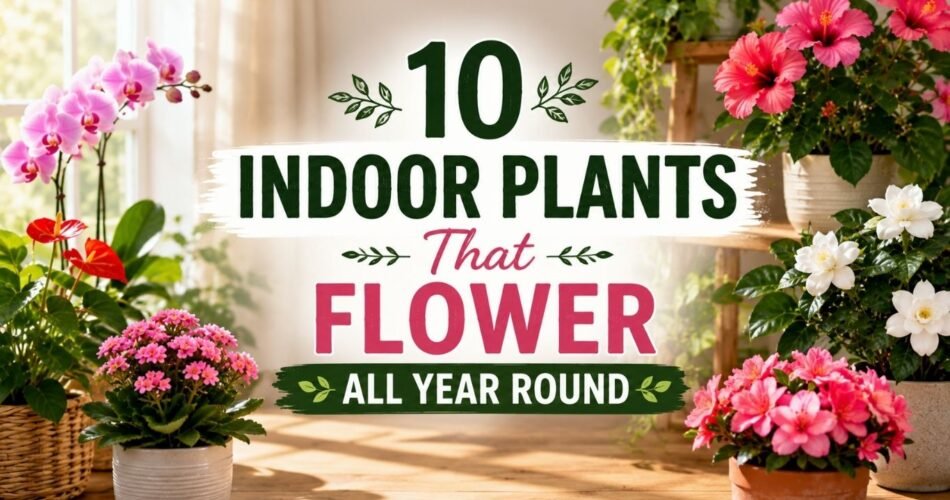
There’s something genuinely uplifting about walking into a room and seeing flowers in bloom. Whether it’s a burst of bright red on your windowsill or a cluster of delicate purple blossoms on your desk, indoor flowering plants have a way of making any space feel more alive. They add color to otherwise plain rooms, soften the look of modern interiors, and even help create a calmer, more relaxing atmosphere at home.
Beyond aesthetics, research has consistently shown that being around plants — especially flowering ones — can reduce stress, improve mood, and even boost productivity. For anyone spending more time indoors, having plants that flower regularly is a small but meaningful way to bring a bit of nature inside.
Now, here’s something worth being honest about before we dive in: very few indoor plants bloom continuously, every single day, all year long. That’s just not how plant biology works. Most plants go through natural growth cycles that include rest periods, and that’s completely normal. What we can do is choose plants known for their exceptionally long or repeated blooming seasons — plants that, with the right care and conditions, will give you flowers for the majority of the year, often with only short breaks in between.
In this guide, we’ll walk through 10 indoor plants that are genuinely impressive in their flowering capacity. You’ll learn about each plant’s blooming habits, the colors available, how to care for them, and where to place them in your home. There’s also a comparison table, practical tips to encourage more blooms, and answers to the most common questions beginners ask.
Let’s get into it.
Why Choose Indoor Flowering Plants?
Before we get to the plant list, it’s worth taking a moment to appreciate what indoor flowering plants actually bring to your home.
Visual impact is the most obvious benefit. A single blooming plant on a coffee table can completely transform the feel of a room. You don’t need to be an interior designer to appreciate that.
Improved air quality is another frequently cited benefit, though it’s worth noting that the effect varies by species and room size. Some flowering plants, like peace lilies, have been studied for their ability to filter certain airborne pollutants.
Mental wellbeing is perhaps the most underrated benefit. Tending to plants — watering, pruning, repotting — gives you a small, manageable routine that can be grounding and satisfying. Watching a plant bloom after you’ve cared for it properly is genuinely rewarding.
And then there’s the seasonal independence. Outdoor gardens are at the mercy of the weather. Indoor plants let you enjoy color and life regardless of what’s happening outside.
The 10 Best Indoor Plants That Flower Repeatedly Throughout the Year
1. Peace Lily (Spathiphyllum wallisii)
Plant Overview
The peace lily is probably the most popular indoor flowering plant in the world, and for good reason. It’s forgiving, adaptable, and produces elegant white blooms that look striking against its deep green foliage. The “flower” is technically a spathe — a modified leaf — surrounding a spadix, but it has the appearance and effect of a traditional bloom.
Blooming Season and Flowering Duration
Peace lilies typically bloom in spring and again in autumn, but in good indoor conditions — particularly with consistent warmth and indirect light — they can produce flowers several times throughout the year. Many indoor gardeners report near-continuous blooming with only brief resting periods.
Flower Colors Available
Primarily white, though some varieties produce creamy or pale green spathes as they mature.
Beginner-Friendly Care Tips
- Watering: Water when the top inch of soil feels dry. Peace lilies are famously forgiving of occasional drought but dislike sitting in soggy soil.
- Light: Thrives in medium to low indirect light. Avoid direct sun, which scorches the leaves.
- Humidity: Appreciates higher humidity. Misting occasionally or placing it near a humidifier helps.
- Feeding: Apply a balanced liquid fertilizer every 6–8 weeks during the growing season.
- Temperature: Keep between 65–85°F (18–29°C). Avoid cold drafts.
Best Location Inside the Home
Bathrooms with natural light, living room corners away from windows, or on a north-facing shelf. Peace lilies are one of the few flowering plants that genuinely thrive in lower light.
2. African Violet (Streptocarpus sect. Saintpaulia)
Plant Overview
African violets are the quintessential compact indoor bloomer. They’ve been popular houseplants since the early 20th century, and modern cultivars have only improved on their already impressive flowering habit. These little plants punch well above their weight when it comes to producing color.
Blooming Season and Flowering Duration
African violets are among the most reliably long-blooming indoor plants available. Under good conditions — bright indirect light and consistent temperature — they can bloom for 9 to 10 months of the year, with only brief rest periods. Some gardeners manage near year-round blooming with careful light management, including grow lights during darker months.
Flower Colors Available
Purple, violet, blue, pink, red, white, and bicolor varieties. There are literally hundreds of cultivars to choose from.
Beginner-Friendly Care Tips
- Watering: Water from the bottom (set the pot in a shallow dish of water) to avoid wetting the leaves, which can cause spotting.
- Light: Bright, indirect light is ideal. East or north-facing windowsills work well. Too much direct sun causes leaf burn and stops blooming.
- Fertilizing: Use a fertilizer specifically formulated for African violets every 2–4 weeks.
- Repotting: African violets prefer being slightly pot-bound, so don’t rush to repot.
- Temperature: Consistent warmth between 65–75°F (18–24°C) is ideal.
Best Location Inside the Home
East or north-facing windowsills, or under a grow light setup on a desk or shelf.
3. Anthurium (Anthurium andraeanum)
Plant Overview
Anthuriums are bold, glossy, and unmistakably tropical-looking. Their waxy, heart-shaped spathes (often mistaken for petals) surround a long spadix and have a remarkably long display life — both on the plant and as cut flowers. They’re a bit of a statement plant without needing much space.
Blooming Season and Flowering Duration
With adequate light and warmth, anthuriums can produce new blooms every few months, meaning a well-cared-for plant can be in some state of bloom for much of the year. Each individual flower can last 6–8 weeks before fading. A mature, healthy plant may have overlapping blooms at different stages.
Flower Colors Available
Red, orange, pink, white, coral, and bicolor. Red is the most common and most striking.
Beginner-Friendly Care Tips
- Light: Bright indirect light is essential. A spot near a south or east-facing window with a sheer curtain is ideal.
- Watering: Allow the top inch or two of soil to dry between waterings. Anthuriums are prone to root rot if overwatered.
- Humidity: Being tropical plants, they love humidity. Bathrooms or kitchens often work well, or use a pebble tray with water beneath the pot.
- Fertilizing: Use a high-phosphorus fertilizer every 6–8 weeks to encourage blooming.
- Dust the leaves: Wiping the glossy leaves occasionally helps the plant photosynthesize more effectively.
Best Location Inside the Home
Near a bright window with filtered light — a living room or bedroom with a south or east-facing window is ideal.
4. Kalanchoe (Kalanchoe blossfeldiana)
Plant Overview
Kalanchoe is a succulent-type plant with clusters of small, cheerful flowers held above thick, waxy leaves. It’s incredibly popular as a gift plant, and while many people discard it after the initial flowers fade, kalanchoe can be coaxed into reblooming with a little patience.
Blooming Season and Flowering Duration
Kalanchoe blooms for 6–8 weeks at a time. With proper care and deliberate light manipulation (more on this below), you can trigger multiple blooming cycles per year. Some gardeners get three or four rounds of blooms annually.
Note: To trigger reblooming, kalanchoe needs a period of darkness — about 14 hours of darkness per day for 6 weeks. This mimics its natural blooming cue. Without this, it may not rebloom reliably.
Flower Colors Available
Red, orange, yellow, pink, white, and purple. Almost every warm color is available.
Beginner-Friendly Care Tips
- Watering: As a succulent, kalanchoe prefers to dry out between waterings. Overwatering is the most common mistake.
- Light: Bright indirect light during growing periods, reduced light (to trigger reblooming) when needed.
- Fertilizing: Feed monthly with a balanced fertilizer during active growth.
- Deadheading: Remove spent flowers to encourage the plant to direct energy toward new growth.
Best Location Inside the Home
South or west-facing windowsill for most of the year. Move to a darker location when you want to trigger reblooming.
5. Moth Orchid (Phalaenopsis spp.)
Plant Overview
Phalaenopsis orchids — commonly called moth orchids — are the most widely sold orchid in the world, and they’ve earned their popularity honestly. They’re elegant, long-lasting, and more adaptable to indoor conditions than most people assume. The reputation of orchids being difficult is largely unfounded with this particular genus.
Blooming Season and Flowering Duration
A single bloom spike on a moth orchid can last 3–6 months, which is genuinely remarkable for any flowering plant. After the blooms fall, the plant enters a rest period before producing another spike. With good care, a moth orchid may bloom once or twice per year, giving you flowers for a large portion of the year in total.
Flower Colors Available
White, pink, purple, yellow, magenta, and intricate multicolored or spotted patterns. The variety is extraordinary.
Beginner-Friendly Care Tips
- Watering: Water once a week by placing the pot in a basin of water for 10–15 minutes, then letting it drain completely. Never let roots sit in standing water.
- Light: Bright indirect light. East-facing windows are ideal. Avoid direct sun.
- Fertilizing: “Weakly, weekly” — diluted orchid fertilizer every week or two during active growth.
- Humidity: Moderate to high humidity. A pebble tray works well.
- After blooming: Don’t cut the spike immediately. Sometimes a new branch will grow from an existing spike node.
Best Location Inside the Home
East-facing windowsills, kitchen counters with indirect light, or a well-lit bathroom.
6. Bromeliad (Bromeliaceae family)
Plant Overview
Bromeliads are dramatic, architectural plants with striking rosettes of leaves and vivid, long-lasting flower structures (technically called inflorescences) that emerge from the center. They’re tropical natives that have adapted remarkably well to indoor living.
Blooming Season and Flowering Duration
Here’s the honest reality with bromeliads: each individual plant blooms only once, but the flower can last for 3–6 months. After blooming, the mother plant slowly dies but produces offsets (“pups”) that grow into new plants and eventually bloom themselves. With a collection of plants at different stages, you can maintain near-continuous flowering.
Flower Colors Available
Red, orange, yellow, pink, and purple — often in vivid, tropical combinations.
Beginner-Friendly Care Tips
- Watering: Keep the central “cup” formed by the leaves filled with water. Change this water weekly to prevent stagnation. Water soil only sparingly.
- Light: Bright indirect light. They adapt well to indoor conditions.
- Fertilizing: Minimal feeding needed — a diluted balanced fertilizer once a month during summer is sufficient.
- Pups: Once pups are about one-third the size of the mother plant, they can be separated and potted on.
Best Location Inside the Home
Living rooms with bright ambient light, or near east or south-facing windows.
7. Begonia (Begonia spp.)
Plant Overview
Begonias are wonderfully varied — there are over 2,000 species and countless hybrids. For indoor year-round flowering, wax begonias (Begonia semperflorens) and cane begonias are the best choices. The name semperflorens literally means “always flowering,” which gives you a sense of their reputation.
Blooming Season and Flowering Duration
Wax begonias are among the most continuously blooming indoor plants available. In a warm, well-lit indoor environment, they can produce flowers for most of the year with minimal interruption. Other types, like tuberous begonias, have more defined rest periods.
Flower Colors Available
Red, pink, white, orange, coral, and yellow. Many varieties have attractive bronze or dark green foliage as a bonus.
Beginner-Friendly Care Tips
- Light: Bright indirect light is ideal. A spot near a sunny window works well, but avoid harsh midday sun.
- Watering: Keep soil evenly moist but not soggy. Begonias are sensitive to both overwatering and underwatering.
- Humidity: Moderate humidity suits begonias well, but avoid misting directly on the leaves as this can encourage fungal issues.
- Pinching: Pinch back leggy growth to encourage bushier, more floriferous plants.
- Fertilizing: Feed every 2–3 weeks with a diluted balanced fertilizer during active growth.
Best Location Inside the Home
East or west-facing windowsills, or anywhere with bright indirect light for most of the day.
8. Impatiens (Impatiens walleriana)
Plant Overview
Impatiens are often thought of as outdoor bedding plants, but they’re actually excellent indoor performers, particularly during the colder months. Their cheerful, profuse flowers and shade-tolerant nature make them a natural fit for indoor growing.
Blooming Season and Flowering Duration
Indoors, in a consistently warm environment with adequate light, impatiens can bloom nearly continuously. They don’t have a strong dormancy requirement, making them reliable year-round bloomers under the right conditions.
Flower Colors Available
Nearly every color imaginable: red, pink, orange, white, purple, coral, and bicolor.
Beginner-Friendly Care Tips
- Watering: Impatiens like consistently moist (but not waterlogged) soil. They’ll droop dramatically when thirsty — a useful signal.
- Light: Bright indirect light works best indoors. They tolerate lower light than many flowering plants.
- Fertilizing: Feed every two weeks with a balanced liquid fertilizer to maintain heavy blooming.
- Pinching: Regularly pinch back spent flowers and leggy stems to keep the plant compact and blooming.
- Temperature: Keep above 50°F (10°C). They’re not frost-tolerant at all.
Best Location Inside the Home
Bright windowsills, hanging baskets near windows, or on tables with good ambient light.
9. Flamingo Flower / Painter’s Palette (Anthurium scherzerianum)
Plant Overview
While we’ve already covered Anthurium andraeanum, its close relative A. scherzerianum — commonly called the flamingo flower — deserves its own mention. It’s more compact, has a charmingly curly spadix, and is equally impressive in its blooming capacity. It’s a great choice for small spaces.
Blooming Season and Flowering Duration
Similar to its cousin, the flamingo flower blooms repeatedly throughout the year. Individual flowers last 4–6 weeks, and a healthy plant can cycle through multiple blooms over the course of a year. In optimal conditions, there’s rarely a time when the plant isn’t either blooming or preparing to bloom.
Flower Colors Available
Red, orange, salmon, and pink. The curled yellow or orange spadix adds to its exotic appearance.
Beginner-Friendly Care Tips
- Light: Bright indirect light is non-negotiable for good blooming. Near a window with a sheer curtain is ideal.
- Watering: Allow the top of the soil to dry slightly between waterings. Root rot is the most common problem.
- Humidity: High humidity is appreciated. Group with other plants to raise ambient humidity naturally.
- Fertilizing: Use a balanced or slightly phosphorus-heavy fertilizer every 6 weeks during spring and summer.
Best Location Inside the Home
Bright living areas, home offices with east or south-facing windows, or warm, humid bathrooms with natural light.
10. Crossandra (Crossandra infundibuliformis)
Plant Overview
Crossandra, sometimes called the firecracker flower, is perhaps the least well-known plant on this list, but it absolutely deserves more attention. Native to India and Sri Lanka, it produces vivid, tubular flowers in warm shades and blooms with impressive reliability when given the right conditions.
Blooming Season and Flowering Duration
In a warm indoor environment with good light, crossandra can bloom for most of the year — often 9–10 months — making it one of the genuinely longest-flowering indoor plants available. It rests briefly but returns to blooming quickly.
Flower Colors Available
Orange, salmon, coral, yellow, and red. The warm tones are particularly striking.
Beginner-Friendly Care Tips
- Light: Bright indirect light is essential. An east or south-facing window works well.
- Watering: Keep soil consistently moist during the growing season. Reduce watering slightly during any rest period.
- Humidity: Being tropical, crossandra loves humidity. Regular misting or a pebble tray is helpful.
- Fertilizing: Feed every two weeks with a balanced liquid fertilizer during active growth.
- Temperature: Keep warm — ideally above 60°F (15°C). Cold temperatures will halt flowering.
Best Location Inside the Home
Bright, warm rooms — south or east-facing windowsills, or well-lit kitchen countertops.
Common Reasons Indoor Plants Stop Flowering
If your plants have been reluctant to bloom, one of these is likely the culprit.
1. Insufficient light. This is the most common issue by far. Without adequate light, plants simply don’t have the energy to produce flowers.
2. Incorrect fertilizing. Too much nitrogen makes plants focus on leaves. Too little feeding overall leaves them without the nutrients needed for blooming.
3. Pot-bound roots (or too much space). Some plants bloom better when slightly root-bound. Others struggle when their pot is too large. African violets and peace lilies are classic examples of plants that prefer cozy pots.
4. Low humidity. Many indoor flowering plants are tropical and genuinely struggle in dry indoor air, especially in heated homes during winter.
5. Temperature stress. Cold drafts, heat vents, or inconsistent temperatures can all cause bud drop and prevent new blooms from forming.
6. Overwatering or underwatering. Both extremes stress plants in ways that suppress flowering. Learn each plant’s specific preferences and stick to them.
7. Pests. Spider mites, aphids, and scale insects divert the plant’s energy and can significantly reduce blooming. Check the undersides of leaves regularly.
Common Mistakes to Avoid
Even experienced indoor gardeners make these errors. Being aware of them can save your plants — and your patience.
Moving plants too often. Plants adapt to their position. Constantly relocating them causes stress and often stops blooming. Find a good spot and leave them there.
Watering on a fixed schedule rather than by soil condition. Water when the plant needs it, not necessarily every Tuesday. Check the soil before watering.
Ignoring the roots. Root-bound plants struggle. So do plants in pots that are far too large. Check roots periodically and repot thoughtfully.
Using tap water with high chlorine or fluoride. Some plants — particularly peace lilies and anthuriums — are sensitive to chemicals in tap water. Let tap water sit for 24 hours before using, or use filtered water.
Forgetting to clean leaves. Dusty leaves significantly reduce a plant’s ability to photosynthesize. Gently wipe leaves with a damp cloth occasionally.
Overcomplicating things. Indoor gardening doesn’t have to be complicated. Consistent basic care — appropriate light, regular watering, occasional feeding — produces better results than elaborate interventions.
If you’re also growing outdoor flowering plants like hibiscus, check out these 7 Hibiscus Flower Care Tips That You Need to Know to keep them thriving alongside your indoor collection.
FAQ: Indoor Flowering Plants
Q1: Can any indoor plant truly bloom every single day of the year?
Realistically, no. Even the most prolific indoor bloomers like African violets and wax begonias have occasional rest periods. What you can achieve — with good care — is near-continuous blooming for most of the year, with only brief gaps. Setting this expectation helps you appreciate your plants’ natural rhythms rather than feeling disappointed by them.
Q2: What is the easiest indoor flowering plant for a complete beginner?
Peace lilies and African violets are both excellent starting points. Peace lilies are particularly forgiving of inconsistent watering and low light. African violets reward consistent care with abundant blooms and are well understood by the gardening community, with plenty of support resources available.
Q3: Do indoor flowering plants need fertilizer to bloom?
Yes, fertilizer makes a meaningful difference to blooming frequency and quality. Without regular feeding during the growing season, plants gradually exhaust the nutrients in their potting mix and reduce flower production. A balanced liquid fertilizer every 2–4 weeks during spring and summer is a good baseline for most flowering indoor plants.
Q4: Why are my plant’s buds falling off before they open?
Bud drop is usually caused by sudden changes in environment — moving the plant to a new spot, a cold draft, a blast of hot air from a heating vent, or inconsistent watering. Once buds form, try to keep conditions as stable as possible. This is particularly common with moth orchids and anthuriums.
Q5: Are indoor flowering plants safe for pets?
Many popular indoor flowering plants are toxic to cats and dogs. Peace lilies, anthuriums, and kalanchoe are all harmful if ingested by pets. Before choosing plants for your home, check the ASPCA’s toxic plant database and place any potentially harmful plants well out of reach. African violets are considered non-toxic to cats and dogs, making them a safer choice for pet-friendly homes.
Q6: Can I use grow lights to extend the blooming season?
Absolutely. This is one of the most effective things you can do for indoor flowering plants, particularly during shorter winter days. Full-spectrum LED grow lights placed 6–12 inches above plants for 12–14 hours daily can significantly extend blooming periods and even trigger flowering in plants that have gone dormant.
Q7: How do I preserve flowers from my indoor plants once they’ve bloomed?
If you want to keep memories of your blooms beyond their natural lifespan, there are some wonderful preservation techniques available. For detailed methods, this guide on 12 Easy Ways to Preserve Flowers at Home covers everything from pressing and drying to more creative approaches.
Key Takeaways
- Most indoor flowering plants bloom for much of the year — not every single day, but repeatedly and reliably under good conditions.
- Light is the most critical factor in getting indoor plants to flower. If bloom production is poor, improving light is almost always the best first step.
- Phosphorus-rich fertilizer supports flower production more effectively than high-nitrogen formulas.
- Rest periods are normal and healthy. Don’t try to force a plant to bloom during its natural resting phase.
- Beginners should start with peace lilies, African violets, or kalanchoe — all are forgiving, beautiful, and reliably rewarding.
- Environmental stability — consistent temperature, humidity, and light — is as important as active care routines.
- Pest and disease management is often overlooked but can significantly impact flowering. Regular observation is key.
- A thoughtful collection of plants at different growth stages can keep your home colorful all year long.