If you’ve ever stood in a grocery store during a snowstorm, a supply chain disruption, or just a tight week financially, you already understand why growing your own food matters. A well-planned survival garden isn’t about doomsday prepping — it’s about building real food security right in your backyard, raised beds, or even a small community plot.
But let’s be honest about something upfront: “year-round” feeding doesn’t mean every plant keeps producing 365 days straight in every climate. What it really means is that by choosing the right survival crops, planting them at the right times, using succession planting, and storing your harvest correctly, you can have homegrown food available throughout most or all of the year — no matter where you live.
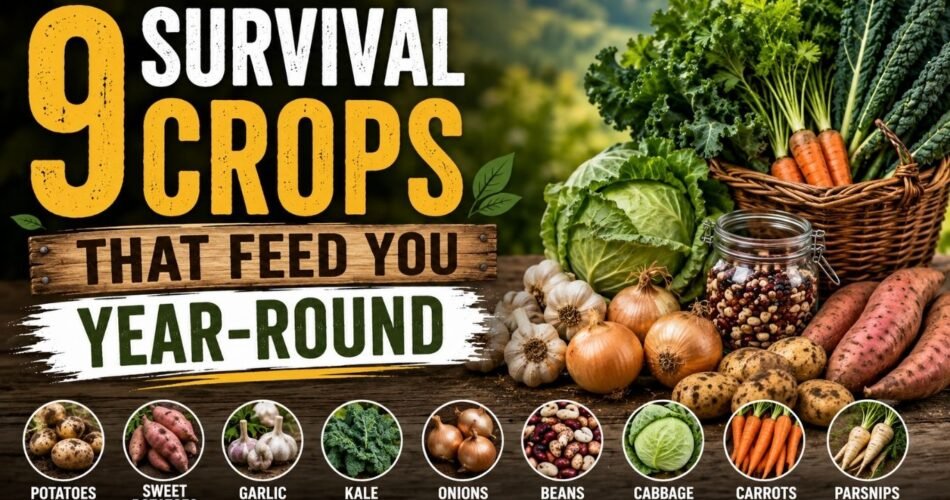
This guide covers 9 survival crops that feed you year-round through strategic planting and smart storage. These aren’t trendy superfoods or exotic varieties that fail at the first sign of drought. These are proven, resilient crops that experienced homesteaders and home gardeners rely on when it matters most.
Before we dive in, if you’re still figuring out the basics of what to put in the ground, check out this helpful guide on What Vegetables to Plant for a Successful Garden — it pairs perfectly with what you’re about to read.
What Makes a Crop a “Survival Crop”?
Not every vegetable earns the title. A true survival crop checks most of these boxes:
- High caloric or nutritional density — it actually sustains you, not just snacks you
- Long storage life — you can eat it weeks or months after harvest
- Reliable yield — it doesn’t disappoint in average garden conditions
- Resilience — tolerates some drought, cold, heat, or pest pressure
- Versatility — can be eaten in multiple ways (raw, cooked, dried, fermented)
- Ease of seed-saving — you can grow it again next year without buying new seeds
With those criteria in mind, here are the 9 best survival crops for home gardens — each with everything you need to grow and store them successfully.
The 9 Best Survival Crops for Your Garden
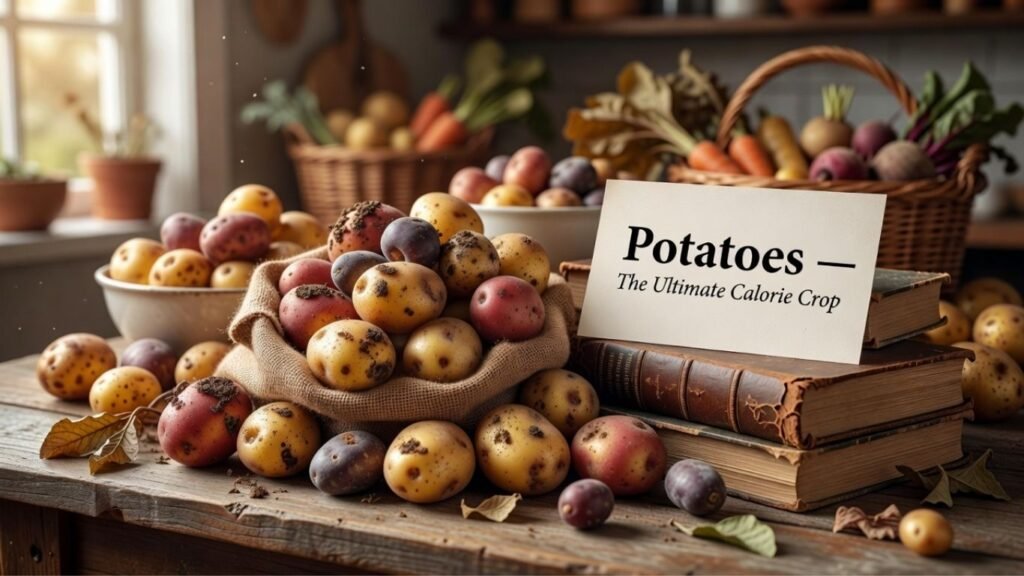
1. Potatoes — The Ultimate Calorie Crop
Why Potatoes Are a Survival Crop
Potatoes have fed entire civilizations. One acre of potatoes can produce more food calories than almost any other crop. For a home gardener, even a small 4×8 raised bed can yield 25–50 pounds of potatoes. They’re filling, nutritious, and incredibly versatile in the kitchen.
| Feature | Details |
|---|---|
| Best Planting Season | Early spring (2–4 weeks before last frost) or fall in warm climates |
| Sunlight | Full sun (6–8 hours minimum) |
| Soil Type & pH | Loose, well-draining loamy soil; pH 5.0–6.0 |
| Watering Needs | 1–2 inches per week; reduce as plants die back |
| Days to Maturity | 70–120 days depending on variety |
| Yield Potential | 10–15 lbs per 10 sq ft |
| Storage Life | 4–6 months in cool, dark, humid conditions |
Practical Tips
Plant certified seed potatoes (not grocery store ones, which are often treated to prevent sprouting). Varieties like Yukon Gold, Kennebec, and Red Pontiac are reliable performers for home gardens.
Cure potatoes for 10–14 days in a cool, humid space (50–60°F) before storing. Store in paper bags or wooden crates — never plastic — in a basement or root cellar at around 38–45°F.
Quick Answer: Potatoes store for 4–6 months when properly cured and kept in cool, dark conditions, making them one of the best long-storage vegetables for food security gardening.
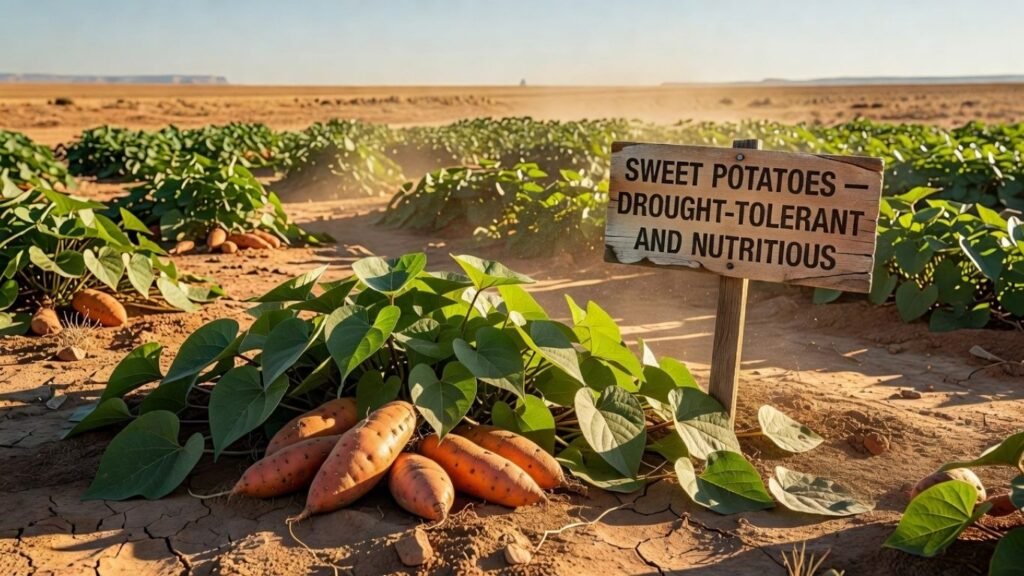
2. Sweet Potatoes — Drought-Tolerant and Nutritious
Why Sweet Potatoes Are a Survival Crop
Sweet potatoes are one of the most nutritionally complete foods you can grow. They’re packed with beta-carotene, vitamin C, potassium, and complex carbohydrates. Once established, they tolerate drought better than almost any other root vegetable. They grow in poor soil where other crops fail, which is exactly what you want in a resilient crop.
| Feature | Details |
|---|---|
| Best Planting Season | Late spring, after soil reaches 65°F |
| Sunlight | Full sun (8+ hours ideal) |
| Soil Type & pH | Sandy loam, well-draining; pH 5.5–6.5 |
| Watering Needs | Moderate; drought-tolerant once established |
| Days to Maturity | 90–120 days |
| Yield Potential | 10–20 lbs per 10 sq ft |
| Storage Life | 6–12 months when cured properly |
Practical Tips
Sweet potatoes are grown from “slips” (rooted sprouts from a mature tuber). You can make your own slips by placing a sweet potato in a jar of water in a sunny window about 6 weeks before planting.
Curing is critical: place freshly harvested sweet potatoes at 85–90°F with high humidity for 10–14 days. This hardens the skin and converts starches to sugars. After curing, store at 55–60°F — not in the refrigerator, which damages them.
3. Winter Squash — Long-Storing Homestead Favorite
Why Winter Squash Is a Survival Crop
Butternut, acorn, Hubbard, and spaghetti squash are among the best storage vegetables you can grow. A single vine can produce multiple fruits, each lasting months without refrigeration. Winter squash is calorie-dense and rich in vitamins A and C.
| Feature | Details |
|---|---|
| Best Planting Season | Spring, after last frost; or start indoors 3–4 weeks earlier |
| Sunlight | Full sun (6–8 hours) |
| Soil Type & pH | Rich, well-draining soil with compost; pH 6.0–6.8 |
| Watering Needs | Deep watering once or twice weekly; reduce near harvest |
| Days to Maturity | 80–110 days |
| Yield Potential | 10–20 lbs per plant |
| Storage Life | 3–6 months in a cool, dry room (50–55°F) |
Practical Tips
Leave a 2–3 inch stem on each squash when harvesting — this prevents rot from entering the fruit. Cure squash in a warm room (75–80°F) for 10–14 days before storing. Butternut squash is particularly reliable because its hard skin resists pests and disease in storage.
Don’t store squash near apples or pears — the ethylene gas from those fruits will shorten your squash’s storage life.
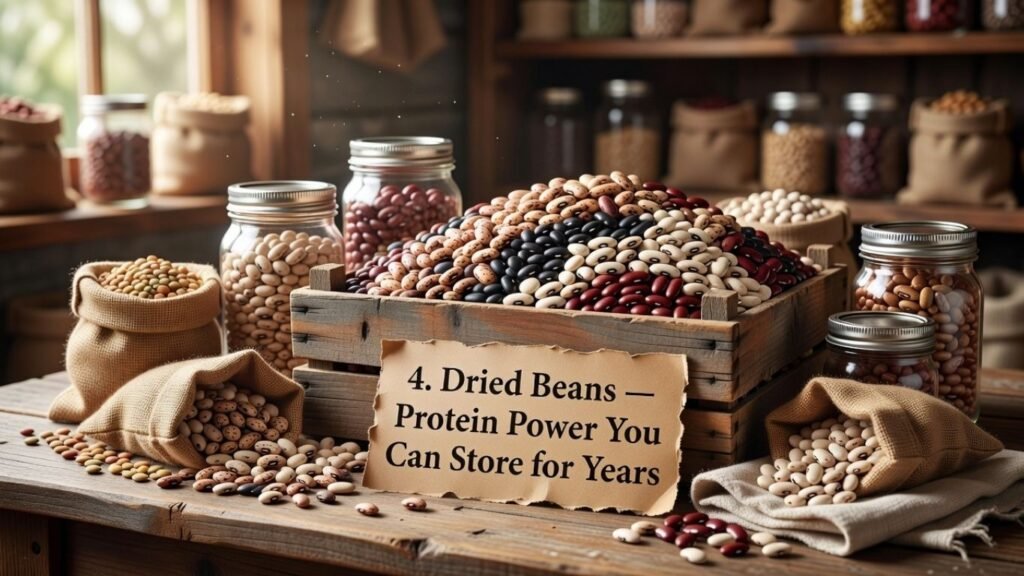
4. Dried Beans — Protein Power You Can Store for Years
Why Dried Beans Are a Survival Crop
If potatoes give you carbohydrates, dried beans give you protein and fiber — the other pillars of a sustainable diet. Varieties like pinto, navy, black, and kidney beans can be harvested dried, stored for 2–10 years, and cooked all winter. They also fix nitrogen in the soil, improving fertility for neighboring crops.
| Feature | Details |
|---|---|
| Best Planting Season | After last frost; soil temp above 60°F |
| Sunlight | Full sun (6–8 hours) |
| Soil Type & pH | Loose, moderately fertile, well-draining; pH 6.0–7.0 |
| Watering Needs | Moderate; drought-tolerant; avoid overwatering |
| Days to Maturity | 70–100 days (for dried beans) |
| Yield Potential | 1–2 lbs dried beans per 10 sq ft |
| Storage Life | 2–10 years when stored in airtight containers |
Practical Tips
Let bean pods dry completely on the plant before harvesting. If rain threatens, pull the whole plant and hang it upside down in a dry shed to finish drying. Once shelled, store beans in glass mason jars with tight lids in a cool, dark pantry.
For the best long-term storage, add an oxygen absorber to your storage jar to prevent weevil infestations.
5. Garlic — Small Space, Big Returns
Why Garlic Is a Survival Crop
Garlic punches well above its weight in a survival garden. It takes up little space, requires minimal care, stores for months, and has genuine antimicrobial and immune-boosting properties that have been used medicinally for centuries. Beyond health benefits, garlic is an essential flavoring that keeps meals interesting when you’re eating from storage — which matters more than people realize.
| Feature | Details |
|---|---|
| Best Planting Season | Fall (4–6 weeks before ground freezes) for summer harvest |
| Sunlight | Full sun (6–8 hours) |
| Soil Type & pH | Rich, well-draining loamy soil; pH 6.0–7.0 |
| Watering Needs | Regular until scapes form; reduce as bulbs mature |
| Days to Maturity | 240–270 days (fall planted) |
| Yield Potential | 1 clove planted = 1 full bulb (roughly 6–10 cloves) |
| Storage Life | 6–12 months in a cool, dry, well-ventilated space |
Practical Tips
Hardneck varieties like Rocambole and Porcelain store longer and have more complex flavor. Softneck varieties like Silverskin braid beautifully for hanging storage and can last up to 12 months.
After harvest, cure garlic by hanging it or laying it on screens in a warm, airy spot for 3–4 weeks. Never store garlic in a sealed plastic bag — it needs airflow.
6. Kale — Cold-Hardy, Cut-and-Come-Again
Why Kale Is a Survival Crop
Kale is one of the most nutritionally dense greens you can grow, offering iron, calcium, vitamins K, A, and C in every leaf. More importantly, kale is cold-hardy and can survive light frosts and even snow, extending your harvest well into fall and winter in many climates. In mild climates (USDA Zones 7–10), kale can grow year-round outdoors.
| Feature | Details |
|---|---|
| Best Planting Season | Spring and late summer/early fall |
| Sunlight | Full sun to partial shade (4–6 hours minimum) |
| Soil Type & pH | Fertile, moist, well-draining; pH 6.0–7.5 |
| Watering Needs | Consistent moisture; 1–1.5 inches per week |
| Days to Maturity | 55–75 days |
| Yield Potential | Multiple harvests per plant for months |
| Storage Life | 1–2 weeks fresh; can be blanched and frozen for 8–12 months |
Practical Tips
Harvest outer leaves first, leaving the center growing point intact. Frost actually improves kale’s flavor — it converts starches to sugars. Varieties like Lacinato (Dinosaur) Kale and Red Russian Kale are particularly cold-hardy and productive.
For year-round eating, blanch kale in boiling water for 2 minutes, plunge into ice water, squeeze dry, and freeze in portions. It holds well in the freezer for up to a year.
7. Carrots — Root Cellar Champions
Why Carrots Are a Survival Crop
Carrots are a cold-hardy root vegetable that store exceptionally well — either in a root cellar or right in the ground in cold climates (covered with mulch). They’re rich in beta-carotene, fiber, and natural sugars, and they work in soups, stews, salads, and fermented dishes. With succession planting, you can harvest carrots from late spring through early winter in most zones.
| Feature | Details |
|---|---|
| Best Planting Season | Early spring and late summer (for fall harvest) |
| Sunlight | Full sun (6+ hours) |
| Soil Type & pH | Deep, loose, sandy loam; free of rocks; pH 6.0–6.8 |
| Watering Needs | 1 inch per week; consistent moisture prevents cracking |
| Days to Maturity | 70–80 days |
| Yield Potential | 15–20 lbs per 10-foot row |
| Storage Life | 4–6 months in root cellar; 10–12 months frozen |
Practical Tips
Carrots need deep, loose soil — rocky or compacted ground produces forked, stunted roots. Raised beds filled with a mix of compost and sand work beautifully. Varieties like Danvers and Nantes are reliable for storage, while Chantenay handles heavier soils better.
For in-ground storage, mulch beds with 12 inches of straw before the ground freezes and dig carrots as needed through winter — they actually sweeten up in cold soil.
8. Winter Greens (Spinach, Swiss Chard, Mâche) — Cold-Season Nutrition
Why Winter Greens Are a Survival Crop
During the hungry gap — that stretch of late winter and early spring when stored food runs low and nothing new has grown yet — cold-hardy greens can literally be the difference between eating fresh food and eating nothing green at all. Spinach, Swiss chard, and mâche (corn salad) all tolerate freezing temperatures and can be harvested even under a light snow cover with row cover protection.
| Feature | Details |
|---|---|
| Best Planting Season | Early spring and late summer/fall |
| Sunlight | Full sun to partial shade |
| Soil Type & pH | Rich, moist, well-draining; pH 6.0–7.0 |
| Watering Needs | Moderate; keep soil consistently moist |
| Days to Maturity | 40–60 days (spinach/mâche); 50–60 days (chard) |
| Yield Potential | Multiple cuts per season from each plant |
| Storage Life | 1–2 weeks fresh; 8–12 months frozen or dehydrated |
Practical Tips
Use cold frames or low tunnels (simple wire hoops with row cover fabric) to extend your growing season by 4–6 weeks on each end. Mâche is particularly overlooked — it’s extremely cold-hardy, grows slowly but reliably in winter, and needs almost no care.
Plant spinach in late summer for fall and early winter harvests. It can overwinter in zones 6 and warmer with minimal protection and resume growth in early spring.
This is also a great entry point for new gardeners. If you’re just getting started and want to build confidence before tackling a full survival garden, take a look at these 8 Easy Vegetables to Grow for Beginner Gardeners — several of them overlap with what we’re discussing here.
9. Corn (Flour or Dent Varieties) — Storable Grain for the Home Garden
Why Corn Is a Survival Crop
This isn’t sweet corn that you eat fresh in July and it’s done. For a survival garden, you want flour corn or dent corn — varieties grown to be dried and ground into cornmeal, corn flour, or masa. These are genuine grain crops that provide serious caloric density and store for 1–5 years when properly dried and sealed.
| Feature | Details |
|---|---|
| Best Planting Season | After last frost, soil above 60°F |
| Sunlight | Full sun (8+ hours) |
| Soil Type & pH | Deep, rich, well-draining soil; pH 5.8–6.8 |
| Watering Needs | 1–1.5 inches per week; critical during silking and ear development |
| Days to Maturity | 90–120 days for drying corn |
| Yield Potential | 15–25 lbs of dried grain per 100 sq ft |
| Storage Life | 1–5 years in sealed containers when fully dried |
Practical Tips
Plant corn in blocks (at least 4 rows wide) rather than a single row — corn is wind-pollinated and poor block planting leads to incomplete pollination and gaps in the ears.
Try heirloom varieties like Glass Gem (beautiful and functional), Bloody Butcher, or Painted Mountain — these are open-pollinated, meaning you can save seeds year after year without buying new ones.
Dry corn on the cob in a warm, ventilated area until the kernels are rock-hard and you can’t dent them with your thumbnail. Then shell, bag, and store in sealed containers.
How to Plan a Year-Round Survival Garden
Start With Your Growing Zone
Your USDA Hardiness Zone (or equivalent in your country) determines what grows when. A gardener in Tennessee has entirely different options in January compared to someone in Minnesota or coastal California. Knowing your zone lets you plan realistically.
Use Succession Planting
Instead of planting everything at once and having a feast-or-famine situation, stagger your plantings every 2–3 weeks for crops like carrots, greens, and beans. This spreads your harvest over a longer season.
Build a Storage System
A survival garden without storage is just a regular garden. Think about:
- Root cellar or cool basement for potatoes, sweet potatoes, carrots, and squash
- Chest freezer for greens, beans, and corn
- Pantry shelving for dried beans, garlic, and dried corn
- Dehydrator or solar drying for extending shelf life of many crops
Save Your Seeds
Buy open-pollinated or heirloom seeds, not hybrids. Hybrids don’t reliably reproduce true to type from saved seed. Open-pollinated varieties let you save seed year after year, which is the heart of true self-sufficiency gardening.
Key Takeaways
- ✅ The 9 survival crops — potatoes, sweet potatoes, winter squash, dried beans, garlic, kale, carrots, winter greens, and corn — provide a broad range of calories, nutrition, and storage options
- ✅ “Year-round feeding” depends on your climate, succession planting, and how well you store your harvest
- ✅ Proper curing and storage dramatically extends how long each crop feeds your family
- ✅ Cold-hardy crops like kale, carrots, and spinach extend your fresh eating season into fall and winter
- ✅ Dried beans and corn are the most shelf-stable options, lasting years in proper storage
- ✅ Open-pollinated and heirloom varieties let you save seeds, reducing dependency on outside seed sources
- ✅ Even a small garden can produce meaningful food when you focus on high-yield, calorie-dense crops
Frequently Asked Questions (FAQ)
What are the best survival crops for a small garden?
For limited space, prioritize potatoes, dried beans, garlic, and kale. These offer the best combination of yield, nutritional value, and storage in a compact footprint. A 4×8 raised bed of potatoes can yield 30–50 pounds, while garlic takes almost no space at all.
Can I really grow food year-round in cold climates?
In colder zones (4–6), true year-round outdoor growing isn’t realistic without significant infrastructure like heated greenhouses. However, you can extend your season significantly using cold frames, row covers, and low tunnels. Combine that with proper storage of summer and fall crops, and you can eat from your garden year-round even in cold climates.
What survival crops grow fastest?
Radishes (25–30 days), spinach (40 days), and kale (55 days) are among the fastest. These quick crops are valuable for filling gaps between slower-maturing crops and for getting fresh food on the table when your stored supplies run thin.
How do I store vegetables without a root cellar?
An unheated garage, basement closet, or even a buried garbage can (insulated with hay bales) can substitute for a proper root cellar. The goal is consistent temperatures between 32–50°F and humidity around 85–95% for root vegetables. A chest freezer works well for greens, corn, and beans.
Are survival garden crops difficult to grow for beginners?
Not at all. Most of the crops on this list — especially potatoes, beans, squash, and kale — are beginner-friendly and forgiving. The key is starting simple, choosing the right varieties for your climate, and not over-complicating things in your first year.
How much garden space do I need to feed a family of four?
Estimates vary widely, but many experienced homesteaders suggest 2,000–4,000 square feet of productive growing space per person for a significant portion of their calories. That said, even a 1,000 square foot garden planted with these 9 survival crops can meaningfully reduce your grocery dependence and provide months of food security.
Should I focus on calories or nutrition in a survival garden?
Both matter, but don’t sacrifice one entirely for the other. Include calorie-dense crops (potatoes, corn, beans, sweet potatoes) for energy, and nutritional powerhouses (kale, carrots, winter greens, garlic) for vitamins and minerals. A survival garden that only provides calories but no nutrients will lead to deficiencies over time.
Final Thoughts
Building a survival garden around 9 survival crops that feed you year-round isn’t about preparing for the worst — it’s about becoming more self-reliant, reducing your food bill, eating better food, and having the deep satisfaction of feeding yourself and your family from your own land.
None of these crops are complicated or exotic. They’ve been grown by ordinary people for hundreds of years, in all kinds of conditions, with nothing but hand tools and good observation. You don’t need a farm — a serious backyard garden, a few raised beds, and a solid storage plan are enough to make a real difference.
Start with two or three crops from this list this season. Learn their rhythms, their needs, and how they behave in your specific climate. Build from there. That’s how real food security is built — one season, one harvest, and one jar of stored beans at a time.