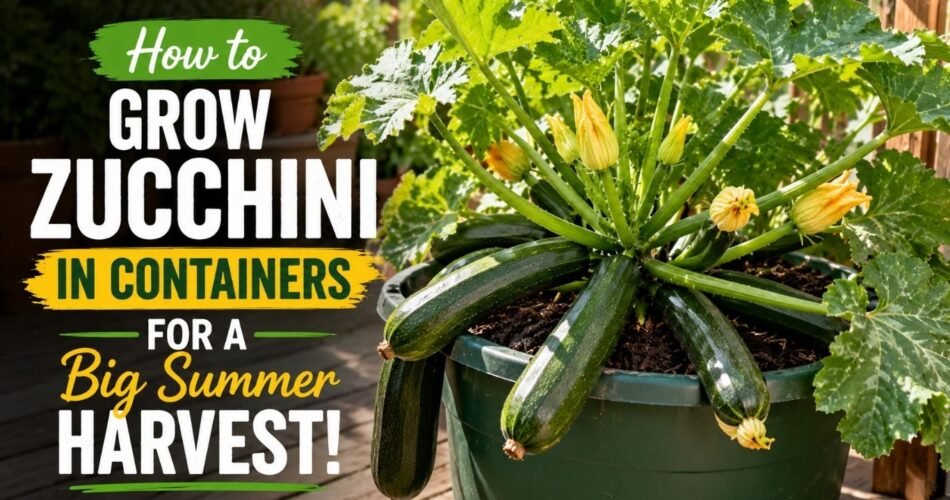
If you’ve always assumed zucchini was strictly a sprawling garden vegetable, think again. With the right container, a sunny spot, and a bit of consistent care, you can absolutely grow zucchini in pots and pull in an impressive harvest all summer long — even from a balcony or small patio.
I’ll be honest with you: container zucchini isn’t quite as effortless as tossing seeds in the ground and walking away. These plants are big eaters, heavy drinkers, and genuine sun lovers. But once you understand what they need and why, the whole process becomes surprisingly straightforward. I’ve grown zucchini on apartment balconies, cramped patios, and rooftop gardens, and I’ve learned through plenty of trial and error exactly what makes them thrive in pots.
This guide covers everything you need — from choosing the right compact varieties to harvesting those perfectly-sized fruits before they turn into baseball bats. Whether you’re a total beginner or someone who’s tried container zucchini before without much luck, there’s something useful here for you.
Why Growing Zucchini in Containers Actually Works
There’s a misconception that container vegetable gardening limits your options to lettuce, herbs, and maybe a tomato plant. Zucchini breaks that mold pretty decisively.
Container zucchini works well for a few practical reasons:
- You control the soil quality completely. No clay, no rocks, no compaction problems.
- Drainage can be optimized. Zucchini hates waterlogged roots, and a well-draining pot with drainage holes makes this easy to manage.
- You can position the plant for maximum sunlight. On a balcony or patio, this flexibility matters enormously.
- Pest management is simpler. Container plants are easier to inspect and treat individually.
The trade-off is that containers dry out faster and need more feeding than in-ground plants. Commit to those two things — consistent watering and regular fertilizing — and you’ll be eating zucchini all summer.
Choosing the Right Container for Zucchini
This is the single most important decision you’ll make. Go too small, and the plant will be constantly stressed, produce poorly, and die early.
What Size Container Do You Need?
Zucchini has an extensive root system that needs room to establish. Here’s what actually works in practice:
- Minimum: 5 gallons — only suitable for dwarf varieties and short seasons
- Recommended: 10–15 gallons — gives the plant room to grow and reduces watering frequency
- Ideal: 15–20 gallons — produces the best yields and most resilient plants
A 15-gallon fabric pot measuring roughly 16 inches in diameter and 14 inches deep hits the sweet spot for most compact varieties.
What Material Works Best?
Fabric grow bags are genuinely my top recommendation for container zucchini. They air-prune roots naturally (preventing the plant from becoming root-bound), drain beautifully, and are lightweight enough to reposition if needed.
Plastic pots work well and retain moisture longer than fabric — useful during hot summer stretches.
Terra cotta pots look great but dry out extremely fast in summer heat. If you go this route, be prepared to water daily or even twice daily.
Whatever container you choose, drainage holes are non-negotiable. Standing water at the root zone invites root rot, and that will end your harvest season abruptly.
Preparing the Ideal Potting Mix
Garden soil belongs in the garden, not in your containers. It compacts in pots, drains poorly, and often carries pests and diseases. Start fresh with a mix designed for containers.
The Best Potting Mix Recipe for Container Zucchini
A simple, effective blend that I’ve used successfully:
- 60% high-quality potting mix (look for one containing perlite or bark)
- 30% finished compost (homemade or bagged)
- 10% perlite (for additional drainage and aeration)
Mix thoroughly before filling your container. This combination provides good drainage, plenty of organic matter for nutrition, and a loose structure that roots can penetrate easily.
Soil pH
Zucchini grows best in slightly acidic to neutral soil — a pH between 6.0 and 7.0. If you’re using quality potting mix with compost, you’ll typically land right in that range without needing to adjust anything.
If you suspect your mix is off, a simple home pH test kit (available at any garden center) will confirm it.
Planting Zucchini: Seeds vs. Seedlings
Both approaches work, and each has advantages depending on your situation.
Starting from Seed
Zucchini seeds germinate quickly — typically within 5–10 days when soil temperature is between 70°F and 95°F. This makes direct seeding completely viable even for beginners.
To start seeds in your container:
- Fill the container with your prepared potting mix to within 2 inches of the rim.
- Water the mix thoroughly and let it drain.
- Plant 2–3 seeds about 1 inch deep in the center of the pot.
- Water gently and keep the soil consistently moist until germination.
- Once seedlings reach 2–3 inches tall, thin to the single strongest plant.
Don’t start zucchini seeds indoors too early. They transplant poorly once roots are established, so time your indoor start for no more than 2–3 weeks before your last frost date.
Using Transplants
Purchasing a seedling from a nursery saves time and gives you a head start. When transplanting:
- Water the seedling thoroughly before removing it from its nursery pot.
- Dig a hole in the center of your container slightly larger than the root ball.
- Set the plant at the same depth it was growing — don’t bury the stem.
- Firm the soil gently around the roots.
- Water deeply immediately after planting.
Transplants may show some wilting in the first day or two — this is normal transplant shock and usually resolves quickly.
Sunlight Requirements for Container Zucchini
Zucchini is a full-sun vegetable without compromise. Plan on giving your plant a minimum of 6 hours of direct sunlight daily, with 8 hours being ideal for maximum fruit production.
This is where container gardening genuinely shines. If one spot on your balcony or patio gets better light than another, you can move the pot. During the growing season, pay attention to how the sun moves across your space and position accordingly.
Signs of insufficient light:
- Tall, leggy growth (the plant stretching toward the light)
- Few or no flowers forming
- Small, poor-quality fruits
- Increased susceptibility to powdery mildew
If your outdoor space gets fewer than 6 hours of direct sun, zucchini will struggle. In that situation, consider consulting resources on how to plan your next garden project to identify the sunniest spots in your space and prioritize them accordingly.
Watering Container Zucchini Correctly
Inconsistent watering is the number one reason container zucchini underperforms. These plants are thirsty, and containers dry out much faster than garden beds.
How Often Should You Water?
During moderate temperatures (below 80°F), every 1–2 days is typical. When temperatures climb above 85°F, you may need to water daily — sometimes twice daily for smaller containers.
The finger test works perfectly: Push your finger 2 inches into the soil. If it feels dry at that depth, it’s time to water. If still moist, wait another day.
How to Water Properly
Always water at the base of the plant, not over the foliage. Wet leaves invite fungal issues, including the powdery mildew that plagues so many zucchini growers.
Water deeply until it flows freely from the drainage holes. Shallow, frequent watering encourages shallow roots that stress easily. Deep, thorough watering builds a stronger root system.
Early morning is the ideal time to water — the plant has moisture available throughout the hot part of the day, and any splash on leaves dries quickly in the sun.
Drought Stress Warning Signs
If your zucchini wilts significantly in the afternoon heat but recovers overnight, it’s managing (though still stressed). If it’s wilted in the morning before temperatures rise, that’s serious drought stress — water immediately.
Fertilizing Zucchini in Containers
Here’s the reality of container gardening: potting mix nutrients deplete fast, especially with the watering frequency zucchini demands. Regular feeding isn’t optional — it’s essential.
What Fertilizer to Use and When
Phase 1 — At planting: Mix a slow-release balanced fertilizer (such as 10-10-10) into the top few inches of your potting mix. This gives the plant a foundation of nutrients as it establishes.
Phase 2 — Vegetative growth: Every 2 weeks, apply a balanced liquid fertilizer (something like a 5-5-5 or 10-10-10 ratio). Fish emulsion and seaweed-based fertilizers work beautifully here and improve soil microbiology at the same time.
Phase 3 — Once flowering begins: Switch to a fertilizer with lower nitrogen and higher phosphorus and potassium (such as a 5-10-10 ratio). High nitrogen at this stage promotes lush leaf growth at the expense of flowers and fruit.
Signs of nutrient deficiency to watch for:
- Yellowing lower leaves (often nitrogen deficiency)
- Poor flower set (often phosphorus deficiency)
- Blossom end rot on fruit (calcium deficiency, usually triggered by inconsistent watering)
Spacing and Supporting Your Container Zucchini
One Plant Per Large Container
For 10–15 gallon containers, plant one zucchini per pot. Crowding two plants together in the same container creates competition for nutrients and moisture and increases disease pressure from poor air circulation.
Do Container Zucchini Need Support?
Bush varieties are naturally self-supporting and don’t typically need staking. However, as the plant matures and the fruit production load increases, a simple stake or small cage can help prevent stems from splaying outward and snapping.
For those growing in very tight spaces, vertical growing opens up real possibilities. Vining or semi-vining zucchini varieties can be trained upward using trellises. Check out these 9 genius vertical growing techniques for small containers for ideas that work specifically in container and small-space setups.
Mulching Container Zucchini
Adding a layer of mulch on top of your potting mix offers multiple practical benefits:
- Slows moisture evaporation — especially valuable in summer heat
- Reduces soil temperature fluctuations — roots prefer stable conditions
- Suppresses weeds — yes, weeds can still find their way into containers
- Prevents soil splash — reduces fungal spore transfer during watering
Apply 1–2 inches of straw, wood chip mulch, or shredded leaves on the surface of your potting mix. Keep mulch pulled slightly away from the base of the plant stem to prevent rot.
Pollination: The Key to Actually Getting Fruit
This is where many first-time container zucchini growers run into trouble. The plant looks healthy, flowers are appearing, but no fruit is developing. The culprit? Pollination failure.
Understanding Zucchini Flowers
Zucchini produces two types of flowers:
- Male flowers appear first — on slender stems with a simple stalk
- Female flowers appear later — identifiable by the tiny immature zucchini (ovary) at the base of the flower
For fruit to develop, pollen from a male flower must reach the center of a female flower. In a garden, bees and other pollinators handle this job. On a balcony or rooftop with limited pollinator access, you may need to lend a hand.
How to Hand-Pollinate Zucchini
This takes about 30 seconds and works reliably:
- Identify an open male flower in the morning (flowers are most receptive in the morning).
- Pick the male flower and peel back the petals.
- Gently rub the pollen-covered center (anther) directly onto the center (stigma) of an open female flower.
- Alternatively, use a small, dry paintbrush to transfer pollen.
Repeat this whenever you see open flowers of both types on the same day. Once pollination succeeds, the tiny fruit at the base of the female flower will begin to swell visibly within a couple of days.
Pruning Leaves for Better Plant Health
Zucchini plants grow fast and can produce large leaves that compete with each other for light and airflow. Strategic leaf removal improves the overall health of your container plant.
Which Leaves to Remove
- Yellow or dying lower leaves: Remove these promptly — they serve no photosynthetic function and become entry points for disease.
- Leaves showing significant powdery mildew: Remove and dispose of (not in the compost bin) to slow the spread.
- Extremely large leaves blocking airflow: Selectively remove one or two if the center of the plant looks crowded and airflow seems restricted.
What not to remove: Healthy, fully green leaves. These are the plant’s solar panels and food factories. Over-pruning healthy foliage reduces the plant’s ability to feed itself and weakens fruit development.
Use clean, sharp scissors or pruning shears and wipe the blades with rubbing alcohol between cuts to prevent spreading any disease.
Pest and Disease Prevention for Container Zucchini
Container plants are somewhat isolated from garden-wide pest pressure, but they’re not immune. Here’s what to watch for and how to handle it.
Common Pests
Aphids cluster under leaves and on new growth, sucking plant sap. A strong spray of water knocks most off. For persistent colonies, insecticidal soap spray works well and is safe for edible plants.
Squash vine borers are a serious threat in North America. The larvae bore into stems, causing sudden wilting. Prevention is easier than cure — use row cover early in the season and remove it once flowers open for pollination. In containers, inspect the base of stems regularly for the small entry holes and frass (sawdust-like material) that indicate borer presence.
Spider mites thrive in hot, dry conditions. They’re tiny but cause distinctive stippling on leaves. Keep plants well-watered and mist leaves occasionally in very dry weather.
Common Diseases
Powdery mildew is the most common zucchini disease, showing as white, powdery patches on leaves. It’s primarily a cosmetic problem early on but weakens the plant significantly if unchecked.
Prevention strategies:
- Water at the base, never overhead
- Space plants for good airflow
- Choose mildew-resistant varieties when possible
Treatment: A spray of 1 tablespoon baking soda plus 1 tablespoon horticultural oil in 1 gallon of water applied to affected leaves can slow progression. Remove severely affected leaves.
Blossom end rot on the developing fruit appears as a dark, sunken area at the blossom end. It’s caused by calcium deficiency, typically triggered by inconsistent watering rather than a lack of calcium in the soil. The solution is steady, consistent watering and avoiding fertilizer high in ammonium nitrogen.
Harvesting Zucchini from Containers
This is the part everyone looks forward to. Container zucchini typically begins producing fruit around 50–65 days after transplanting, depending on variety and growing conditions.
When to Harvest
The best zucchini for eating is harvested young and small — between 6 and 8 inches long for most varieties. At this size, the skin is tender, the seeds are barely formed, and the flavor is at its peak.
Don’t wait for them to get big. It’s tempting to let them grow, but large zucchini are seedy, tough-skinned, and less flavorful. More importantly, leaving oversized fruits on the plant signals it to stop producing. Regular harvesting of small fruits is the secret to continuous production.
Round varieties like Eight Ball are ready when they reach golf ball to tennis ball size.
How to Harvest Without Damaging the Plant
Use a sharp knife or pruning shears to cut the fruit from the stem rather than twisting and pulling. Leave about an inch of stem attached to the fruit. Pulling can damage the main stem or the crown of the plant.
Harvest Frequency
Check your plants every day or two during peak production. Zucchini grows fast — a fruit that’s 4 inches long today can be 10 inches long in two or three days in warm weather.
Extending the Harvest Season
With some planning, you can keep fresh zucchini coming from your containers from early summer well into early fall.
Succession Planting
Start a second container with seeds 4–6 weeks after your first planting. By the time your first plant starts winding down in midsummer, the second will be hitting peak production.
Fall Planting in Warm Climates
In USDA Zones 8–10, you can plant a second round in late summer (July or August) for a fall harvest. Just count backward from your first expected frost date, allowing 65–70 days for the plant to reach peak production.
Keep the Plant Productive
- Harvest regularly (every 1–2 days at peak season)
- Continue fertilizing on schedule
- Remove any fruit that has gone oversized or is showing decay
- Keep up with watering — a stressed plant stops producing
Practical Tips for Balcony and Patio Zucchini Gardens
Growing zucchini in a genuinely small space requires a few extra considerations.
Weight: Filled 15-gallon containers can weigh 40–60 pounds. Check your balcony’s weight rating before setting up multiple large pots. Using lighter fabric grow bags and lighter-weight potting mixes (look for mixes with perlite rather than heavy compost) helps.
Wind: Balcony plants often deal with more wind than garden plants. Wind dries containers out faster and can damage large leaves. If wind is significant, position containers near a wall for some shelter.
Heat reflection: Balconies surrounded by concrete or glass can intensify heat. Monitor moisture closely in these conditions and consider lighter-colored containers that absorb less heat.
Pollinator access: As mentioned earlier, hand-pollinate if you’re not seeing regular pollinator visits. This is especially important in high-rise settings.
FAQ: Growing Zucchini in Containers
1. Can zucchini really grow well in containers?
Yes, absolutely. With the right container size (at least 10–15 gallons), compact varieties, consistent watering, and regular fertilizing, container zucchini performs very well and produces impressive harvests throughout summer.
2. How many zucchini plants should I put in one pot?
One plant per large container (10–15 gallons). Crowding two plants together leads to competition for resources, poor airflow, increased disease pressure, and lower overall yields from each plant.
3. Why are my zucchini flowers falling off without producing fruit?
This is almost always a pollination issue. Either pollinators aren’t visiting your containers, or male and female flowers aren’t opening at the same time. Try hand-pollinating when you see both types of flowers open on the same morning.
4. How do I keep my container zucchini from wilting in summer heat?
Water deeply every morning, mulch the surface of the pot to reduce moisture loss, and consider moving very dark-colored containers to a slightly shadier afternoon position. Some afternoon wilting on very hot days is normal as long as the plant recovers by morning.
5. What’s the best fertilizer for container zucchini?
A balanced fertilizer (10-10-10) is good for the vegetative growth phase. Once flowers appear, switch to one with lower nitrogen and higher phosphorus and potassium (such as 5-10-10) to support flower and fruit development rather than excessive leaf growth.
6. When should I harvest zucchini for the best flavor?
Harvest at 6–8 inches for standard varieties, or golf ball to tennis ball size for round types. Young, small zucchini has the best texture and flavor, and regular harvesting keeps the plant producing throughout the season.
7. Can I grow zucchini on a shaded balcony?
Zucchini needs a minimum of 6 hours of direct sunlight daily. In less than 6 hours, it will grow slowly, produce few fruits, and become prone to disease. If your balcony is heavily shaded, zucchini isn’t the right choice — leafy greens and herbs tolerate lower light much better.
Key Takeaways
- Choose compact bush varieties — Patio Star, Bush Baby, and Astia are among the best performers in containers.
- Use a large container — 10–15 gallons minimum; more is better.
- Rich, well-draining potting mix with compost is essential.
- Sunlight is non-negotiable — 6–8 hours daily for reliable fruit production.
- Water deeply and consistently — this is the single most important maintenance task.
- Fertilize regularly and adjust the formula once flowering begins.
- Hand-pollinate if you’re not seeing pollinator activity at your plants.
- Harvest young (6–8 inches) and harvest often to keep production going.
- One plant per large pot — resist the temptation to crowd plants together.
Conclusion
Learning how to grow zucchini in containers for a big summer harvest is genuinely one of the most rewarding projects a small-space gardener can take on. These plants are vigorous, productive, and satisfying — once you understand their needs and meet them consistently.
The approach isn’t complicated: give the plant a large enough container, fill it with quality potting mix, place it where it gets good sun, water it regularly, feed it on schedule, help with pollination when needed, and harvest the fruits while they’re young. Do those things, and a productive summer of fresh zucchini is well within reach, even from a modest balcony or patio.
Start with a single container this season. Once you taste that first homegrown zucchini — harvested at exactly the right size, still warm from the summer sun — you’ll likely be planning a second pot before the season is over.
Happy growing.