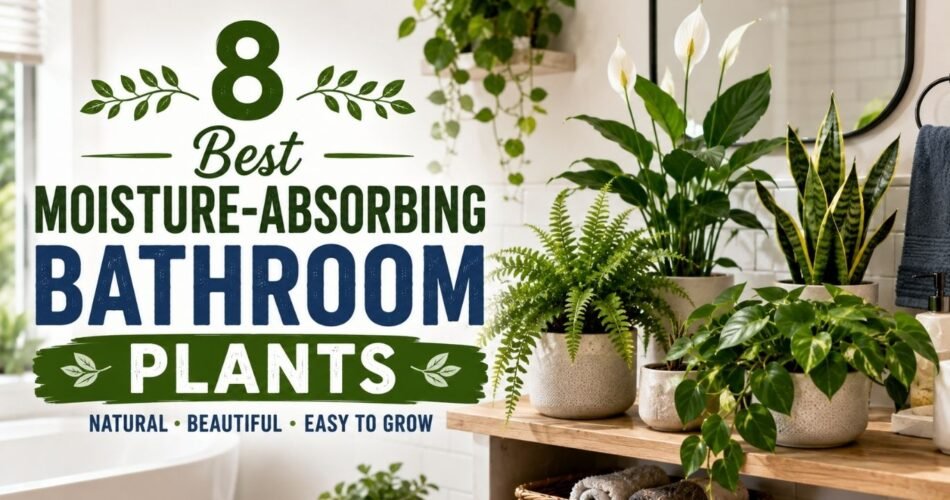
If your bathroom feels like a mini rainforest after every shower, you might as well lean into it. The good news? There are plants that genuinely love that warm, steamy environment — and they’ll reward you by looking lush, growing vigorously, and even helping clean the air while they’re at it.
I’ve been growing indoor plants for over a decade, and bathrooms are honestly one of my favorite places to experiment. The humidity that makes towels feel damp and mirrors fog up? Plants like peace lilies and Boston ferns absolutely eat that up. They don’t just survive in bathrooms — they thrive.
This guide covers the 8 best moisture-absorbing bathroom plants that are practical, beautiful, and genuinely easy to keep alive — even if you don’t have a green thumb. Whether you’re working with a windowless powder room or a sunny master bath, there’s something here for everyone.
Why Bathroom Plants Are a Genuinely Good Idea
Before we get into the list, let’s quickly talk about why plants belong in bathrooms in the first place.
Most bathrooms experience humidity spikes between 50% and 85% after showers or baths. For tropical houseplants — which make up the majority of popular indoor plants — that’s basically ideal growing conditions. Instead of misting your plants daily or running a humidifier, the bathroom does the work for you.
Here’s what bathroom plants can realistically do:
- Absorb excess moisture from the air through their leaves and roots
- Reduce condensation on walls and mirrors over time
- Improve air quality by filtering common household toxins like formaldehyde and ammonia (found in cleaning products)
- Add a calming, spa-like aesthetic to the room
- Reduce mold growth naturally by competing with mold spores for the same moisture
Now, they won’t replace your exhaust fan or fix a ventilation problem — let’s be clear about that. But as part of a healthy bathroom environment, they’re genuinely useful and beautiful additions.
What Makes a Plant Good for Bathrooms?
Not every plant belongs in a bathroom. Here’s what to look for when choosing the right humidity-loving plants:
- Humidity tolerance: Look for plants native to tropical or subtropical climates
- Low to medium light adaptability: Most bathrooms don’t get full sun
- Tolerance for temperature fluctuations: Bathrooms warm up quickly and cool down just as fast
- Resistance to root rot: Good drainage tolerance matters in humid spaces
- Compact size (unless you have a spacious bathroom)
With those factors in mind, here are the 8 best plants for humid bathrooms.
8 Best Moisture-Absorbing Bathroom Plants
1. Boston Fern (Nephrolepis exaltata)
Why It’s Perfect for Bathrooms
If there’s one plant that was practically designed for bathrooms, it’s the Boston fern. Native to tropical forests and humid swamps, this plant craves the exact conditions your bathroom naturally provides. The lush, arching fronds look stunning hanging from a shelf or sitting on a pedestal near the shower.
Boston ferns are one of the most effective humidity-loving plants for indoor spaces. They actively absorb moisture through their fronds, which helps balance excess humidity in the bathroom without making the air feel stuffy.
How It Benefits from Humidity
Boston ferns evolved in environments where humidity rarely drops below 50%. In your bathroom, humidity spikes from showers give the plant exactly what it needs. You’ll notice the fronds stay greener, fuller, and more upright in humid rooms compared to dry living rooms where they tend to turn yellow and drop leaves constantly.
Care at a Glance
- Light: Indirect light, medium preferred. Tolerates low light but grows slower. If your bathroom has no window, check out 5 Indoor Plants That Grow Without Sunlight for better alternatives.
- Watering: Keep soil consistently moist but never waterlogged. Water when the top inch of soil feels slightly dry — roughly every 3–4 days in summer, less in winter.
- Temperature: 60–75°F (15–24°C). Avoid cold drafts from windows.
- Humidity: Loves 50–80% humidity. Thrives in bathroom conditions naturally.
- Mature Size: 2–3 feet tall and wide when grown indoors.
- Pet Safety: ✅ Non-toxic to cats and dogs.
- Care Difficulty: Moderate. Needs consistent moisture and humidity.
2. Peace Lily (Spathiphyllum wallisii)
Why It’s Perfect for Bathrooms
The peace lily is one of those rare plants that combines genuine air-purifying ability with low-light tolerance and high humidity preference — three things that make it nearly ideal for bathroom living. It’s also one of the most studied indoor bathroom plants for air quality improvement.
Those glossy dark green leaves and elegant white flowers add a clean, serene look to any bathroom. It’s no coincidence that peace lilies are often found in spa environments.
How It Benefits from Humidity
Peace lilies are native to tropical rainforests of Central and South America. They use moisture in the air through their stomata (tiny pores on leaves) to support photosynthesis. In humid bathrooms, they grow more vigorously and require less frequent watering from you because they’re pulling moisture from the surrounding air.
They’re also known to help improve indoor air quality — for a deeper look at plants that do this well, the article 6 Air Purifying Plants for a Healthier Home is well worth reading.
Care at a Glance
- Light: Low to medium indirect light. One of the best plants for windowless or dim bathrooms.
- Watering: Once a week, or when leaves begin to slightly droop. Don’t overwater — this plant will tell you when it’s thirsty.
- Temperature: 65–80°F (18–27°C). Sensitive to cold.
- Humidity: 40–60% and above. Very happy in humid bathrooms.
- Mature Size: 1–4 feet tall, depending on variety.
- Pet Safety: ⚠️ Toxic to cats and dogs. Keep out of reach.
- Care Difficulty: Easy to moderate.
3. Spider Plant (Chlorophytum comosum)
Why It’s Perfect for Bathrooms
Spider plants are the definition of easy indoor plants. They adapt to almost any condition, but they particularly love the humidity and warmth of bathrooms. Those long, arching green-and-white striped leaves and cascading “babies” (plantlets) look gorgeous hanging from a bathroom shelf or trailing off a high cabinet.
They’re also one of the most studied plants for removing formaldehyde — a common compound found in bathroom cleaning sprays, new shower curtains, and adhesives.
How It Benefits from Humidity
Spider plants have thick, fleshy roots that store water, making them naturally drought-tolerant. But in humid bathrooms, those roots get a break because the plant can absorb some moisture through its leaves. The result is a plant that grows faster, produces more offshoots, and stays green year-round in bathroom conditions.
Care at a Glance
- Light: Medium to bright indirect light preferred, but adapts well to low light. Good choice for bathrooms with frosted or small windows.
- Watering: Every 1–2 weeks. Err on the side of underwatering — these plants handle dry spells better than wet feet.
- Temperature: 55–80°F (13–27°C). Tolerates a wide range.
- Humidity: 40–60%. Comfortable in most bathroom environments.
- Mature Size: 12–24 inches tall, with cascading stems up to 3 feet.
- Pet Safety: ✅ Non-toxic to cats and dogs (though mildly hallucinogenic to cats — they may chew on it).
- Care Difficulty: Very easy. Great for beginners.
4. Orchid (Phalaenopsis spp.)
Why It’s Perfect for Bathrooms
Orchids might look intimidating, but Phalaenopsis (moth orchids) — the variety you find at most garden centers — are actually quite beginner-friendly when placed in the right environment. And bathrooms happen to be that environment.
They love warmth, indirect light, and the kind of humidity spikes that come from daily showers. Those elegant blooms can last for months, making orchids one of the most rewarding best plants for bathrooms you can choose.
How It Benefits from Humidity
Orchids are epiphytes in the wild — they grow on trees rather than in soil, absorbing moisture and nutrients from the air and rain. In your bathroom, the aerial roots (those silvery-green roots you see creeping out of the pot) actively absorb moisture from the humid air. This reduces how often you need to water them, which is the number one cause of orchid death.
Care at a Glance
- Light: Bright indirect light. Best near an east or south-facing bathroom window with a sheer curtain.
- Watering: Once every 7–10 days. Water thoroughly, then let drain completely. Never let roots sit in water.
- Temperature: 65–85°F (18–29°C). Needs a 10°F night/day temperature difference to rebloom.
- Humidity: 50–70%. Thrives in humid bathrooms.
- Mature Size: 12–24 inches tall.
- Pet Safety: ✅ Non-toxic to cats and dogs.
- Care Difficulty: Moderate. Reblooming takes patience.
5. Bamboo Palm (Chamaedorea seifrizii)
Why It’s Perfect for Bathrooms
If you have a larger bathroom and want a dramatic statement plant, the bamboo palm is a showstopper. This elegant, multi-stemmed palm thrives in warm, humid conditions and handles low light better than most palms — which typically demand full sun.
It brings that tropical, resort-style energy to a bathroom that no other plant quite replicates. Place it in a corner near the shower and it’ll look like you hired an interior designer.
How It Benefits from Humidity
Native to Mexican and Central American rainforests, bamboo palms are accustomed to consistent humidity. In dry indoor air, their fronds develop brown tips quickly. In bathrooms, the natural humidity keeps fronds looking lush and green without you having to mist constantly.
Care at a Glance
- Light: Low to medium indirect light. One of the better palms for dim bathrooms.
- Watering: Every 7–10 days in summer, every 2 weeks in winter. Likes moist but well-draining soil.
- Temperature: 65–80°F (18–27°C). Hates cold drafts.
- Humidity: 50–80%. Very happy in humid bathrooms.
- Mature Size: 4–8 feet tall indoors (grows slowly).
- Pet Safety: ✅ Non-toxic to cats and dogs.
- Care Difficulty: Easy to moderate.
6. Pothos (Epipremnum aureum)
Why It’s Perfect for Bathrooms
Pothos is the ultimate beginner plant — and one of the most versatile moisture-loving houseplants you can grow. It tolerates neglect, thrives in low light, handles humidity like a champ, and grows at a pace that feels genuinely rewarding. Its trailing vines look beautiful draped over bathroom shelves or climbing a small trellis.
If you’ve ever killed a plant and given up, start with pothos. It’s practically indestructible.
How It Benefits from Humidity
Pothos is native to tropical forests of Southeast Asia and the Solomon Islands, where humidity is consistently high. In bathrooms, the elevated humidity encourages faster growth and more vibrant leaf color. The variegated varieties (like golden pothos or marble queen) show more pronounced patterns and better contrast in humid conditions.
Care at a Glance
- Light: Low to bright indirect light. Adapts well to dim conditions, though variegated varieties need more light to maintain their color patterns.
- Watering: Every 1–2 weeks. Let the top 1–2 inches of soil dry out between waterings.
- Temperature: 60–85°F (15–29°C). Very adaptable.
- Humidity: 40–70%. Does great in any bathroom.
- Mature Size: Vines can trail 6–10 feet with proper care.
- Pet Safety: ⚠️ Toxic to cats and dogs. Keep out of reach of pets.
- Care Difficulty: Very easy. Excellent for beginners and busy people.
7. ZZ Plant (Zamioculcas zamiifolia)
Why It’s Perfect for Bathrooms
The ZZ plant is the low-maintenance champion of the indoor plant world. Its waxy, dark green leaves are naturally moisture-repellent (which helps in high-humidity spaces), and its underground rhizomes store water for weeks at a time. If you travel often or just forget to water, this is your plant.
What makes it particularly suited to plants for humid bathrooms is its tolerance for the full range of bathroom conditions — including low light, inconsistent care, and fluctuating temperatures.
How It Benefits from Humidity
Interestingly, ZZ plants don’t need high humidity — they’re native to dry grasslands and forests in East Africa. But they don’t suffer from it either. In bathrooms, the humidity actually gives the rhizomes a break from drought stress, and the leaves develop a particularly glossy finish in humid conditions that looks almost lacquered.
Care at a Glance
- Light: Low to medium indirect light. One of the best plants for dark bathrooms.
- Watering: Every 2–3 weeks in summer, monthly in winter. Drought-tolerant — when in doubt, don’t water.
- Temperature: 65–75°F (18–24°C). Sensitive to extreme cold.
- Humidity: 40–70%. Tolerates both dry and humid environments.
- Mature Size: 2–4 feet tall indoors.
- Pet Safety: ⚠️ Toxic to cats and dogs. Causes mouth irritation if ingested.
- Care Difficulty: Very easy. Ideal for neglect-prone plant parents.
8. Aloe Vera (Aloe barbadensis miller)
Why It’s Perfect for Bathrooms
Aloe vera might surprise you on this list — it’s typically thought of as a desert plant. And yes, it stores water in its fleshy leaves and prefers things on the drier side. But bathrooms with good light (especially near a sunny window) are actually excellent homes for aloe, particularly because the ambient humidity prevents the dry, crispy leaf tips that aloe often develops in overly arid indoor environments.
Plus, having aloe in the bathroom is just practical — it’s right where you need it for burns, cuts, or skin irritation.
How It Benefits from Humidity
Aloe doesn’t love or need high humidity the way ferns do, but moderate bathroom humidity (around 40–60%) keeps its leaves plump and its gel concentrated. The bathroom’s warmth also encourages healthy growth, provided there’s enough light.
Care at a Glance
- Light: Bright indirect light. Needs a bathroom window — south or east-facing is ideal. Not suitable for windowless bathrooms.
- Watering: Every 2–3 weeks in summer, once a month in winter. Let soil dry completely between waterings.
- Temperature: 60–80°F (15–27°C). Avoid frost or freezing temps.
- Humidity: 30–60%. Tolerates bathroom humidity well but doesn’t require it.
- Mature Size: 1–2 feet tall and wide indoors.
- Pet Safety: ⚠️ Toxic to cats and dogs if ingested.
- Care Difficulty: Easy. Very forgiving as long as it has light.
How to Choose the Right Bathroom Plant for Your Space
Bathrooms With Windows
Lucky you — a window opens up far more plant options. If your bathroom gets morning sun through an east-facing window, you can successfully grow orchids, spider plants, and aloe vera. South-facing windows with filtered light work beautifully for peace lilies, pothos, and Boston ferns.
For brighter bathrooms, prioritize plants that appreciate bright indirect light like orchids and aloe. Just avoid placing any plant in harsh afternoon direct sun through south or west windows — it dries them out and scorches leaves.
Bathrooms Without Windows
Windowless bathrooms are tricky but not hopeless. Your best choices from this list are:
- ZZ Plant — handles almost no light remarkably well
- Pothos — survives low light, though growth slows
- Peace Lily — genuinely tolerates very low light conditions
You can also supplement with a small LED grow light placed on a timer (8–10 hours daily). These are cheap, energy-efficient, and make a surprising difference for plant health. If you want to explore more no-window plant options, this guide on 5 Indoor Plants That Grow Without Sunlight goes deeper on that topic.
Do Bathroom Plants Actually Improve Air Quality?
Short answer: yes, to a degree.
Research from NASA and subsequent independent studies has shown that plants can remove volatile organic compounds (VOCs) like formaldehyde, benzene, and trichloroethylene from indoor air. In bathrooms, common sources of VOCs include:
- Cleaning products and disinfectants
- Air fresheners and synthetic fragrances
- New shower curtains and mats
- Hair products and nail polish removers
Plants like peace lilies, spider plants, and pothos are particularly noted for their air-filtering abilities. For a comprehensive look at which plants do this most effectively throughout your home, the resource on 6 Air Purifying Plants for a Healthier Home is a helpful companion read.
Keep in mind — you’d need many plants to match the filtration power of a HEPA filter. But even a few plants contribute meaningfully to air quality while making the space feel more alive and pleasant.
How to Prevent Mold in a Plant-Filled Bathroom
One of the most common concerns people have about bathroom plants is mold. And it’s a fair one — combine soil, humidity, and warmth, and mold can sometimes become an issue. Here’s how to prevent it naturally:
1. Use well-draining potting mix
Avoid dense, water-retaining soils. Use mixes designed for indoor plants or add perlite for better drainage.
2. Never leave plants sitting in standing water
Drainage saucers should be emptied within 30 minutes of watering. Standing water breeds mold and root rot.
3. Ensure good air circulation
Run your bathroom exhaust fan during and after showers. This prevents the humidity from becoming too stagnant — yes, even humidity-loving plants need some air movement.
4. Choose terracotta pots when possible
Terracotta is porous and allows soil to breathe and dry more evenly, reducing mold risk compared to plastic pots.
5. Sprinkle cinnamon on topsoil
This is an old gardener’s trick — cinnamon has natural antifungal properties and can prevent surface mold on soil without harming plants.
6. Remove dead leaves promptly
Decaying organic matter is a mold magnet. Keep plants tidy and remove any fallen leaves quickly.
Frequently Asked Questions
Q: What is the best plant for a bathroom with no windows?
A: ZZ plants and pothos are your best options for windowless bathrooms. They tolerate very low light better than almost any other houseplant. Peace lilies are also a solid choice. You can extend their survival with a basic LED grow light on a timer.
Q: Can bathroom plants really absorb moisture from the air?
A: Yes, partially. Plants absorb some atmospheric moisture through their leaves via stomata, and their roots absorb moisture from the growing medium. While they won’t fully dehumidify your bathroom, they do contribute to moisture balance, particularly humidity-loving plants like Boston ferns and peace lilies that transpire actively.
Q: How many plants do I need in a bathroom to make a difference?
A: Even two or three well-chosen plants can improve air quality, add aesthetic value, and help with humidity balance in an average-sized bathroom. You don’t need to overload the space — a few healthy, thriving plants outperform a dozen struggling ones every time.
Q: Do bathroom plants attract bugs?
A: Not typically, if you care for them properly. Overwatering is the primary cause of fungus gnats, which lay eggs in moist soil. Mealybugs and spider mites tend to thrive in dry conditions, so bathroom humidity actually helps deter them. Good drainage and avoiding overwatering are your best defenses.
Q: How often should I fertilize bathroom plants?
A: Most bathroom plants benefit from a balanced liquid fertilizer every 4–6 weeks during the growing season (spring through summer). Reduce or stop fertilizing in fall and winter when growth naturally slows. Don’t over-fertilize — more fertilizer doesn’t mean more growth, and salt buildup in soil causes leaf tip burn.
Q: Can I keep succulents in my bathroom?
A: Most succulents — including cacti — are not ideal for bathrooms because they need bright, direct sunlight and low humidity. However, aloe vera is an exception. It tolerates moderate bathroom humidity and can thrive near a bright bathroom window, making it the one succulent genuinely worth trying in a bathroom.
Q: Is it safe to keep plants in the bathroom long-term?
A: Absolutely, provided you choose appropriate species and care for them properly. Plants are not just decorative in bathrooms — they’re functional additions that can genuinely improve the environment. The key is matching the plant to your bathroom’s specific light level and maintaining good airflow by using your exhaust fan regularly.
Final Thoughts
Bathrooms are genuinely underrated as plant habitats. The warmth, humidity, and shelter they provide are conditions that most popular tropical houseplants naturally evolved in. Rather than fighting your bathroom’s steamy environment, work with it — choose plants that love those conditions, and you’ll spend far less time caring for them while enjoying far better results.
Start simple. Pick one or two plants from this list that match your bathroom’s light level and your lifestyle. A pothos on a high shelf or a peace lily near a frosted window can completely transform how a bathroom feels — turning a purely functional room into something genuinely calming and beautiful.
The best bathroom plant is ultimately the one that makes you smile every time you see it. And with this list, you’ve got plenty of excellent options to choose from.