
If you’ve ever walked into someone’s home and spotted a massive, lush plant sitting in the corner looking absolutely stunning — and then immediately wondered how on earth they’re keeping it alive — you’re not alone. Giant indoor plants have a way of transforming a space completely. They add drama, texture, life, and even a sense of calm that no piece of furniture can replicate.
But here’s the honest truth: no plant is truly impossible to kill. What we can tell you is that some large indoor plants are remarkably tough, forgiving, and built to last for years — even decades — when you understand what they actually need. That’s exactly what this guide is about.
Whether you’re a beginner who just moved into your first apartment or a seasoned plant parent ready to level up, these 10 giant indoor plants are your best bet for making a big, beautiful statement without the constant worry. These are genuinely low-maintenance indoor plants that have earned their reputation as some of the hardiest houseplants available.
Let’s dive in.
Why Choose Large Indoor Plants?
Before we get into the list, it’s worth understanding why tall houseplants deserve a spot in your home beyond just looking incredible.
They genuinely improve your living environment. Many large houseplants actively filter toxins from indoor air. If you’re curious about which plants do this best, check out this helpful guide on 6 Air Purifying Plants for a Healthier Home — some of the plants on that list overlap with ours, which tells you something about how versatile these species are.
They’re often easier to maintain than small plants. Counterintuitively, bigger plants in larger pots tend to have more soil volume, which means more stable moisture levels, more nutrient reserves, and less dramatic reactions to missed watering days.
They anchor a room. Interior designers consistently use tall houseplants as focal points. A six-foot fiddle leaf fig or a sprawling monstera does the work of a major furniture piece — at a fraction of the cost.
Now let’s meet the plants.
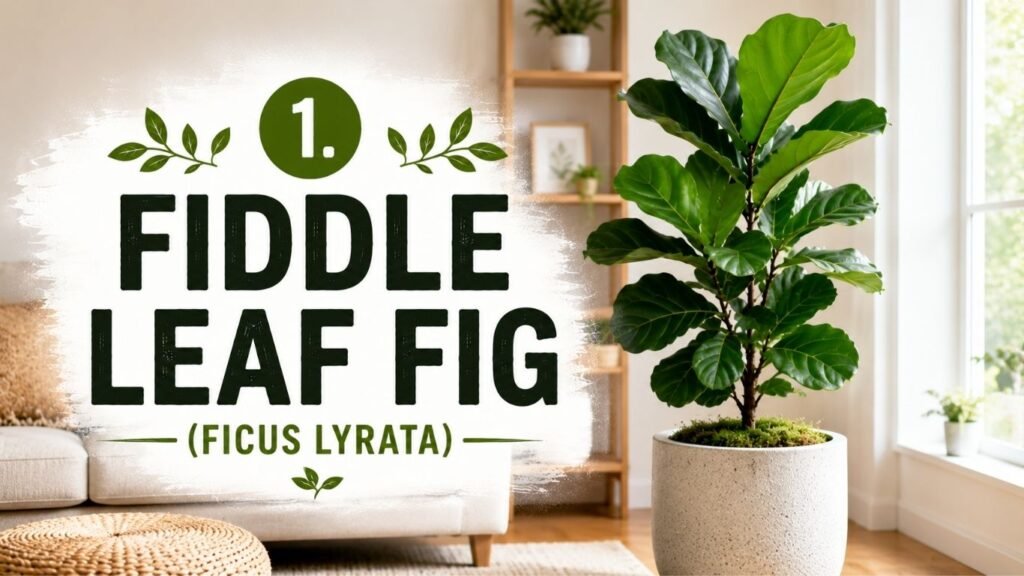
1. Fiddle Leaf Fig (Ficus lyrata)
Why It’s a Great Large Indoor Plant
The fiddle leaf fig is possibly the most photographed houseplant on the internet, and for good reason. Its enormous, violin-shaped leaves create an unmistakable silhouette that looks equally at home in a minimalist Scandinavian apartment or a warm, bohemian living room. Despite its reputation for being “fussy,” a fiddle leaf fig that’s placed in the right spot will grow confidently and reward you with years of bold, architectural beauty.
The key is understanding what it wants. Once you nail its preferred conditions, it becomes one of the most rewarding large indoor plants you’ll ever grow.
Mature Height and Spread
Indoors, fiddle leaf figs typically reach 6 to 10 feet tall, with a spread of 3 to 5 feet. In their native tropical West African habitat, they can grow to 50 feet, but your ceiling will naturally keep things in check.
Light Requirements
Bright, indirect light is the sweet spot. Place it near a south- or east-facing window where it gets several hours of filtered sunlight daily. Direct afternoon sun through glass can scorch those gorgeous leaves, while low light will slow growth dramatically and cause leaf drop.
Watering Needs
Water thoroughly when the top inch or two of soil feels dry — typically every 7 to 10 days in growing season, and less frequently in winter. Overwatering is the number one killer of fiddle leaf figs. Let the pot drain fully and never let it sit in standing water.
Best Potting Mix
Use a well-draining potting mix specifically formulated for indoor plants or a mix of regular potting soil with 20-30% perlite to improve drainage. Slightly acidic soil (pH 6.0–7.0) is ideal.
Common Problems and Solutions
- Brown, crispy leaf edges: Usually caused by low humidity or dry air from heating/cooling vents. Move it away from vents and consider a humidifier.
- Dark brown spots in the middle of leaves: Classic sign of root rot from overwatering. Let the soil dry out more between waterings and check drainage.
- Leaf drop: Often triggered by moving the plant. Fiddle leaf figs hate being relocated. Find its perfect spot and leave it there.
- Yellowing leaves: Can indicate both overwatering and underwatering — check soil moisture to diagnose.
2. Bird of Paradise (Strelitzia nicolai or Strelitzia reginae)
Why It’s a Great Large Indoor Plant
If you want a plant that makes people stop in their tracks, the bird of paradise is your answer. With its enormous, paddle-shaped leaves fanning out dramatically, it brings an unmistakable tropical energy to any room. The Strelitzia nicolai (white bird of paradise) is the giant variety most commonly grown indoors, and it’s significantly tougher than it looks.
This is a plant that genuinely thrives on a bit of neglect. Miss a watering? It’ll be fine. Skip fertilizing for a season? Still going strong. It’s one of the best examples of a long-lasting houseplant that delivers maximum impact with minimum fuss.
Mature Height and Spread
Indoors, white bird of paradise grows 5 to 8 feet tall with a spread of 3 to 5 feet. The orange bird of paradise (Strelitzia reginae) is smaller, reaching about 3 to 5 feet.
Light Requirements
Bright, direct to indirect light is ideal. This plant loves sun — a south-facing window is perfect. It can tolerate lower light, but growth will slow significantly and leaves may not develop their full, dramatic size.
Watering Needs
Water when the top 2 inches of soil feel dry, roughly every 1 to 2 weeks depending on the season and light levels. It’s more drought-tolerant than most large houseplants, so when in doubt, wait another day or two.
Best Potting Mix
Rich, well-draining potting mix works perfectly. Add perlite if your standard mix feels heavy. Repot every 2 to 3 years as roots become crowded — a slightly root-bound bird of paradise actually grows well.
Common Problems and Solutions
- Split or torn leaves: Completely normal — this happens in the wild too and is the plant’s way of adapting to wind. It’s not a sign of poor health.
- Brown leaf edges: Low humidity is usually the culprit. Mist the leaves occasionally or use a pebble tray with water beneath the pot.
- Slow growth: This plant grows naturally slowly. Don’t panic — it’s not dying, it just takes its time.
- Root bound: If you see roots growing out of drainage holes, it’s time for a pot one size larger.
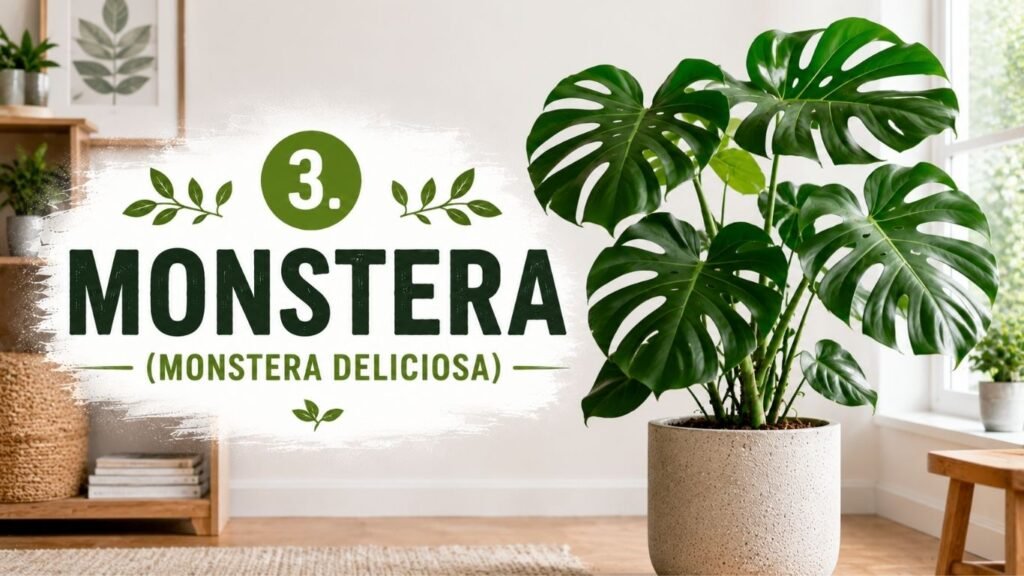
3. Monstera (Monstera deliciosa)
Why It’s a Great Large Indoor Plant
Is there a more iconic houseplant than the monstera? Those distinctive split leaves — botanically called fenestrations — have appeared on everything from wallpapers to throw pillows, and for good reason. They’re genuinely spectacular. But beyond aesthetics, the monstera is one of the most forgiving and adaptable giant houseplants you can grow.
It grows enthusiastically, communicates its needs clearly (drooping leaves = needs water; yellowing = too much water), and fills a space rapidly. Indoors, it’s a true statement plant that gets better-looking every single year.
Mature Height and Spread
Indoors, monsteras can reach 6 to 10 feet tall and spread 3 to 5 feet wide, though growth can be managed with pruning. They’re natural climbers, so providing a moss pole will encourage them to grow upright and produce larger, more deeply fenestrated leaves.
Light Requirements
Medium to bright indirect light is ideal. Monstera is one of the more adaptable plants on this list and can tolerate lower light conditions — though it will grow more slowly and produce smaller, less split leaves. Avoid prolonged direct sun, which can cause bleaching.
If you’re specifically looking for plants that handle darker conditions, take a look at 5 Indoor Plants That Grow Without Sunlight for some excellent lower-light alternatives.
Watering Needs
Water when the top 2 inches of soil feel dry — approximately every 1 to 2 weeks. Monstera is fairly drought-tolerant but prefers consistently moist (not soggy) soil. Good drainage is essential.
Best Potting Mix
A chunky, well-draining mix works beautifully: combine potting soil with perlite and orchid bark. This mimics the loose, aerated soil it would grow in naturally on the rainforest floor.
Common Problems and Solutions
- No leaf splits (fenestrations): Usually caused by insufficient light or the plant being too young. Move it to a brighter spot.
- Yellow leaves: Almost always overwatering. Let the soil dry out more between sessions.
- Leggy growth with small leaves: Needs more light. Move it closer to a window.
- Brown, crispy tips: Low humidity or underwatering. Increase misting or watering frequency.
4. Rubber Plant (Ficus elastica)
Why It’s a Great Large Indoor Plant
The rubber plant is the quiet achiever of the large indoor plant world. It doesn’t demand constant attention, it grows steadily year after year, and those thick, glossy leaves — which come in rich green, burgundy, or variegated varieties — look genuinely luxurious. Rubber plants are among the most beginner-friendly tall houseplants available, and they’ve been popular for generations for good reason.
They’re also well-documented air purifiers, which makes them a double-value choice for your home.
Mature Height and Spread
With proper care, rubber plants can reach 6 to 10 feet indoors, though slow to moderate growth means this takes several years. Spread is typically 2 to 4 feet.
Light Requirements
Bright, indirect light brings out the best coloration — especially in burgundy varieties, which need decent light to maintain their deep color. They can tolerate medium light but may become leggy and lose some vibrancy.
Watering Needs
Water every 1 to 2 weeks, allowing the soil to dry partially between waterings. In winter, you can reduce this to once every 2 to 3 weeks. Rubber plants are quite forgiving if you occasionally miss a watering.
Best Potting Mix
Well-draining, slightly acidic potting mix is ideal. Standard indoor potting soil with added perlite works well. Ensure your pot has solid drainage holes.
Common Problems and Solutions
- Dropping lower leaves: Normal as the plant matures — it will naturally lose older, lower leaves as it grows taller.
- Dusty or dull-looking leaves: Wipe leaves with a damp cloth monthly to keep them glossy and help the plant absorb light efficiently.
- Root rot: Always caused by overwatering or poor drainage. Check your watering routine and pot drainage.
- Milky sap when pruning: Completely normal — wear gloves as the sap can irritate skin. Wash hands thoroughly after handling.
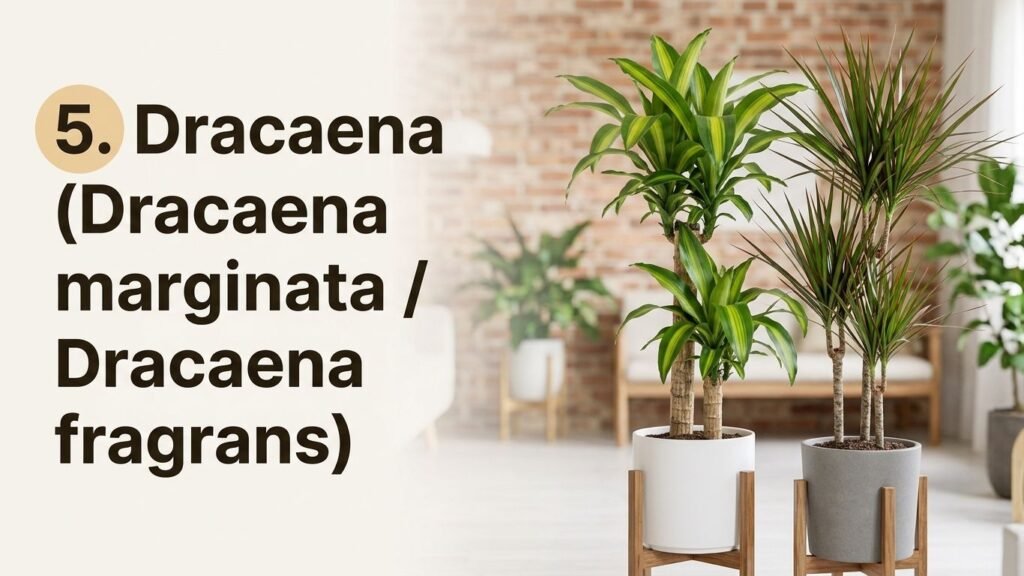
5. Dracaena (Dracaena marginata / Dracaena fragrans)
Why It’s a Great Large Indoor Plant
Dracaenas are the ultimate low-maintenance indoor plants for people who want height and drama without much effort. Their cane-like stems topped with long, arching leaves give them a distinctly tropical, even prehistoric look. They come in dozens of varieties — from the slender, red-edged Dracaena marginata to the broader-leafed Dracaena fragrans (corn plant) — so there’s a style for every taste.
One of the most important things to know: dracaenas are on NASA’s famous Clean Air Study list as effective at filtering indoor toxins. They’re both beautiful and functional.
Mature Height and Spread
Most dracaena varieties reach 4 to 8 feet indoors, with a spread of 2 to 3 feet. Larger varieties like Dracaena fragrans can push toward 10 feet given time and space.
Light Requirements
Dracaenas are adaptable across a wide range of light conditions — from bright indirect light to moderate low light. This makes them one of the best choices for offices or rooms with limited natural light. Avoid harsh direct sunlight, which will scorch the leaf tips.
Watering Needs
Water when the top half of the soil feels dry — roughly every 1 to 2 weeks. Dracaenas are particularly sensitive to fluoride in tap water, which causes brown leaf tips. Use filtered water or let tap water sit overnight before using.
Best Potting Mix
Well-draining, loamy potting mix. Avoid heavy soils that retain too much moisture. Repot every 2 years or when roots start appearing at drainage holes.
Common Problems and Solutions
- Brown leaf tips: Almost always fluoride sensitivity or dry air. Switch to filtered water and increase humidity.
- Yellow leaves: Overwatering is the most common cause. Reduce watering frequency.
- Pale, washed-out leaves: Too much direct sun. Move to a spot with bright but filtered light.
- Scale or spider mites: Wipe leaves with neem oil solution or insecticidal soap at the first sign of infestation.
6. Snake Plant (Sansevieria trifasciata / Dracaena trifasciata)
Why It’s a Great Large Indoor Plant
If there’s one plant that deserves the label “nearly indestructible,” it’s the snake plant. It handles neglect better than almost any other houseplant, tolerates low light, survives infrequent watering, and still manages to look sharp and architectural. Larger varieties like Sansevieria trifasciata ‘Laurentii’ or Sansevieria cylindrica can grow impressively tall, making them worthy of a spot on any giant indoor plant list.
They’ve been popular for decades, they’re available everywhere, and they genuinely deliver on their reputation as one of the easiest, most long-lasting houseplants around.
Mature Height and Spread
Tall varieties can reach 3 to 5 feet indoors, with a tight, upright spread of 1 to 2 feet. Their narrow profile makes them excellent for corners and tight spaces.
Light Requirements
Snake plants are exceptionally adaptable. They prefer bright indirect light for fastest growth but will survive in surprisingly low light conditions. This adaptability is a major reason why they’re recommended so consistently for beginners.
Watering Needs
This is where the snake plant really shines. Water every 2 to 6 weeks — yes, that range is correct. In summer, every 2-3 weeks is fine. In winter, once a month or even less is sufficient. Overwatering is the only real way to seriously damage a snake plant.
Best Potting Mix
Sandy, well-draining soil is essential. Use a cactus or succulent mix, or create your own by combining regular potting soil with 50% coarse sand or perlite.
Common Problems and Solutions
- Soft, mushy base: Root rot from overwatering. Remove affected roots, let dry, and repot in fresh, well-draining soil.
- Wrinkling leaves: Underwatering — give it a good drink.
- Slow growth: Usually just low light. Move closer to a window.
- Falling over: Pot may be too small, or the plant needs to be divided. Repot and separate the pups.
7. Kentia Palm (Howea forsteriana)
Why It’s a Great Large Indoor Plant
If you want to bring genuine tropical elegance into your home, the Kentia palm is one of the finest choices available. Unlike many palm varieties that struggle indoors, the Kentia is remarkably well-suited to home conditions — tolerating lower light, average humidity, and even some neglect without throwing a tantrum.
It grows slowly, which means less repotting and fuss, but over time it develops into a genuinely magnificent specimen that can anchor an entire room. Victorian-era homes across Europe were famous for their Kentia palms — this plant has been a household staple for over a century.
Mature Height and Spread
Indoors, Kentia palms typically reach 6 to 10 feet, with graceful, arching fronds spreading 4 to 6 feet wide. In their native habitat (Lord Howe Island, Australia), they grow much taller, but indoor environments naturally limit their height.
Light Requirements
Bright to medium indirect light. The Kentia palm is more tolerant of lower light than most palms, making it a realistic choice for rooms that don’t get intense natural light. Avoid direct sunlight, which will scorch the frond tips.
Watering Needs
Water when the top 2 inches of soil feel dry — roughly every 1 to 2 weeks in summer, less in winter. Like dracaenas, Kentia palms are sensitive to fluoride, so filtered water is recommended for best results.
Best Potting Mix
Well-draining palm mix or a combination of potting soil, perlite, and coarse sand. Good drainage is critical — palms do not like sitting in wet soil.
Common Problems and Solutions
- Brown frond tips: Very common and often caused by dry air, fluoride in water, or underwatering. Not a cause for alarm if the rest of the plant looks healthy.
- Yellow lower fronds: Normal aging — occasional yellow lower fronds can simply be removed.
- Spider mites: More common in dry environments. Increase humidity and treat with neem oil if spotted.
- Very slow growth: Completely normal for Kentia palms — be patient. Slow growth is not a sign of poor health.
8. Elephant Ear (Alocasia spp. and Colocasia spp.)
Why It’s a Great Large Indoor Plant
Few plants command attention quite like an elephant ear. Those enormous, heart-shaped leaves — some varieties growing leaves over two feet long — create an instant tropical atmosphere that no other houseplant quite matches. While elephant ears do require a bit more attention than some others on this list, they reward that care with dramatic, fast-paced growth that’s genuinely exciting to watch.
Varieties like Alocasia macrorrhiza (giant taro) and Alocasia odora are particularly well-suited to indoor life, growing large without becoming unmanageable.
Mature Height and Spread
Indoor elephant ears typically reach 4 to 8 feet, with a dramatic leaf spread of 3 to 5 feet. Under ideal conditions, some large-leaf varieties can push beyond this.
Light Requirements
Bright, indirect light is best. Elephant ears need decent light to support their large leaf production — insufficient light results in smaller leaves, slower growth, and a generally less impressive plant. An east or west-facing window is ideal.
Watering Needs
Keep soil consistently moist but never waterlogged. During the growing season, this may mean watering every 3 to 5 days. In winter, reduce frequency significantly and allow the soil to dry out slightly between waterings.
Best Potting Mix
Rich, well-draining potting mix with good moisture retention — a blend of potting soil, perlite, and compost works well. These plants are heavy feeders, so regular fertilization during the growing season will keep them looking their best.
Common Problems and Solutions
- Drooping leaves: Usually underwatering or a sudden temperature drop. Check soil moisture and move away from cold drafts.
- Yellow leaves: Often overwatering, especially in winter when growth slows. Reduce watering frequency.
- Leaf curling: Low humidity is the most common cause. These tropical plants appreciate higher humidity — consider a humidifier.
- Dormancy in winter: Some elephant ear varieties naturally go dormant in cooler months. This is normal — reduce watering and wait for spring regrowth.
9. ZZ Plant (Zamioculcas zamiifolia)
Why It’s a Great Large Indoor Plant
The ZZ plant has earned its place among the most recommended hardy houseplants through pure, consistent performance. It’s genuinely one of the toughest plants you can grow indoors. Its waxy, dark green leaves are stunning, its upright stems create elegant height, and its tolerance for neglect is almost legendary among experienced plant growers.
While it’s not the absolute tallest plant on this list, mature ZZ plants are genuinely impressive in size — especially when multiple stems fill a large pot — and they live for many, many years with minimal care.
Mature Height and Spread
ZZ plants typically reach 2 to 4 feet tall indoors, with a spread of 2 to 3 feet. In a large pot with multiple stems, a mature ZZ plant creates a substantial, impressive presence.
Light Requirements
ZZ plants thrive in low to bright indirect light. They’re one of the genuinely best low-light large indoor plants available — making them perfect for offices, hallways, or rooms with limited windows.
Watering Needs
Water every 2 to 3 weeks during the growing season, and even less frequently in winter. ZZ plants store water in their rhizomes (underground potato-like structures), which gives them impressive drought tolerance. When in doubt, wait longer before watering.
Best Potting Mix
Well-draining potting mix with added perlite or coarse sand. The rhizomes are prone to rot in consistently wet soil, so drainage is the top priority.
Common Problems and Solutions
- Yellowing leaves: The most common issue, almost always caused by overwatering. Dramatically reduce watering frequency.
- Slow growth: Normal for ZZ plants — they’re naturally slow growers. Bright indirect light and regular fertilization during summer will encourage faster growth.
- Leggy growth: Insufficient light. Move closer to a light source.
- Dust buildup on leaves: Wipe with a damp cloth to keep leaves clean and glossy. This also helps the plant photosynthesize more efficiently.
10. Parlor Palm (Chamaedorea elegans)
Why It’s a Great Large Indoor Plant
The parlor palm has been a beloved indoor plant since the Victorian era — and that 150-year track record tells you everything you need to know about its reliability. It’s one of the most graceful, elegant, and genuinely easy-care palms available for indoor growing, and it’s significantly more adaptable to typical home conditions than most other palm varieties.
It grows slowly, stays manageable, and never demands much from you. For beginners looking for a large, impressive plant that won’t punish mistakes, the parlor palm is an excellent starting point.
Mature Height and Spread
Parlor palms reach 4 to 6 feet indoors over many years, with a graceful frond spread of 2 to 3 feet. Growth is slow, so patience is rewarded with a beautifully refined specimen.
Light Requirements
Low to bright indirect light. Parlor palms are one of the most light-flexible plants on this entire list — they can genuinely thrive in lower-light conditions that would cause many other plants to struggle. Keep them away from intense, direct sunlight.
Watering Needs
Water when the top inch of soil feels dry — roughly every 1 to 2 weeks. Parlor palms prefer consistently moist soil but will tolerate occasional drying out much better than they handle being waterlogged.
Best Potting Mix
Well-draining, peat-based or coconut coir-based potting mix works well. Ensure your pot has drainage holes and doesn’t allow water to pool at the bottom.
Common Problems and Solutions
- Brown leaf tips: Extremely common and usually harmless — caused by dry air, fluoride in water, or occasionally underwatering. Trim brown tips with clean scissors for a neater appearance.
- Spider mites: The parlor palm’s most common pest. Treat promptly with neem oil or insecticidal soap and increase humidity.
- Yellowing lower fronds: Normal aging — remove them cleanly at the base.
- No new growth: Usually a light issue in combination with winter dormancy. Move to a brighter spot and resume regular fertilization in spring.
Common Mistakes to Avoid
Even experienced plant parents make these errors. Learning from them now will save you frustration and plants later.
Overwatering is the number one killer of houseplants. More plants die from too much water than from too little. Always check soil moisture before watering — stick your finger two inches into the soil. If it still feels damp, wait.
Placing plants in spots that look good but don’t provide enough light. A beautiful dark corner might seem like a perfect spot for a dramatic plant, but many large houseplants simply won’t survive there long-term. Light is non-negotiable — it’s literally how plants make food.
Repotting too frequently or into pots that are too large. Let your plant tell you when it needs repotting (roots emerging from drainage holes, water running straight through without being absorbed). Don’t repot simply because you think it’s time.
Using the wrong soil. Standard garden soil is almost never appropriate for indoor plants. It compacts easily in pots, drains poorly, and often introduces pests. Always use quality indoor potting mix, adjusted with perlite or bark as needed for each plant type.
Ignoring pests until they’re a major problem. Check the undersides of leaves regularly — this is where pests like spider mites, scale, and mealybugs like to hide. Catching an infestation early makes treatment much simpler.
Placing plants near heating or air conditioning vents. The hot or cold drafts from these vents stress plants significantly — causing brown tips, leaf drop, and slowed growth. Position plants at least a few feet away from any vents.
Expert Recommendations
Based on years of indoor plant growing experience and widely agreed-upon wisdom in the gardening community, here are some expert-level tips that separate thriving plants from merely surviving ones:
Invest in a moisture meter. They cost around $10–$15 and take the guesswork completely out of watering. It’s one of the most useful tools any indoor plant grower can own.
Spring is the ideal time to repot, divide, and fertilize. As daylight hours increase and temperatures rise, plants enter their natural growth phase — they recover from root disturbance more quickly and have energy to put toward new growth.
Acclimate new plants slowly. When you bring a new large plant home from a store or nursery, it was likely growing in very specific conditions. Give it a few weeks to adjust before judging whether it’s thriving. Some leaf drop or stress during this period is completely normal.
Don’t be afraid to prune. Regular pruning of damaged or dead leaves not only keeps plants looking sharp but also redirects the plant’s energy toward healthy new growth. For woody plants like the rubber plant or fiddle leaf fig, pruning encourages a bushier, more branching growth habit.
Group complementary plants together. This naturally increases the ambient humidity around all of them, creates a visually cohesive indoor garden, and makes caring for multiple plants more efficient since they often share similar light positions.
If you enjoy working with plants more broadly — including growing your own herbs and edibles — the principle of learning your plants’ specific needs applies just as much to outdoor growing. Resources like How to Grow Beautiful Marigolds in Pots demonstrate how understanding a plant’s natural preferences always leads to better results, whether indoors or out.
And once you’ve mastered growing herbs alongside your indoor plants, knowing how to use them fully makes the whole endeavor even more rewarding — How to Dry and Preserve Herbs is an excellent resource for getting the most from any herb-growing efforts.
Conclusion
Growing large, hardy indoor plants is one of the most rewarding things you can do for your home environment. Whether you’re drawn to the dramatic architecture of a fiddle leaf fig, the tropical exuberance of a bird of paradise, or the quiet, reliable resilience of a snake plant, there’s a giant houseplant on this list for every space, every lifestyle, and every level of experience.
The plants we’ve covered in this guide aren’t magic — they need the right light, appropriate watering, good soil, and occasional attention. But what makes them special is that when you give them what they need, they genuinely thrive for years. Some of these plants — well-cared-for rubber plants, ZZ plants, and parlor palms in particular — can become multigenerational, passed down through families as living heirlooms.
Start with one or two plants that match your current light conditions and lifestyle. Learn to read what they’re telling you. Build your confidence slowly. Before long, you’ll have a home full of magnificent, long-lasting houseplants that genuinely make every room better.
Your green thumb is closer than you think — these plants will help you find it.