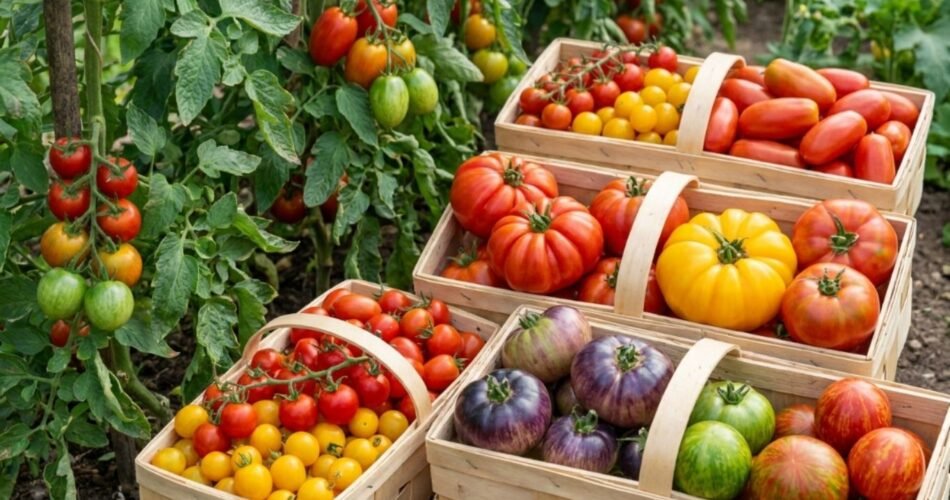
If you’ve ever bitten into a sun-warmed tomato straight from your own garden, you already know why so many home gardeners treat tomatoes as their crown jewel crop. But not all tomato plants are created equal — some will reward you with a modest handful of fruit while others will bury you in tomatoes faster than you can use them.
Choosing the right variety makes all the difference between a frustrating season and an overwhelmingly productive one.
This guide covers the 10 high-yield tomato varieties for home gardens that consistently outperform the rest — whether you’re working with a sprawling raised bed, a small backyard plot, or a sunny apartment balcony. I’ve grown most of these myself and researched the rest thoroughly, so you’ll get honest, practical information you can actually use.
Let’s dig in.
Why Variety Selection Matters More Than You Think
Most new gardeners buy whatever tomato seedlings look healthiest at the garden center without thinking much about whether that variety suits their space, climate, or cooking habits. That’s a missed opportunity.
The best tomato for your neighbor might be completely wrong for you. A paste tomato won’t satisfy someone who loves thick slices on a BLT. A massive beefsteak plant won’t thrive in a 5-gallon container on a balcony. And a variety with no disease resistance will collapse by midsummer if you live somewhere hot and humid.
Before we get into the individual varieties, here’s a quick way to think about your options:
- Determinate tomatoes grow to a set height (usually 3–4 feet), produce most of their fruit at once, then slow down. Great for canning and small spaces.
- Indeterminate tomatoes keep growing and producing fruit all season until frost kills them. Better for a steady harvest throughout summer.
- Hybrid varieties are bred for disease resistance, uniformity, and high yields.
- Heirloom varieties are open-pollinated, often with superior flavor, but may be more disease-prone.
If you’re just starting out with vegetable gardening, it’s worth checking out 11 Fast-Growing Vegetables for Beginner Gardeners to understand which crops fit best alongside tomatoes in a beginner-friendly garden plan.
10 High-Yield Tomato Varieties for Home Gardens
1. Celebrity Tomato
Why It’s a High-Yield Variety
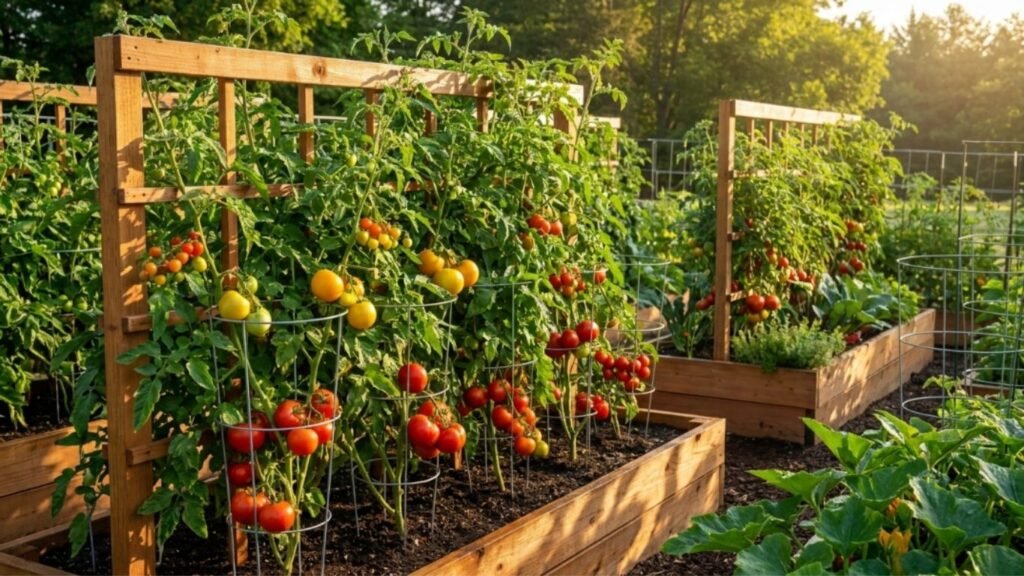
Celebrity has earned its name. This is one of the most dependable tomato varieties you can plant, offering consistently heavy harvests even in challenging conditions. It produces large clusters of medium-to-large fruit throughout the growing season and holds up well in heat and humidity — conditions that cause many other varieties to drop their blossoms and stall out.
Its widespread disease resistance is a huge part of why it yields so well. While other plants in the garden might be struggling with verticillium wilt or fusarium wilt, Celebrity keeps producing.
Growth Habit: Determinate (semi-determinate, actually — it grows slightly taller than most determinate types)
Days to Maturity: 70–75 days
Fruit Size and Flavor: Medium-large, typically 7–8 ounces. Round, meaty, and firm with a classic, balanced tomato flavor — not too acidic, not too sweet. Great all-around taste.
Best Culinary Uses: Fresh slicing, sandwiches, burgers, salads, light cooking, and canning
USDA Hardiness Zones: Best in zones 3–9 (grown as an annual)
Sunlight Requirements: Full sun, minimum 6–8 hours per day
Soil Type and pH: Well-draining loamy soil; pH between 6.0 and 6.8
Watering Needs: 1–2 inches per week; consistent moisture is key — irregular watering causes blossom end rot and cracking
Fertilizer Recommendations: Start with a balanced fertilizer (10-10-10) at planting, then switch to a lower-nitrogen, higher-phosphorus formula once flowering begins. Side-dress with compost monthly.
Plant Spacing: 24–36 inches apart in rows 36–48 inches apart
Container Suitability: Yes — use a minimum 5-gallon container, though a 10-gallon is better for best production
Disease Resistance: V (Verticillium Wilt), F (Fusarium Wilt), N (Nematodes), T (Tobacco Mosaic Virus), A (Alternaria), L (Septoria Leaf Spot)
Common Pests and Diseases: Aphids, tomato hornworms, early blight
Harvesting Tips: Harvest when fully red and slightly soft to the touch. Don’t refrigerate — it kills the flavor. Fruit will hold on the vine for several days once ripe.
Common Mistakes to Avoid: Planting too close together (reduces airflow and invites disease) and letting fruit stay on the vine too long, which signals the plant to slow production.
2. Sun Gold Cherry Tomato
Why It’s a High-Yield Variety
Sun Gold is genuinely one of the most productive tomato plants you’ll ever grow. A single healthy plant can produce hundreds — sometimes over a thousand — small fruits in a season. The trusses (clusters) are long and laden with fruit, and the plant keeps setting new ones right up until frost. If you want raw volume from your garden, Sun Gold delivers.
It’s also one of the sweetest tomatoes ever developed, which makes it incredibly popular with both adults and kids who might otherwise turn their nose up at garden tomatoes.
Growth Habit: Indeterminate
Days to Maturity: 57–65 days (one of the earlier producers on this list)
Fruit Size and Flavor: Small, 1-ounce orange cherry tomatoes. Exceptionally sweet with a hint of tropical fruitiness — many gardeners say it tastes almost like candy. Low acidity.
Best Culinary Uses: Fresh eating, salads, roasting, pasta, snacking straight off the vine
USDA Hardiness Zones: Zones 3–10 (annual)
Sunlight Requirements: Full sun, 6–8 hours minimum
Soil Type and pH: Fertile, well-draining soil; pH 6.0–6.8
Watering Needs: Consistent 1–1.5 inches per week. Inconsistent watering causes cherry tomatoes to split, which is the most common frustration with this variety.
Fertilizer Recommendations: Compost-enriched soil at planting, followed by a tomato-specific fertilizer (like a 5-10-10) once flowers appear. Avoid excess nitrogen — it produces leafy growth at the expense of fruit.
Plant Spacing: 24–36 inches apart; needs strong staking or caging as plants can reach 6–8 feet tall
Container Suitability: Yes — use a 15-gallon or larger container with a tall, sturdy stake or tomato cage
Disease Resistance: Good tolerance to fusarium wilt; moderate resistance to cracking compared to other cherry types
Common Pests and Diseases: Aphids, whiteflies, gray mold (Botrytis) in wet conditions
Harvesting Tips: Pick when fully golden-orange and slightly soft. They ripen so fast during peak season that you should check the plant daily. Slightly underripe is better than overripe — they continue ripening after picking.
Common Mistakes to Avoid: Not providing tall enough support (these plants get huge) and irregular watering that causes fruit to split just before harvest.
3. Early Girl Tomato
Why It’s a High-Yield Variety
Early Girl earns its spot on this list not because it produces the largest volume of fruit, but because it starts producing so early and keeps going all season. In short-season climates where other varieties barely get started, Early Girl is already delivering ripe tomatoes. That extended production window adds up to impressive total yields over the season.
It’s a favorite among gardeners in northern states and Canada for exactly this reason.
Growth Habit: Indeterminate
Days to Maturity: 50–62 days — one of the fastest large-fruited tomatoes available
Fruit Size and Flavor: Medium, 4–6 ounces. Globe-shaped with a bright, tangy, classic tomato flavor. More acidic than Celebrity — great for people who like a punchy tomato taste.
Best Culinary Uses: Slicing, sandwiches, salads, light sauces, fresh eating
USDA Hardiness Zones: Zones 3–9
Sunlight Requirements: Full sun, 6–8 hours daily
Soil Type and pH: Rich, well-drained soil with pH 6.0–6.8
Watering Needs: 1–2 inches per week; mulch heavily to maintain even moisture
Fertilizer Recommendations: Balanced starter fertilizer, then switch to a phosphorus-heavy blend at flowering. A liquid fish emulsion feed every two weeks during fruiting is beneficial.
Plant Spacing: 24–36 inches
Container Suitability: Possible in a 10-gallon+ container, but better suited to garden beds due to indeterminate growth
Disease Resistance: F (Fusarium Wilt), V (Verticillium Wilt) in the improved “Early Girl VFFNT” variety
Common Pests and Diseases: Early blight, septoria leaf spot, tomato hornworm
Harvesting Tips: Don’t wait for perfection — pick when the color is fully developed and the fruit gives slightly under gentle pressure. This encourages the plant to set more fruit.
Common Mistakes to Avoid: Skipping staking or caging (these plants need strong support) and failing to prune suckers, which can reduce fruit size and airflow.
4. Roma Tomato (VF)
Why It’s a High-Yield Variety
Roma is the classic paste tomato, and when it produces, it produces in earnest. A mature Roma plant in good conditions can give you 50–200 fruits over its productive period. Since it’s determinate, most of that fruit ripens within a 2–3 week window — which is actually ideal if you’re planning to make big batches of sauce or salsa.
The meaty, low-moisture flesh and thick walls make Roma ideal for cooking. Slice it open and you’ll see very few seeds and minimal gel — perfect for reducing into a thick, rich sauce.
Growth Habit: Determinate
Days to Maturity: 75–80 days
Fruit Size and Flavor: Medium, 2–3 ounces, classic plum/egg shape. Mild, slightly sweet flavor with low moisture content — not ideal for fresh eating but excellent for cooking.
Best Culinary Uses: Tomato sauce, paste, salsa, canning, drying, roasting
USDA Hardiness Zones: Zones 3–9
Sunlight Requirements: Full sun, 6–8 hours
Soil Type and pH: Well-draining fertile soil; pH 6.0–6.8
Watering Needs: 1–1.5 inches per week. Less prone to cracking than fresh market varieties, but still needs consistent moisture.
Fertilizer Recommendations: Balanced fertilizer at transplanting; shift to a low-nitrogen, high-potassium formula once fruit sets. Side-dress with a balanced granular fertilizer midseason.
Plant Spacing: 24–36 inches
Container Suitability: Yes — 5-gallon minimum. One of the better determinate options for containers.
Disease Resistance: V (Verticillium), F (Fusarium Wilt)
Common Pests and Diseases: Blossom end rot (common if watering is inconsistent), early blight, aphids
Harvesting Tips: Harvest when fully red all the way through. For sauce making, pick at peak ripeness and process within 1–2 days for best flavor. Roma freezes whole beautifully — just core them, bag them, and freeze.
Common Mistakes to Avoid: Overwatering (dilutes flavor) and skipping calcium supplementation (increases blossom end rot risk).
5. Cherokee Purple (Heirloom)
Why It’s a High-Yield Variety
Cherokee Purple won’t match hybrid varieties in sheer numbers, but it produces consistently large, beautiful fruits that command attention. For an heirloom, it’s surprisingly productive and relatively reliable. If you’re after flavor above all else and you want to be the person at the neighborhood potluck who brings the wow-worthy tomatoes, this is your variety.
Growth Habit: Indeterminate
Days to Maturity: 72–80 days
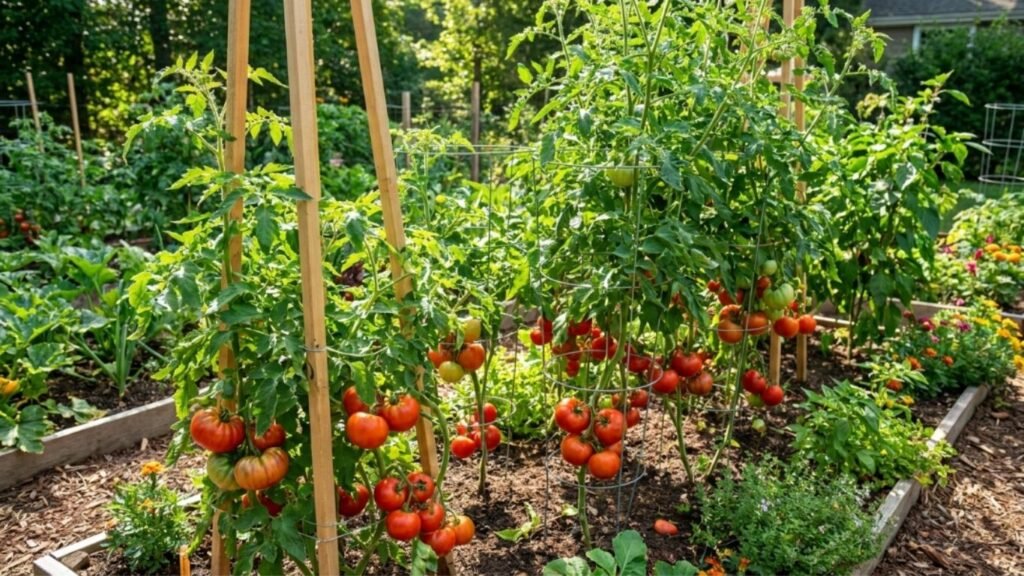
Fruit Size and Flavor: Large, 10–12 ounces. Deep reddish-purple with green shoulders. Complex, rich, smoky-sweet flavor — widely considered one of the best-tasting tomatoes in existence. Low acidity.
Best Culinary Uses: Fresh slicing, caprese salads, gourmet burgers, bruschetta, fresh eating
USDA Hardiness Zones: Zones 3–9
Sunlight Requirements: Full sun, 8 hours preferred
Soil Type and pH: Rich, fertile, well-draining; pH 6.0–6.5
Watering Needs: Deep watering 1–2 inches per week; large fruits are prone to cracking if watering is uneven
Fertilizer Recommendations: Compost-heavy soil at planting; monthly compost top-dressing; low-nitrogen liquid fertilizer at flowering
Plant Spacing: 36–48 inches — these get large
Container Suitability: Not ideal — best in raised beds or in-ground garden beds where roots can spread
Disease Resistance: Limited — heirlooms generally lack built-in hybrid disease resistance
Common Pests and Diseases: Susceptible to early blight, late blight, and cracking. Aphids and hornworms are also common.
Harvesting Tips: Harvest when shoulders begin to soften and the dark color deepens. The green shoulders will always be there — that’s normal. Don’t wait for them to turn fully red.
Common Mistakes to Avoid: Planting in poorly draining soil (causes root disease), and expecting the same disease resistance as hybrids. Cherokee Purple needs attentive care to perform at its best.
6. Juliet Tomato (Hybrid)
Why It’s a High-Yield Variety
Juliet is sometimes called the “grape tomato that thinks it’s a cherry tomato.” It produces enormous trusses — sometimes with 40+ small fruits per cluster — and it doesn’t stop producing all season. The fruits are crack-resistant, which means you won’t lose half your harvest to splitting after rain. This variety won an All-America Selections award for good reason.
It’s one of the most reliably productive plants you can grow, and the flavor is excellent for a hybrid.
Growth Habit: Indeterminate
Days to Maturity: 60–70 days
Fruit Size and Flavor: Small oblong, 1–2 ounces. Deep red, meaty flesh with a rich, sweet-tangy flavor. Lower moisture than cherry tomatoes — holds up well in cooking.
Best Culinary Uses: Salads, pasta, roasting, snacking, halved in salads, light sauces
USDA Hardiness Zones: Zones 3–10
Sunlight Requirements: Full sun, 6–8 hours
Soil Type and pH: Well-draining, fertile soil; pH 6.0–6.8
Watering Needs: 1–1.5 inches per week; crack-resistant, so slightly more forgiving of inconsistent watering than other cherry types
Fertilizer Recommendations: Compost at planting; balanced tomato fertilizer every 2–3 weeks during fruiting season
Plant Spacing: 24–36 inches; needs a tall, sturdy cage or stake — plants reach 6–8 feet
Container Suitability: Yes — 15-gallon container with a strong support structure
Disease Resistance: Good tolerance to late blight, gray mold, and cracking
Common Pests and Diseases: Aphids, whiteflies, spider mites in hot dry conditions
Harvesting Tips: Harvest entire trusses when most fruits are ripe, or pick individual fruits daily. They hold well on the vine for several days without quality loss.
Common Mistakes to Avoid: Underestimating plant size and providing inadequate support. Juliet plants loaded with fruit clusters are heavy — weak cages topple over.
7. Better Boy Tomato (Hybrid)
Why It’s a High-Yield Variety
Better Boy has been a top-selling tomato variety in America for decades, and it still holds that position for a reason — it works. It consistently produces large, beautiful fruits from midsummer through frost. One plant can yield 20–30+ pounds of tomatoes in a good season, which is impressive for a large-fruited variety.
It’s the kind of reliable, hard-working plant that belongs in every home garden.
Growth Habit: Indeterminate
Days to Maturity: 70–75 days
Fruit Size and Flavor: Large, 8–16 ounces. Round, bright red, meaty with a balanced sweet-acid flavor. Classic American tomato taste that most people grew up with.
Best Culinary Uses: Slicing, sandwiches, burgers, salads, light sauces, fresh eating
USDA Hardiness Zones: Zones 3–9
Sunlight Requirements: Full sun, 6–8 hours
Soil Type and pH: Deep, fertile, well-draining loam; pH 6.0–6.8
Watering Needs: Deep, consistent watering — 1–2 inches per week. Large fruit is highly susceptible to blossom end rot and cracking from inconsistent moisture.
Fertilizer Recommendations: Slow-release balanced fertilizer at planting; liquid tomato fertilizer (5-10-10 or similar) every 2 weeks once flowering begins; calcium supplement if blossom end rot appears.
Plant Spacing: 36–48 inches; these are large plants
Container Suitability: Not ideal — better in garden beds. If you must use a container, go with 15+ gallons.
Disease Resistance: V (Verticillium), F (Fusarium), N (Nematodes)
Common Pests and Diseases: Tomato hornworm, early blight, blossom end rot, catfacing (cosmetic issue in cool spring weather)
Harvesting Tips: Pick when fully red and slightly soft. Larger fruits need a firm twist to remove cleanly. Don’t yank — you can break stems.
Common Mistakes to Avoid: Planting without deep staking (these plants get tall and heavy with fruit) and not pruning suckers, which can cause the plant to divert energy away from fruit.
8. Sweet 100 Cherry Tomato
Why It’s a High-Yield Variety
The name “Sweet 100” refers to the clusters of 100+ tiny fruits this plant can produce per truss. Whether that number is literal or aspirational, the yields from Sweet 100 are genuinely staggering. It’s an indeterminate plant that grows vigorously all season and produces wave after wave of small, intensely sweet fruits that disappear as fast as you pick them.
If you have kids who garden with you, Sweet 100 is the variety that will hook them forever.
Growth Habit: Indeterminate
Days to Maturity: 65–70 days
Fruit Size and Flavor: Very small, 1 ounce or less. Bright red, intensely sweet with high sugar content. Slightly higher acidity than Sun Gold but still very sweet.
Best Culinary Uses: Fresh eating, salads, skewers, roasting, school lunches, snacking
USDA Hardiness Zones: Zones 3–10
Sunlight Requirements: Full sun, 6–8 hours
Soil Type and pH: Well-draining fertile soil; pH 6.0–6.8
Watering Needs: Regular 1–1.5 inches per week; susceptible to splitting in heavy rain or after dry spells followed by heavy watering
Fertilizer Recommendations: Balanced starter fertilizer; switch to low-nitrogen, higher potassium feed during fruiting. Feed every 2–3 weeks.
Plant Spacing: 24–36 inches; stake or cage at planting
Container Suitability: Yes — works well in large containers or hanging baskets. Use a 15-gallon container minimum for best production.
Disease Resistance: Good resistance to Fusarium wilt and cracking relative to older cherry varieties
Common Pests and Diseases: Aphids, whiteflies, gray mold in wet weather
Harvesting Tips: Check daily during peak season. Fruits that overripen fall off the vine and attract pests. Pick in clusters when most are ripe.
Common Mistakes to Avoid: Not harvesting frequently enough (overripe fruit on the vine invites pests and disease) and planting in too-small containers.
9. Mortgage Lifter (Heirloom)
Why It’s a High-Yield Variety
The backstory of Mortgage Lifter is one of the most beloved tales in American gardening history. A West Virginia gardener named M.C. “Radiator Charlie” Borghese spent years crossing the largest tomatoes he could find until he developed a strain that produced such massive, beautiful fruits that he sold seedlings and paid off his mortgage. The name stuck.
For an heirloom beefsteak type, Mortgage Lifter is remarkably productive. The fruits are enormous — often topping 2 pounds — and the flavor is superb.
Growth Habit: Indeterminate
Days to Maturity: 80–85 days
Fruit Size and Flavor: Very large, 1–2.5 pounds. Pink-red, meaty with very few seeds. Mild, sweet, slightly smoky flavor — considered one of the finest-flavored large tomatoes available.
Best Culinary Uses: Thick slicing, gourmet sandwiches, bruschetta, caprese, fresh eating
USDA Hardiness Zones: Zones 3–9
Sunlight Requirements: Full sun, 8 hours preferred
Soil Type and pH: Very rich, deeply amended soil; pH 6.0–6.5
Watering Needs: Deep watering 2 inches per week; large fruits demand consistent moisture to avoid blossom end rot and cracking
Fertilizer Recommendations: Very fertile soil at planting; monthly compost top-dressing; calcium-rich liquid fertilizer during fruiting. These heavy producers need generous feeding.
Plant Spacing: 36–48 inches minimum
Container Suitability: Not recommended — root system and plant size need garden bed space
Disease Resistance: Limited compared to hybrids; susceptible to early and late blight
Common Pests and Diseases: Hornworms love large-fruited tomatoes. Also watch for early blight and blossom end rot.
Harvesting Tips: Start checking at 80 days. Ripe fruits develop a slight blush-pink color and feel heavy. Support large fruits with pantyhose slings tied to cages if they’re at risk of falling.
Common Mistakes to Avoid: Underfeeding (these heavy producers need rich soil), and not providing exceptionally strong support — a fully loaded Mortgage Lifter plant is impressively heavy.
10. Patio Tomato (Bush)
Why It’s a High-Yield Variety
Patio Tomato is specifically bred for container growing, which is why it closes out this list in the most practical way possible. If you don’t have a garden bed but have a deck, balcony, or patio with at least 6 hours of sun, this compact determinate variety was made for you.
For its small size — plants max out around 2 feet tall — Patio tomato produces an impressive number of smallish, flavorful fruits. It’s the ideal solution for urban gardeners, apartment dwellers, and anyone working with limited space.
Growth Habit: Determinate (dwarf)
Days to Maturity: 65–70 days
Fruit Size and Flavor: Small-medium, 2–4 ounces. Round, bright red, moderately sweet with a pleasant balanced flavor. Not as complex as heirloom types but very good for a compact hybrid.
Best Culinary Uses: Fresh eating, salads, small batch sauce, slicing for kids’ meals
USDA Hardiness Zones: Zones 3–10
Sunlight Requirements: Full sun, 6–8 hours; can tolerate 5 hours but production suffers
Soil Type and pH: Premium potting mix (not garden soil) in containers; pH 6.0–6.8
Watering Needs: Container plants dry out fast — check moisture daily and water when the top inch of soil is dry. In summer heat, this may mean daily watering.
Fertilizer Recommendations: Slow-release container fertilizer mixed into potting mix at planting; liquid tomato fertilizer every 2 weeks during fruiting season
Plant Spacing: 18–24 inches; one plant per 5-gallon container, two per 15-gallon container
Container Suitability: Excellent — this variety was specifically developed for container growing
Disease Resistance: Moderate — better than most heirlooms
Common Pests and Diseases: Aphids, spider mites (more common in containers), blossom end rot from uneven watering
Harvesting Tips: Pick when fully red and slightly soft. Container-grown tomatoes are ready slightly earlier than in-ground plants in some climates because pots warm up faster.
Common Mistakes to Avoid: Using garden soil in containers (it compacts and drains poorly), using containers that are too small, and forgetting to fertilize regularly (container soil exhausts nutrients faster than garden soil).
Quick Tomato Growing Guide
| Factor | Recommendation |
|---|---|
| Sunlight | Minimum 6 hours full sun; 8 hours for best production |
| Watering | 1–2 inches per week; consistent moisture prevents blossom end rot and cracking |
| Soil pH | 6.0–6.8 for optimal nutrient uptake |
| Fertilizer Schedule | Balanced at transplanting → phosphorus-heavy at flowering → potassium-heavy at fruiting |
| Spacing | 18–48 inches depending on variety; wider is better for airflow |
| Pruning | Remove suckers from indeterminate varieties; keep 1–2 main stems |
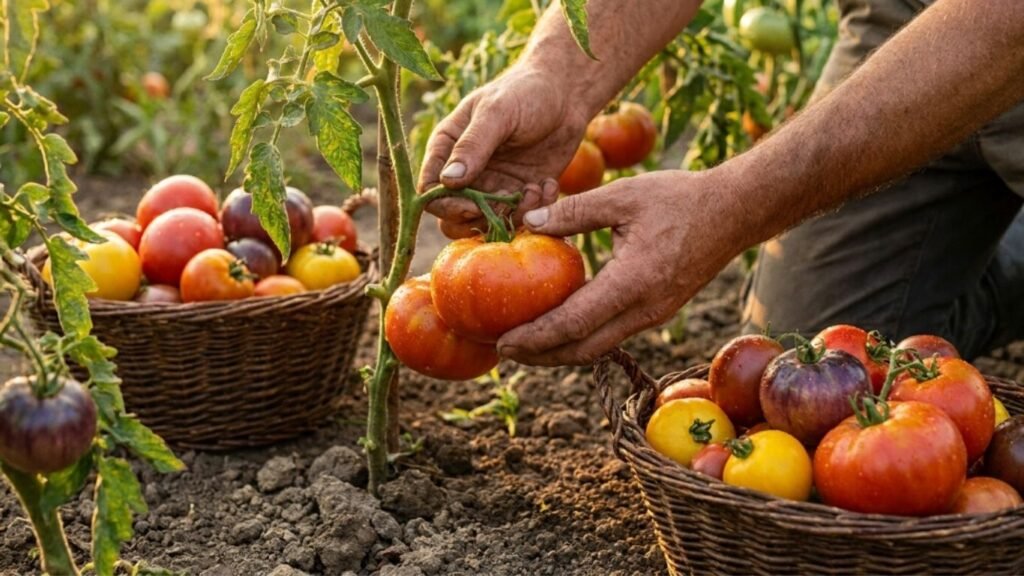
| Staking/Caging | Install at planting before roots establish; use 5–6 ft sturdy stakes for indeterminate types |
| Mulching | 2–3 inches of straw or wood chips to retain moisture and prevent soil splash-back |
| Transplant Depth | Plant deep — bury 2/3 of the stem for a stronger root system |
| First Fertilizer Feed | Wait 2 weeks after transplanting before feeding |
| Pest Monitoring | Check undersides of leaves weekly for eggs and early infestations |
| Harvest Trigger | Pick regularly to encourage the plant to set new fruit |
Expert Tips for Growing High-Yield Tomatoes
How to Choose the Right Tomato Variety
Start by answering three questions:
- What do you want to do with the tomatoes? Sauce, slicing, snacking, canning?
- How much space do you have? Raised bed, in-ground garden, or containers?
- What’s your climate like? Short season, long season, humid, dry?
Once you know the answers, matching a variety to your situation becomes much easier. New gardeners often do well starting with reliable hybrids like Celebrity or Juliet before experimenting with more demanding heirlooms.
If you’re planning a full vegetable garden around your tomatoes, this guide on What Vegetables to Plant for a Successful Garden will help you build a productive, well-planned planting schedule.
Improving Pollination for Bigger Harvests
Tomatoes are self-pollinating — they don’t need a second plant to set fruit — but they do need vibration to release pollen effectively.
In a garden, wind and bees handle most of this naturally. But in a sheltered spot or a greenhouse, you might need to help. Try:
- Gently shaking the plant or cage midday when pollen is most abundant
- Tapping individual flower clusters with your finger
- Using a small electric toothbrush near (not touching) open flowers to mimic bee vibration
Blossom drop (flowers falling off without setting fruit) usually happens when nighttime temperatures fall below 55°F or rise above 75°F, or when plants are stressed from inconsistent watering or over-fertilization with nitrogen.
Pruning Tomatoes the Right Way
Pruning is one of the most misunderstood aspects of tomato growing.
For indeterminate varieties: Remove suckers — the small shoots that grow in the “V” between the main stem and a branch — to keep the plant focused on fruit production and to improve airflow. Leave one or two main stems. Prune in the morning so cuts dry quickly.
For determinate varieties: Prune minimally or not at all. Determinate plants set their fruit on all their branches simultaneously, so heavy pruning will reduce your harvest.
The “Missouri Pruning” method works well for cherry tomatoes: instead of removing the sucker entirely, pinch out the growing tip and leave one or two leaves. This allows some sun protection for fruit while controlling plant size.
Staking and Caging for Maximum Production
Unsupported tomato plants will flop over, which increases disease risk, makes harvesting difficult, and often leads to fruit rot where it touches soil.
Options:
- Heavy-duty cages: Best for Celebrity, Roma, Patio, and other shorter varieties. Standard wire cages are often too flimsy for larger plants — look for sturdy square cages made from concrete reinforcement wire.
- Single stake: Works for smaller indeterminate varieties; tie the main stem loosely every 12 inches as it grows.
- Florida weave: String twine between stakes in rows to support multiple plants simultaneously — efficient for garden beds with several plants.
- Trellis systems: Excellent for cherry tomatoes in raised beds.
Always install support at planting time or within the first week. Trying to stake a mature plant almost always damages roots.
Companion Planting for Tomatoes
Companion planting isn’t magic, but thoughtful plant placement genuinely helps:
- Basil: Often cited as benefiting tomatoes — at minimum, it’s a great use of nearby space and deters some aphids
- Marigolds: Plant around the perimeter of your tomato bed. They deter nematodes and certain beetles.
- Carrots: Can be interplanted without competing heavily for resources
- Nasturtiums: Act as a trap crop for aphids, keeping them off your tomatoes
- Avoid planting near: Fennel (allelopathic to most vegetables), brassicas (compete for nutrients), and potatoes (share diseases like blight)
Tomatoes also grow well alongside squash as part of a diverse vegetable garden — you can learn more about growing conditions for squash in this helpful guide on How to Grow Squash in a Home Garden.
Preventing Blossom End Rot
Blossom end rot — that dark, sunken, leathery patch on the bottom of the fruit — is one of the most disheartening things to discover at harvest time. It’s caused by calcium deficiency in the fruit, but the real culprit is almost always irregular watering or root damage that prevents the plant from uptaking calcium even when it’s present in the soil.
How to prevent it:
- Water deeply and consistently — use a drip irrigation system or water timer if possible
- Mulch heavily (2–3 inches) to maintain even soil moisture
- Avoid damaging roots by cultivating shallowly near plants
- Add agricultural lime or crushed eggshells to naturally low-calcium soil at planting
- Use a calcium-magnesium spray (like Cal-Mag) as a foliar treatment if symptoms appear
Do not overuse high-nitrogen fertilizer. Lush, leafy plants with lots of green growth often show more blossom end rot because the plant prioritizes nitrogen-driven leaf production over balanced mineral uptake.
Reducing Common Diseases
The most effective disease management is prevention:
- Rotate tomatoes to a different garden bed each year (at minimum every 2–3 years)
- Water at the soil level, not overhead — wet foliage is an open invitation for fungal disease
- Remove and dispose of any diseased leaves or fruit immediately — don’t compost them
- Apply copper fungicide preventively if you live in a humid climate prone to blight
- Space plants adequately to allow good airflow through the canopy
- Clean tools between plants if you suspect disease
For most home gardeners, growing disease-resistant varieties (like Celebrity, Better Boy, or Juliet) removes the majority of disease stress before it starts.
Maximizing Harvests Throughout the Season
Pick frequently. Every time you remove a ripe tomato, you’re signaling the plant to produce more. Leaving ripe fruit on the vine for too long — especially with determinate varieties — tells the plant its work is done.
Succession plant. For a continuous harvest, start seeds indoors in waves 2–3 weeks apart, or pair an early variety like Early Girl with a later producer like Mortgage Lifter.
Feed throughout the season. Tomatoes are heavy feeders. Stop fertilizing only when you want the plant to wind down production in late fall.
At end of season: When frost is approaching, pick all green tomatoes of decent size. Wrap individually in newspaper and store at room temperature (not the refrigerator). They’ll ripen slowly over the following weeks, extending your harvest.
Building a Year-Round Garden Around Your Tomatoes
Tomatoes are a summer crop, but a truly productive home garden keeps producing in other seasons too. If you want to develop a garden that feeds your family through fall and winter as well, this guide on 9 Survival Crops That Feed You Year-Round covers the most valuable crops to plant alongside and after your tomato season ends.
Frequently Asked Questions
Q: What is the highest-yielding tomato plant for a home garden?
A: For sheer volume, cherry tomatoes like Sun Gold, Sweet 100, and Juliet produce the most individual fruits per plant — sometimes hundreds to over a thousand per season. For large-fruited varieties, Better Boy and Celebrity consistently deliver high yields of full-sized tomatoes. The “highest yield” depends on whether you’re measuring by number of fruits or total weight.
Q: How many tomato plants do I need to feed a family of four?
A: For fresh eating, 2–3 plants per person is a general guideline — so 8–12 plants for a family of four. If you also want to preserve tomatoes (sauce, salsa, canning), add several Roma or paste tomato plants to that number. Exact yield varies by variety, growing conditions, and your season length.
Q: What’s the difference between determinate and indeterminate tomatoes, and which is better?
A: Neither is universally better — they serve different purposes. Determinate tomatoes grow to a fixed height, produce fruit in a concentrated period, and require less staking. Ideal for canning, small spaces, and containers. Indeterminate tomatoes grow all season, require substantial support, and produce fruit continuously until frost. Better for fresh eating throughout the summer. Many home gardeners grow both types.
Q: Can I grow high-yield tomatoes in containers?
A: Absolutely. Varieties like Sun Gold, Juliet, Sweet 100, Patio Tomato, and Celebrity all perform well in containers of the right size. Use at minimum a 10-gallon container (15-gallon is better for indeterminate types), a premium potting mix (not garden soil), and fertilize more frequently than you would in-ground plants since container nutrients deplete faster.
Q: Why are my tomato plants flowering but not setting fruit?
A: The most common reasons are temperature extremes (blossoms drop when nights fall below 55°F or rise above 75°F), insufficient pollination (in sheltered locations or greenhouses), inconsistent watering, or excess nitrogen pushing vegetative growth over fruit development. Try gently shaking flowering stems to distribute pollen, ensure consistent watering, and switch to a lower-nitrogen fertilizer once plants are established.
Q: How do I prevent tomato plants from getting blight?
A: Choose disease-resistant varieties, water at the base of the plant (never overhead), mulch to prevent soil splash-back onto lower leaves, space plants for good airflow, remove affected leaves immediately, rotate your tomato planting location each year, and consider preventive copper fungicide applications in humid climates. Early intervention is far more effective than treating established infections.
Q: When is the best time to plant tomatoes outside?
A: Plant tomatoes outside after your last average frost date, when nighttime temperatures consistently stay above 50°F. Soil temperature should be at least 60°F — ideally 65–70°F — for optimal root growth. Planting too early stunts growth even without frost, because cold soil inhibits root function and nutrient absorption.
Key Takeaways
- Variety selection is the foundation of a productive tomato season — match the variety to your space, climate, and cooking goals.
- Indeterminate types (Sun Gold, Early Girl, Better Boy, Mortgage Lifter, Cherokee Purple, Juliet, Sweet 100) produce all season; determinate types (Celebrity, Roma, Patio) produce in a more concentrated window.
- Disease-resistant hybrids (Celebrity, Better Boy, Juliet) outperform heirlooms in challenging conditions, while heirlooms (Cherokee Purple, Mortgage Lifter) offer superior flavor.
- Consistent watering is the single most important cultural practice for preventing blossom end rot, fruit cracking, and blossom drop.
- Proper support, pruning, and spacing dramatically improve airflow, reduce disease, and increase marketable fruit.
- Frequent harvesting encourages plants to set more fruit — don’t let ripe tomatoes sit on the vine.
- Container gardeners have excellent options: Sun Gold, Juliet, Sweet 100, Roma, and Patio Tomato all thrive with the right container size and care.
- Companion planting, mulching, and crop rotation are low-effort practices that pay significant dividends in disease management and garden health.
Conclusion
There’s a reason tomatoes are the most popular home garden vegetable in the country — when they’re producing well, there’s nothing quite like it. The 10 high-yield tomato varieties for home gardens covered in this guide represent a range of flavors, sizes, growth habits, and uses. Whether you want buckets of sweet cherry tomatoes, a freezer full of sauce made from homegrown Romas, or a showstopper beefsteak that makes people stop and stare, there’s a variety here for you.
The most important decision you can make is to actually choose a variety that fits your situation rather than just grabbing whatever’s on the shelf. Match the plant to your space, support it properly, water consistently, and harvest frequently — do those four things and you’ll have more tomatoes than you know what to do with.
And honestly? That’s a very good problem to have.