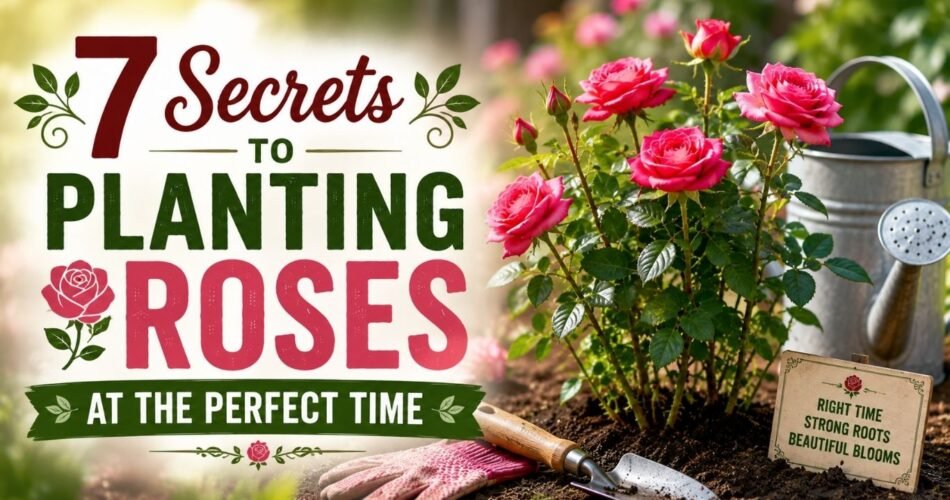
Roses are one of those plants that reward you generously when you get the timing right — and punish you with poor growth when you don’t. I’ve watched plenty of gardeners struggle with weak, spindly rose bushes, wondering what went wrong, only to discover they planted at the wrong time of year or skipped a few key steps during planting.
The truth is, growing roses isn’t complicated. But it does require a little know-how, especially around when and how to plant them. Timing isn’t just about the calendar — it’s about understanding your local climate, your soil, and what type of rose you’re working with.
In this guide, I’m going to share the 7 secrets to planting roses at the perfect time so you can set your plants up for strong root development, healthy foliage, and those stunning, full blooms you’ve been dreaming about. Whether you’re a first-time rose grower or someone who’s had mixed results in the past, these practical tips will make a real difference.
Let’s dig in.
Secret #1: Understand the Best Season to Plant Roses
The single biggest factor in rose planting success is when you put them in the ground. Get this wrong, and even the healthiest plant will struggle to establish properly.
Spring Planting: The Gold Standard
For most gardeners across the United States, early spring is the best time to plant roses. You’re aiming for that sweet spot when the ground has thawed and nighttime temperatures are consistently staying above freezing — but before the summer heat sets in.
In practical terms, that usually means:
- Zones 3–5: Late April to mid-May
- Zones 6–7: Late March to mid-April
- Zones 8–10: February to early March
- Zone 11: November through January (avoid the hottest months)
Spring planting gives roses an entire growing season to establish strong roots before they face the stress of summer heat or winter cold.
Fall Planting: A Solid Second Choice
Fall planting works well for container roses (more on that in a moment). The cooler temperatures reduce transplant stress, and the soil is still warm enough to encourage root growth before winter arrives.
Plant container roses in fall at least 6 weeks before your first expected frost. This gives roots enough time to anchor into the soil.
What About Summer?
Honestly, summer is the worst time to plant roses — especially in warmer climates. The heat stresses the plant before it has a chance to establish, leading to wilting, root stress, and sometimes complete failure. If you absolutely must plant in summer, do it on a cool, overcast day and water consistently.
Secret #2: Choose the Right Type of Rose for Your Timing
Not all roses are sold or planted the same way, and the type of rose you buy determines when you should plant it.
Bare-Root Roses: Early Spring Is Your Window
Bare-root roses are dormant plants sold without soil around their roots. They’re typically available from late winter through early spring, and that’s exactly when you should plant them.
Why bare-root roses are worth considering:
- They’re less expensive than container roses
- They establish quickly once planted correctly
- They’re easier to inspect for root health
Plant bare-root roses when the soil can be worked but before new growth emerges. If you receive them before you’re ready to plant, store them in a cool, dark place and keep the roots moist — or temporarily “heel them in” by burying the roots in damp soil or sawdust.
One important tip: Soak bare-root roses in a bucket of water for 12–24 hours before planting. This rehydrates the roots and dramatically improves establishment rates.
Container Roses: More Flexible Timing
Container roses give you more flexibility. You can plant them in spring, early summer, or fall — just avoid planting during extreme heat or right before a hard freeze.
Container roses are a great option for beginners because they’re more forgiving during the transition from pot to garden. However, they cost more than bare-root plants and need careful handling during transplanting to avoid disturbing the root ball.
Secret #3: Know Your USDA Hardiness Zone (And Actually Use It)
I can’t tell you how many gardeners skip this step. Knowing your USDA Plant Hardiness Zone isn’t just useful — it’s essential for rose planting success.
Your hardiness zone tells you the average minimum winter temperature in your area, which directly affects:
- Which rose varieties will survive in your garden
- When your last frost date typically occurs
- When to plant in spring and when to stop planting in fall
You can find your zone easily at the USDA’s official plant hardiness zone map online. Just type in your zip code.
Matching Roses to Your Zone
| USDA Zone | Avg. Winter Low | Recommended Rose Types |
|---|---|---|
| Zone 3–4 | -40°F to -20°F | Hardy shrub roses, Canadian varieties |
| Zone 5–6 | -20°F to 0°F | Hybrid teas, floribundas, shrub roses |
| Zone 7–8 | 0°F to 20°F | Most varieties thrive here |
| Zone 9–11 | 20°F to 40°F+ | Heat-tolerant varieties; avoid cold-hardy types |
If you garden in a colder zone and love hybrid tea roses, don’t give up — just be prepared to provide winter protection. If you’re in a warmer climate like Zone 9 or 10, look for varieties bred specifically for heat tolerance, such as ‘Knock Out’ roses or many antique varieties.
Secret #4: Pick the Right Planting Spot Before You Even Buy the Plant
Most gardeners pick out the rose first and then figure out where to put it. I’d encourage you to flip that process. Choose your planting location before you buy, because the wrong spot is one of the most common reasons roses underperform.
Sunlight: Non-Negotiable
Roses need at least 6 hours of direct sunlight daily, and 8 hours is even better. In shadier spots, you’ll get leggy plants, fewer blooms, and increased susceptibility to fungal diseases like black spot and powdery mildew.
Morning sun is especially valuable because it dries dew off the leaves early in the day, reducing disease pressure. If you have to choose, prioritize eastern or southeastern exposure.
Air Circulation Matters More Than You Think
Don’t cram roses up against a wall or fence with no airflow. Good air circulation helps leaves dry out quickly after rain or watering, which keeps fungal diseases at bay. Leave at least 18–24 inches between the plant and any structure.
Avoid Low-Lying Areas
Water pooling around rose roots is a death sentence for these plants. Avoid planting in low spots that collect water after rain. Roses need well-draining soil, and standing water will cause root rot within weeks.
Secret #5: Prepare Your Soil Like You Mean It
Here’s something experienced rose gardeners will tell you: the work you do before planting matters more than almost anything you do after. Roses planted in well-prepared soil consistently outperform those planted in neglected ground, even with identical post-planting care.
The Ideal Soil for Roses
Roses thrive in:
- Loamy soil with good texture (not too sandy, not too clayey)
- Slightly acidic pH between 6.0 and 6.5
- Rich organic matter — compost, aged manure, or leaf mold
- Good drainage to prevent waterlogging
How to Prepare Your Planting Site
- Dig a wide, deep hole — at least 18 inches wide and 18 inches deep (some rose growers go 24 inches in both directions for hybrid teas)
- Break up compacted soil at the bottom with a garden fork
- Mix in 2–3 generous shovelfuls of compost or well-rotted manure
- Test your soil pH — if it’s too high (alkaline), add sulfur; if too low, add garden lime
- Add a handful of bone meal to the planting hole for phosphorus, which supports root development
If you’re working with heavy clay soil, mix in perlite or coarse sand along with compost to improve drainage. Sandy soil needs extra organic matter to hold moisture and nutrients.
What Not to Add
Skip fresh manure (too nitrogen-heavy and can burn roots) and don’t overload the planting hole with synthetic fertilizer at planting time. You want to encourage root exploration — not pamper the plant so much it gets lazy.
Secret #6: Plant at the Correct Depth — This One Really Matters
Planting depth is one of those details that gardeners often overlook, but it can make or break your rose’s long-term performance. Plant too shallow or too deep, and you’ll have problems.
The Bud Union: Your Key Reference Point
Most grafted roses have a bud union — a swollen knob at the base of the canes where the top variety was grafted onto rootstock. Where you position this bud union relative to the soil surface depends on your climate.
Planting depth guidelines:
- Zones 6 and colder: Bury the bud union 1–2 inches below soil level to protect it from freezing temperatures
- Zones 7 and warmer: Plant the bud union at or slightly above soil level (about 1 inch above)
For own-root roses (not grafted), you have more flexibility — just make sure you plant at the same depth the rose was growing in its container.
Step-by-Step Planting Process
- Dig your prepared hole and mound soil in the center to create a cone
- Set the rose on the cone and drape roots naturally over it (for bare-root) or gently set the root ball (for container)
- Check the bud union height relative to the soil surface and adjust the mound height accordingly
- Backfill with your amended soil in stages, firming gently as you go
- Water thoroughly as you fill to eliminate air pockets
- Create a small watering basin around the plant by mounding soil in a ring
Secret #7: Master the First 30 Days of Care After Planting
The first month after planting is critical. Your rose is working hard underground to establish new roots, and what you do during this period sets the tone for the rest of its life.
Watering: Deep and Consistent
Newly planted roses need deep, consistent watering — not light, frequent sprinkles. Water at the base of the plant (not overhead) and aim to keep the soil consistently moist but not waterlogged.
General watering schedule:
- Week 1–2: Water every 1–2 days (depending on weather and soil type)
- Week 3–4: Begin tapering to 2–3 times per week
- Established plants: Once or twice per week, deeply
A good test: push your finger 2 inches into the soil. If it feels dry, water. If it still feels moist, wait a day.
Mulching: Don’t Skip This Step
Apply a 2–3 inch layer of organic mulch (wood chips, shredded bark, or composted leaves) around your rose after planting. Keep mulch a few inches away from the base of the canes to prevent rot.
Mulch does three important things:
- Conserves soil moisture
- Regulates soil temperature
- Suppresses weeds
This is especially helpful for newly planted roses that are still getting established and can’t handle water stress or weed competition.
Fertilizing: Patience Is a Virtue
Don’t rush to fertilize immediately after planting. Give your rose 4–6 weeks to settle in before you start feeding. During this window, the roots are focused on establishment — heavy fertilizing can actually burn tender new roots and cause more harm than good.
Once established, begin with a balanced rose fertilizer (10-10-10) or a dedicated rose formula. Feed every 4–6 weeks during the growing season, stopping about 6 weeks before your first expected frost.
Protecting Newly Planted Roses
From late frosts: If a late spring frost threatens your newly planted roses, cover them overnight with frost cloth or an old bedsheet. Remove it in the morning once temperatures rise.
From extreme heat: In very hot climates, young roses benefit from temporary afternoon shade (using shade cloth) during their first summer. This reduces transplant stress while roots establish.
From pests: Aphids love tender new growth. Check plants regularly and knock pests off with a strong stream of water or treat with insecticidal soap if needed.
Planting Roses in Containers: Expert Tips
Not everyone has garden space, and that’s perfectly fine. Roses can thrive in containers if you follow a few key rules.
- Choose the right container: Minimum 15-gallon pot for hybrid teas; 5–10 gallons for miniature roses
- Use quality potting mix: Don’t use garden soil — it compacts and drains poorly in pots. Use a premium potting mix blended with compost
- Drainage is critical: Make sure your container has multiple drainage holes
- Water more frequently: Container roses dry out faster than in-ground plants, especially in summer
- Feed regularly: Nutrients leach out of containers quickly, so fertilize every 3–4 weeks during the growing season
If you enjoy growing flowers in pots, you might also love learning how to grow dahlias in pots for stunning summer blooms — another beautiful option for container gardening that pairs wonderfully with roses in a patio or balcony setting.
How to Encourage Stronger Root Development
Strong roots are the foundation of a healthy rose. Here’s how to actively encourage deeper, more robust root systems:
- Water deeply rather than frequently — this trains roots to grow down toward moisture rather than staying shallow
- Add mycorrhizal fungi to the planting hole — these beneficial fungi form symbiotic relationships with rose roots and dramatically improve nutrient and water uptake
- Avoid overfeeding with nitrogen — too much nitrogen pushes lush top growth at the expense of root development
- Let the soil dry slightly between waterings — brief dry periods encourage roots to search deeper into the soil profile
If you’re interested in how similar principles apply to other flowering plants, the 7 hibiscus flower care tips that you need to know covers related techniques around root health and care timing for another popular garden favorite.
FAQ: Rose Planting Questions Answered
Q1: What is the best month to plant roses?
The best month depends on your climate and rose type. For most gardeners in Zones 5–7, March through April is ideal for bare-root roses. Container roses can go in from spring through early fall, but spring planting is generally most successful.
Q2: Can I plant roses in summer?
You can, but it’s not ideal. Summer planting stresses roses before they’ve established. If you must plant in summer, choose a cool, overcast day, water generously, and provide afternoon shade in hot climates. Spring or fall planting will give you better results with less effort.
Q3: How deep should I plant a rose?
For grafted roses in cold climates (Zones 3–6), bury the bud union 1–2 inches below soil level. In warmer climates (Zones 7+), plant the bud union at or just above soil level. For own-root roses, match the original container depth.
Q4: How often should I water newly planted roses?
Water deeply every 1–2 days for the first two weeks, then taper to 2–3 times per week. Always water at the base, not overhead. Check soil moisture with your finger before watering — the top 2 inches should feel dry before you water again.
Q5: What soil pH do roses prefer?
Roses grow best in slightly acidic soil with a pH between 6.0 and 6.5. Use a simple soil test kit (available at most garden centers) to check your soil. Adjust with sulfur to lower pH or garden lime to raise it.
Q6: When should I start fertilizing a newly planted rose?
Wait 4–6 weeks after planting before fertilizing. This gives the roots time to establish without the risk of fertilizer burn. Once established, feed every 4–6 weeks during the growing season.
Q7: Can I plant roses near other flowers?
Yes! Roses actually grow well with many companion plants. Good companions include lavender, salvia, catmint, and alliums — all of which help deter pests. Avoid planting roses near other plants that compete aggressively for water and nutrients, like large shrubs or trees.
Conclusion
Growing beautiful roses comes down to getting a few fundamental things right — and timing is right at the top of that list. When you plant at the right time of year, in the right location, with properly prepared soil and correct planting depth, you’re giving your roses the best possible start.
The secrets shared in this rose planting guide aren’t complicated, but they do require some attention and intention. Take the time to understand your local climate, choose the right type of rose for your situation, and commit to those first critical weeks of care after planting. Your rewards will be plants that establish quickly, resist disease better, and produce more blooms season after season.
Roses are one of the most rewarding plants you can grow. Put in the effort at the beginning, and they’ll pay you back with color and fragrance for many years to come. Happy planting!