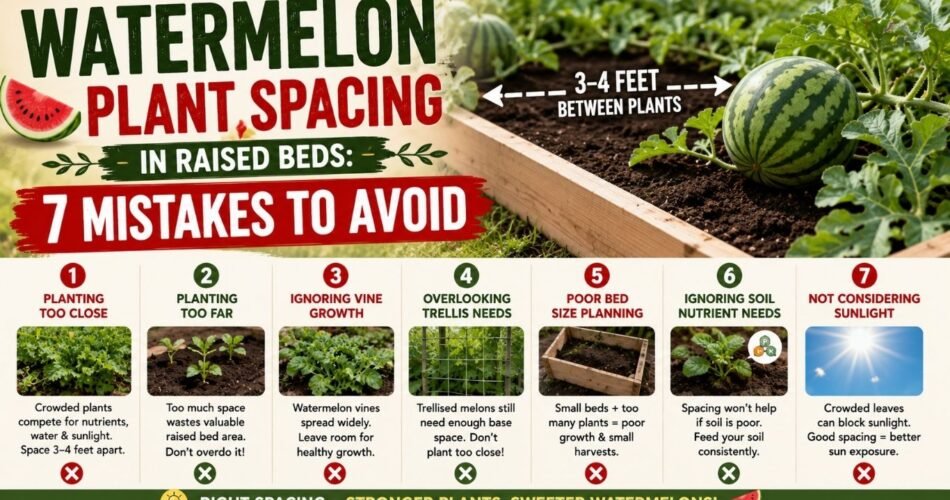
There’s something deeply satisfying about harvesting a big, juicy watermelon you grew yourself. But if you’ve ever ended up with spindly vines, small fruits, or a plant that just looked stressed all season long, overcrowding might be the culprit. Watermelons are hungry, thirsty, space-loving plants — and when you’re growing them in a raised bed, space becomes a serious consideration.
Raised beds have real advantages: better drainage, warmer soil, fewer weeds, and easier access. But they also have fixed boundaries. You can’t just let vines sprawl across the yard the way you might in an open garden. That means getting your plant spacing right from the start isn’t just helpful — it’s essential.
Proper watermelon spacing in a raised bed determines how much airflow moves between plants (which directly affects disease pressure), how much sunlight each plant receives, how well the roots can develop, and ultimately, how many fruits you’ll actually harvest. Squeeze too many plants into a small space and you’ll get competition for nutrients, poor air circulation, and frustrated vines that barely produce. Give each plant the room it needs, and you’ll be rewarded with strong growth, healthy leaves, and fruits worth bragging about.
This guide covers everything — from spacing charts and soil prep to common pests, companion planting, and the seven most common spacing mistakes gardeners make. Whether you’re a first-time grower or someone who’s tried watermelons before with mixed results, you’ll find something useful here.
Why Spacing Matters More in Raised Beds Than Open Ground
In a traditional garden row, a vining watermelon can wander. You can nudge the vines in whatever direction makes sense. In a raised bed, you’re working within a defined footprint — usually 4×8 feet or 4×4 feet — and every square inch counts.
When plants are too close together in that limited space:
- Leaves overlap, blocking sunlight from lower foliage
- Air can’t circulate freely, creating humid microclimates where fungal diseases love to grow
- Root systems compete for the same water and nutrients
- Pollinators struggle to access flowers buried under dense foliage
- Fruits develop poorly because the plant can’t support them adequately
On the flip side, proper spacing means each plant gets its own “zone” — adequate light, airflow, root space, and access to soil nutrients. This isn’t just theory. Experienced gardeners consistently report better yields from well-spaced plants, even when the overall plant count in a bed is lower.
Recommended Spacing for Watermelon Plants in Raised Beds
The general rule is this: one watermelon plant per 4 square feet minimum for bush varieties, and one plant per 6–9 square feet for vining varieties — assuming you’re training vines vertically or letting them sprawl outside the bed.
Here’s a more practical breakdown:
Standard Vining Watermelon Varieties
Vining types like ‘Crimson Sweet,’ ‘Sugar Baby’ (technically compact but still vigorous), and ‘Charleston Gray’ produce long vines that can stretch 6–10 feet or more. In a raised bed:
- Plant spacing: 36–48 inches between plants within the bed
- Row spacing (if applicable): 60–96 inches between rows
- Recommended bed size: At least a 4×8 raised bed for one to two plants, with vines allowed to trail over the sides
Bush or Compact Watermelon Varieties
Bush varieties like ‘Bush Sugar Baby,’ ‘Crimson Petite,’ and ‘Golden Midget’ were bred specifically for smaller spaces. Their vines stay shorter (3–4 feet), making them far more raised-bed friendly.
- Plant spacing: 24–36 inches between plants
- Recommended bed size: One plant per 4×4 bed, two plants in a 4×8 bed (with careful training)
How Raised Bed Size Affects Plant Spacing
The size of your raised bed shapes every decision you make about spacing. A 4×4 bed gives you 16 square feet to work with — enough for one compact bush variety with room to breathe. A 4×8 bed at 32 square feet offers more flexibility, especially if you plan to trellis your plants vertically.
A 4×12 or larger bed starts to feel more like a mini garden row and can comfortably handle two vining plants if the vines are directed outward from the long sides.
Depth matters too. Watermelons have extensive root systems that can go 18–24 inches deep. If your raised bed is only 6–8 inches deep, you’ll need to ensure the native soil below is loose and uncompacted. Ideally, a raised bed for watermelons should be at least 12 inches deep, with 18 inches being even better for optimal root development.
Practical Tip for Small Beds
If you only have a 4×4 bed and still want watermelons, go with a bush variety and install a small trellis. Train the vines upward, support the fruit with a sling made from old pantyhose or netting, and you can make it work. It requires more attention, but it’s absolutely doable.
Bush Varieties vs. Vining Varieties: Which Works Better in Raised Beds?
This is one of the most important decisions you’ll make before planting. Understanding the difference helps you plan spacing accurately.
Vining Watermelon Varieties
These are the classic watermelons — the ones that produce large fruits on long, sprawling vines. Varieties like ‘Crimson Sweet’ and ‘Jubilee’ are delicious, but they’re space hogs. In a raised bed, the solution is to let vines trail over the edges onto the ground or to guide them onto a trellis.
Pros of vining types in raised beds:
- Larger, more flavorful fruits
- Wide variety selection
- Vines can be directed outside the bed
Cons:
- Require much more overall space
- Harder to manage in tight areas
- Need careful monitoring to prevent chaos
Bush Watermelon Varieties
Bush types were developed with small-space gardeners in mind. They’re compact, easier to manage, and well-suited for raised beds. The fruits are typically smaller (5–15 pounds), but the flavor is comparable.
Recommended bush varieties:
- Bush Sugar Baby – 8–10 lb fruits, 3–4 foot vines
- Golden Midget – Small fruits, short season (great for cooler climates)
- Crimson Petite – Good flavor, manageable size
- Picnic – Compact vines, sweet flesh
For most raised bed growers, especially beginners, bush varieties are the smarter choice. If you’re just starting out with vegetable gardening and want manageable, rewarding crops, check out this helpful guide on 8 Easy Vegetables to Grow for Beginner Gardeners — it’ll give you a solid foundation for planning your garden alongside watermelons.
Trellising vs. Ground Growing in Raised Beds
Trellising Watermelons
Vertical growing is a game-changer for raised bed watermelons. A sturdy trellis allows you to grow vining types without letting them take over your entire yard.
What you need:
- A trellis at least 5–6 feet tall (watermelon vines are heavy)
- Strong support posts — T-posts or 2×4 lumber work well
- Horizontal wire or cattle panel for vines to grip
- Fabric slings or old mesh bags to support developing fruits
Spacing for trellised plants: You can reduce in-bed spacing slightly to 18–24 inches when trellising because the vertical orientation opens up airflow. However, don’t get too aggressive — watermelons still need adequate root space.
Important: Not all varieties do well on a trellis. Large-fruited varieties can produce melons weighing 20–30 pounds, which puts serious strain on any support system. For trellising, stick with smaller fruited varieties (under 10 pounds) for best results.
Ground Growing in Raised Beds
If you prefer to let vines sprawl, that’s fine — just plan for it. Position your raised bed where trailing vines have room to grow outward. Vines can be guided off the raised bed edge and onto landscape fabric or a path area to keep them off bare soil and away from areas where people walk.
Soil Preparation and Nutrient Requirements
Watermelons are demanding. Before planting, take time to prepare your raised bed soil properly — this effort pays dividends throughout the season.
Ideal Soil Composition
Watermelons thrive in loose, well-draining, nutrient-rich soil. A good raised bed mix for watermelons:
- 40% topsoil (good quality, not compacted)
- 30% compost (aged and well-decomposed)
- 20% perlite or coarse sand (for drainage)
- 10% coconut coir (for moisture retention)
Aim for a soil pH between 6.0 and 6.8. Slightly acidic to neutral soil gives watermelons the best access to nutrients. You can test your soil with an inexpensive pH meter or test strips from any garden center.
Key Nutrients
- Nitrogen (N): Important early in the season for leafy vine growth, but too much nitrogen later causes excessive foliage at the expense of fruit
- Phosphorus (P): Critical for root development and fruiting
- Potassium (K): Supports fruit quality, sweetness, and disease resistance
- Calcium and Magnesium: Help prevent blossom-end rot and other deficiency symptoms
Before planting, work in 2–3 inches of aged compost into the top 8–10 inches of soil. If your soil is heavy or compacted, add extra perlite to improve drainage.
Watering and Mulching Tips
Watering
Watermelons need consistent moisture — roughly 1–2 inches of water per week depending on your climate, soil type, and weather. In raised beds, the soil tends to dry out faster than in-ground gardens, so you’ll need to check moisture levels regularly.
Best practices:
- Drip irrigation is ideal — it delivers water directly to roots, keeps foliage dry (reducing fungal disease risk), and conserves water
- Water deeply and less frequently to encourage deep root growth
- Reduce watering slightly as fruits approach maturity — this concentrates sugars and improves flavor
- Avoid wetting the foliage, especially in the evening
Signs of underwatering: Wilting leaves in the morning (not just afternoon heat wilting), crispy leaf edges, and slow vine growth
Signs of overwatering: Yellowing leaves, soft stems, root rot, waterlogged soil
Mulching
Mulch is your best friend in a watermelon raised bed. A 2–3 inch layer of mulch:
- Retains soil moisture (less watering needed)
- Regulates soil temperature
- Suppresses weeds that compete for nutrients
- Prevents soil splash (which carries disease spores onto leaves)
Good mulch options for watermelon beds:
- Straw (light, easy to work with, inexpensive)
- Wood chips (excellent for moisture retention, but avoid fresh chips)
- Black plastic mulch (warms the soil early in the season — great for short-season climates)
- Shredded leaves (free if you have trees, good for soil health)
Place mulch around the base of plants but keep it a few inches away from the main stem to prevent rot.
Fertilizing Schedule for Raised Bed Watermelons
Getting your fertilizing schedule right makes a big difference in fruit size and sweetness.
Pre-Planting
Work in a balanced granular fertilizer (like 10-10-10) or a good amount of compost before transplanting. This gives plants a nutrient base to draw from during establishment.
Early Growth (Weeks 1–4)
Focus on nitrogen to encourage strong vine and leaf development. A diluted liquid fertilizer with a higher nitrogen ratio works well at this stage. Apply every 10–14 days.
Flowering Stage (Weeks 4–6)
Shift to a lower-nitrogen, higher-phosphorus formula to support flower development and fruit set. Too much nitrogen now causes the plant to keep growing vegetatively instead of focusing on producing fruit.
Fruit Development (Weeks 6–10)
Switch to a potassium-heavy fertilizer. Potassium supports fruit quality, skin toughness, and sweetness. Look for formulas marketed for fruiting vegetables or tomatoes — they typically have the right ratio.
Two Weeks Before Harvest
Cut back on fertilizing entirely. Let the plant focus its energy on ripening the fruit rather than pushing new growth.
Companion Planting for Watermelons in Raised Beds
Companion planting is one of those practical strategies that experienced gardeners rely on — not as magic, but as a thoughtful way to improve growing conditions naturally.
Good Companions for Watermelons
Nasturtiums — These cheerful flowers attract aphids away from your watermelon plants (a sacrificial trap crop), and they’re edible too. Plant them at the edges of your bed or nearby.
Marigolds — French marigolds in particular repel nematodes in the soil and may deter some flying pests. They’re easy to grow and look great around a raised bed.
Radishes — Fast-growing radishes can be interplanted early in the season. They break up soil as their roots grow and are typically harvested before watermelon vines get too large.
Herbs (dill, basil, parsley) — These attract beneficial insects that help pollinate watermelon flowers. Since watermelons need bee activity to set fruit, having pollinators drawn to your garden area is genuinely useful.
Corn — In a traditional companion planting sense, corn and watermelons can grow together in large spaces. Corn provides some wind protection. However, in a raised bed, corn takes up significant space, so this pairing works better in an open garden.
Just as companion planting benefits watermelons, it plays a similarly important role with other crops. For example, you can learn how 6 Plants That Help Lettuce Thrive by creating beneficial microclimates and pest management — similar principles apply to your watermelon setup.
Plants to Avoid Near Watermelons
- Other cucurbits (cucumbers, squash) — They compete for the same nutrients and attract the same pests and diseases, which can amplify problems quickly in a raised bed
- Fennel — Allelopathic to most vegetables, including watermelons
- Potatoes — Compete for nutrients and can harbor diseases
Signs of Overcrowding and How to Fix It
Even if you planned your spacing carefully, you might end up with overcrowding — particularly if seedlings establish vigorously or companion plants grow larger than expected. Knowing the warning signs helps you act before the problem becomes serious.
Signs Your Watermelon Plants Are Overcrowded
- Yellowing lower leaves — often the first sign; leaves not getting enough sunlight start to yellow and drop
- Leggy, stretched vines — plants reaching aggressively for light rather than growing outward and upward in a healthy pattern
- Increased pest and disease pressure — powdery mildew, aphid clusters, and fungal issues tend to appear first in crowded areas
- Poor fruit set — flowers may form but fruits don’t develop, or fruits stay small
- Slow growth overall — when roots compete, neither plant wins
How to Address Overcrowding Mid-Season
- Prune competing vines — carefully remove side shoots from the weakest plant to reduce competition without eliminating the plant entirely
- Remove the weaker plant — if two plants are too close, remove the smaller, less vigorous one. It’s painful, but the remaining plant will respond positively
- Redirect vines — gently guide vines away from each other and out of the bed over the sides or onto a trellis
- Increase airflow artificially — trim lower leaves from all plants to improve circulation at the base
Prevention is always easier than correction. Getting spacing right at planting time is far less stressful than trying to fix a crowded bed mid-season.
Climate Considerations for Raised Bed Watermelons
Watermelons are warm-season crops that need heat — both in the air and in the soil. Understanding your climate helps you time planting and manage expectations around spacing and yield.
Warm Climates (USDA Zones 8–11)
You have the most flexibility. Long growing seasons mean you can grow larger vining varieties and don’t need to rush planting. Raised beds can actually get too hot in these zones, so thick mulching is important to prevent soil temperature spikes that stress roots.
Moderate Climates (Zones 5–7)
Start seeds indoors 3–4 weeks before your last frost date. Transplant only when soil temperature reaches at least 65°F (ideally 70°F or higher). Black plastic mulch helps warm the soil faster in spring. Choose varieties with shorter days-to-maturity (75–85 days) to ensure you get a harvest before frost.
Short-Season or Cooler Climates (Zones 3–5)
This is where bush varieties and short-season types like ‘Golden Midget’ (70 days) shine. Use a cold frame or row cover early in the season, and consider raised bed covers to protect against unexpected late frosts. Every warm day counts.
Humidity Considerations
High humidity climates are prone to fungal diseases like powdery mildew and downy mildew. In these regions, spacing becomes even more critical — extra space between plants is a form of disease prevention. Also lean toward disease-resistant varieties when available.
Common Pests and Diseases in Watermelon Raised Beds
Pests to Watch For
Cucumber beetles (striped and spotted) — These are among the most damaging watermelon pests. They chew leaves, damage fruit, and can transmit bacterial wilt. Use row covers early in the season, remove them when flowers appear for pollination, and scout regularly.
Aphids — Small, soft-bodied insects that cluster on new growth and the undersides of leaves. They spread viruses and weaken plants. A strong spray of water knocks them off. Ladybugs and lacewings are their natural enemies.
Squash vine borers — More of a problem on squash, but can affect watermelons. The larvae bore into stems and cause sudden vine collapse. Check for frass (sawdust-like droppings) near the base of stems.
Spider mites — Thrive in hot, dry conditions. Look for fine webbing on leaf undersides. Increase humidity around plants and use insecticidal soap if populations get heavy.
Diseases to Watch For
Powdery mildew — White, powdery coating on leaves. Caused by poor airflow and humidity. Proper spacing is your best preventative measure. Treat with potassium bicarbonate spray or diluted neem oil at the first sign.
Fusarium wilt — A soil-borne fungal disease that causes vines to wilt and die. No effective treatment once established. Rotate crops and choose resistant varieties.
Anthracnose — Dark, water-soaked lesions on leaves and fruits. Spreads in wet conditions. Avoid overhead watering and remove infected plant material promptly.
Gummy stem blight — Causes water-soaked lesions and oozing from stems. Remove affected plant material and avoid wounding plants during routine care.
The 7 Spacing Mistakes to Avoid When Growing Watermelons in Raised Beds
Now for the practical heart of this article. These are real mistakes that gardeners — beginners and experienced alike — make regularly. Each one costs you yield, health, or both.
Mistake #1: Planting Too Many Seedlings in One Bed
This is the most common mistake, full stop. Seeds look tiny. Seedlings look tiny. It’s tempting to think you can fit more plants than you actually can. But watermelons grow fast and large. Within weeks, you’ll have a tangle of vines competing for everything.
Why it hurts: Crowded plants share limited root space, reducing water and nutrient uptake for each individual plant. Overlapping foliage creates humid conditions that invite fungal disease. Fruit production drops significantly.
How to avoid it: Plan on paper before you plant. Use the spacing chart in this article. If you’re unsure, err on the side of planting fewer and spacing wider. One healthy, well-spaced plant will almost always outproduce two cramped ones.
Mistake #2: Choosing the Wrong Variety for Your Bed Size
Planting a standard vining variety like ‘Crimson Sweet’ in a small 4×4 raised bed without a trellis plan is setting yourself up for frustration. The vines don’t know they’re in a small space — they’ll grow regardless.
Why it hurts: Without room to expand, vines crowd the bed and each other. You spend all season managing chaos instead of growing great fruit.
How to avoid it: Match your variety to your space. For small beds, choose bush varieties. For medium beds with a trellis, choose compact vining varieties. Reserve large vining types for large beds or open garden spaces where vines can roam freely.
Mistake #3: Ignoring Vertical Space (Not Using a Trellis)
Many raised bed gardeners focus entirely on horizontal space and forget that vertical growing is an option. Without a trellis, vining watermelons have no choice but to sprawl.
Why it hurts: Vines that sprawl across the bed floor shade out lower leaves, increase disease pressure from soil moisture, and reduce airflow. The bed becomes a dense, hard-to-manage mat of vegetation.
How to avoid it: Install a sturdy trellis before planting — it’s much harder to add one later. Even a simple cattle panel arched over the raised bed creates substantial vertical growing space. Use slings to support developing fruits weighing more than a few pounds.
Mistake #4: Not Accounting for Vine Training
Even when gardeners plan spacing correctly, they sometimes forget that vines need to be actively managed throughout the season. You can’t just plant and walk away.
Why it hurts: Untrained vines naturally grow toward the densest part of the bed, overlapping with neighboring plants. Fruits develop on the ground in wet conditions, increasing rot risk. The whole system becomes tangled and hard to work with.
How to avoid it: Spend 5–10 minutes each week walking your beds and guiding vines in the direction you want them to go. Secure vines to trellis supports with soft garden ties. Direct ground-growing vines off the bed edge onto landscape fabric or a path.
Mistake #5: Planting Transplants Too Deep or Too Close to the Bed Edge
Getting the actual planting position wrong is a spacing mistake that affects individual plants rather than the relationship between them. Planting too close to the bed edge means roots eventually hit the wall and become restricted. Planting too deep can rot the stem.
Why it hurts: A plant too close to the bed edge has less root space on one side, creating an imbalanced root system. In a hot summer, the roots near the wall can overheat. Too-deep planting causes stem rot at the soil line.
How to avoid it: Plant watermelon transplants at the same depth they were in their container — never deeper. Position plants at least 12 inches from the inner edge of the raised bed walls to give roots room to spread in all directions.
Mistake #6: Skipping Thinning When Direct Sowing
Some gardeners prefer to direct sow watermelon seeds and plan to thin later. The problem is, thinning doesn’t always happen — especially when you feel guilty pulling out healthy-looking seedlings.
Why it hurts: Multiple seedlings in the same spot compete intensely from their earliest days. By the time they’re established, pulling them out damages the roots of the one you want to keep.
How to avoid it: If direct sowing, plant 2–3 seeds per spot and commit to thinning down to one seedling per position once they’re a few inches tall. Cut the extras at soil level with scissors rather than pulling them — this avoids disturbing neighboring roots. This is the same kind of attentive care that applies to many vegetables — understanding what each plant needs at each stage is a key part of growing a successful garden.
Mistake #7: Not Adjusting Spacing Based on Soil Fertility
This one surprises a lot of gardeners. The “standard” spacing recommendations assume reasonably fertile soil. If your raised bed soil is nutrient-rich and well-amended, plants can handle being a little closer together. If your soil is poor, thin, or compacted, you need to space even more widely because each plant needs a larger root zone to find what it needs.
Why it hurts: Planting at the same spacing regardless of soil quality leads to nutrient deficiencies in poor soil (where plants can’t find enough food) or, in extreme cases, excessive competition even in rich soil if you overcrowded based on good soil assumptions.
How to avoid it: Before planting, assess your soil honestly. If it’s well-amended with compost and aged materials, standard spacing works. If it’s mediocre, add more compost and increase plant spacing. Never plant at minimum spacing in soil you haven’t prepared properly.
FAQ: Watermelon Spacing in Raised Beds
Q1: Can I grow watermelons in a 4×4 raised bed?
Yes, but you’ll need to choose carefully. A bush variety like ‘Bush Sugar Baby’ or ‘Golden Midget’ is your best option. Plant one per 4×4 bed and install a small trellis to manage the vines. One plant, given proper care, can still produce 2–4 fruits in a season.
Q2: How many watermelon plants can I fit in a 4×8 raised bed?
For bush varieties without a trellis: 2 plants at 36-inch spacing. For trellised bush or compact varieties: up to 3 plants. For standard vining types: 1–2 plants with vines trained over the sides of the bed. More than that and you’re creating problems for yourself.
Q3: Do watermelons need full sun in a raised bed?
Absolutely. Watermelons need at least 8 hours of direct sunlight daily. Less than that and fruit development will be poor. Position your raised bed in the sunniest location in your garden.
Q4: Is it better to start watermelons from seed or transplants in raised beds?
Either works, but transplants give you a head start. If you start from seed in the bed, plant 2–3 seeds per spot and thin to one. If buying transplants, make sure they’re not root-bound — check that roots aren’t circling heavily inside the container before planting.
Q5: How do I know if my raised bed soil is good enough for watermelons?
Good watermelon soil is loose, crumbles easily when squeezed, has a pleasant earthy smell, and drains within a few seconds of watering. If it’s compacted, smells sour, or puddles water on the surface, amend it before planting. Add compost, perlite, and aged material to improve structure and nutrition.
Q6: Can watermelons and cucumbers share a raised bed?
This isn’t recommended. Both are cucurbits, meaning they’re susceptible to the same pests and diseases. Planting them together concentrates risk and creates intense competition for resources. Give each its own raised bed if possible. For ideas on what works well together, you might also look at research on Best Companion Plants for Broccoli — similar companion planting logic applies across the vegetable garden.
Q7: Why are my watermelon plants flowering but not producing fruit?
This is usually a pollination problem. Watermelons have separate male and female flowers, and bees need to carry pollen from male to female flowers. If pollinator activity is low in your area, hand-pollinate by transferring pollen from a male flower (no bump behind the petals) to a female flower (has a small fruit-like bump behind the petals) using a small paintbrush or cotton swab. Also make sure you haven’t used insecticides that could be harming pollinators.
Key Takeaways
- One plant per 4 square feet minimum for bush varieties; significantly more space for vining types
- Match your variety to your bed size — bush types for small beds, vining types for large beds or trellised setups
- Soil depth matters — aim for at least 12 inches of loose, well-amended soil
- Mulch and drip irrigation together are the most effective combination for consistent moisture management
- Fertilize in three phases: nitrogen-focused early, phosphorus-focused at flowering, potassium-focused during fruiting
- Proper spacing is disease prevention — good airflow is your first line of defense against fungal issues
- Limit fruits to 2–3 per plant for best size and flavor
- Train vines actively throughout the season rather than letting them grow however they like
- Companion planting with nasturtiums, marigolds, and herbs supports pollination and pest management
- Harvest when the tendril nearest the fruit turns brown — this is the most reliable ripeness indicator
A Note on Garden-Wide Planning
Growing watermelons is just one piece of a garden that can work together as a whole. The companion planting principles here connect to broader ideas about plant relationships across your entire growing space. For example, the same attention to planting relationships benefits flowers like hibiscus — if you’re growing ornamentals alongside your vegetables, 7 Hibiscus Flower Care Tips That You Need to Know is worth a read to keep both edible and ornamental plants healthy side by side.
And if you ever want to do something creative with the non-edible flowers in your garden, 12 Easy Ways to Preserve Flowers at Home offers some lovely ideas for making the most of your garden’s beauty beyond the harvest.