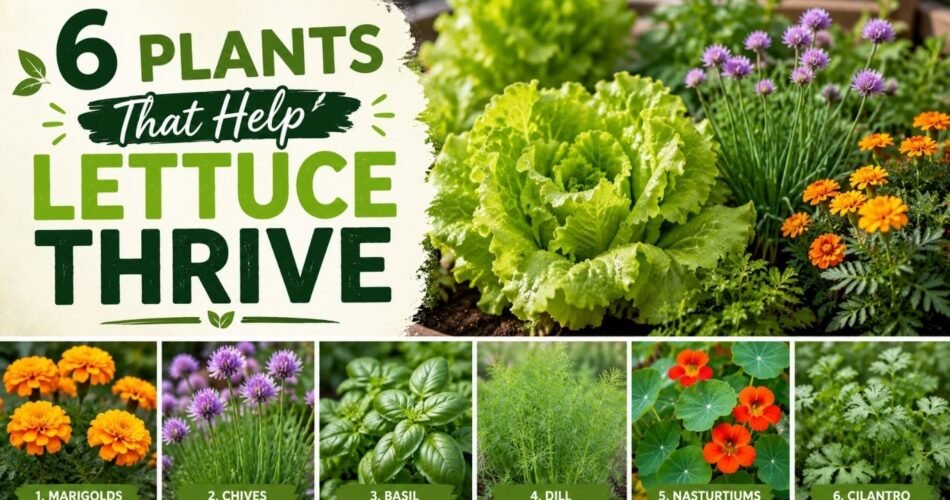
Lettuce is one of those vegetables that almost every gardener grows at some point. It’s fast, rewarding, and honestly — there’s nothing quite like cutting fresh leaves from your own garden for a salad. But if you’ve ever struggled with bitter leaves, pest damage, or poor growth, the solution might not be in a bottle of fertilizer or pesticide. It might actually be in what you plant next to your lettuce.
Companion planting is one of the oldest gardening practices around, and for good reason. Certain plants naturally support each other — one might repel pests, another might improve the soil, and some simply make better use of the available space. Lettuce, in particular, responds really well to having the right neighbors.
In this guide, I’ll walk you through six of the best companion plants for lettuce, explain exactly why they work, share practical planting tips, and point out a few mistakes people commonly make. Whether you’re gardening in raised beds, containers, or an in-ground plot, this information will help you grow healthier, tastier lettuce with less effort.
Why Companion Planting Matters for Lettuce
Before we dive into the specific plants, it’s worth understanding why lettuce benefits so much from companion planting.
Lettuce is a cool-season crop. It’s shallow-rooted, relatively fragile, and prone to bolting (going to seed prematurely) when temperatures rise. It’s also a favorite target for aphids, slugs, and other garden pests. On top of that, it needs consistent moisture and doesn’t love harsh afternoon sun in summer.
The right companion plants can address almost all of these problems naturally. Some provide shade. Some attract beneficial insects that eat pests. Some release chemicals into the soil that deter harmful bugs. And some simply grow in a different vertical layer — meaning you get more food from the same square footage.
Once you understand this, companion planting starts to feel less like folklore and more like smart garden design.
1. Radishes — The Underground Pest Fighter
Why Radishes Work So Well With Lettuce
Radishes and lettuce might seem like an odd pairing, but they’re actually one of the most effective combinations in the vegetable garden. The main reason? Radishes act as a trap crop for flea beetles.
Flea beetles are tiny, jumping insects that chew small holes in leaves. They love radish leaves even more than lettuce, so when you plant radishes nearby, the beetles flock to them instead. This keeps your lettuce leaves clean and undamaged.
Beyond pest control, radishes grow and mature incredibly fast — usually within 25 to 30 days. Their quick growth doesn’t compete with the lettuce for nutrients for long, and their taproots actually help loosen compacted soil, making it easier for lettuce roots to spread.
How to Plant Radishes With Lettuce
- Spacing: Sow radish seeds about 2 to 3 inches away from lettuce plants or in a row alongside them.
- Timing: Plant radishes at the same time as your lettuce or a week earlier so they’re ready to attract pests before the lettuce is fully established.
- Succession planting: Since radishes mature so quickly, you can sow a new batch every two weeks to keep a constant trap crop working through the season.
Common Mistakes to Avoid
Don’t let your radishes bolt and go woody without harvesting them. Once they flower, they stop attracting pests effectively and start competing for space. Pull them as soon as they’re ready and sow fresh ones.
Also, avoid planting radishes directly under lettuce — give each plant its own space to breathe and receive sunlight.
2. Carrots — The Deep-Root Companion
Why Carrots Complement Lettuce
Carrots and lettuce are a classic combination, especially in intensive growing setups. The reason they pair so well comes down to root depth. Lettuce has shallow roots that stay in the top few inches of soil, while carrots send their taproots deep — sometimes 10 to 12 inches down. This means they don’t compete for the same soil resources or water.
Because of this, you can plant them much closer together than you might think. This dense planting actually helps suppress weeds, which is a bonus you don’t want to ignore. Fewer weeds mean less competition for the water and nutrients your lettuce needs.
There’s also an aesthetic benefit — the feathery carrot tops create a delicate texture that contrasts beautifully with the broad lettuce leaves, making your garden look intentional and lush.
How to Plant Carrots With Lettuce
- Spacing: You can plant carrot seeds in between lettuce rows, about 3 inches apart from each other.
- Timing: Sow carrot seeds at the same time as lettuce. By the time the carrots are ready to harvest, your lettuce will often be done for the season, freeing up space.
- Soil prep: Make sure your soil is loose and free of stones before sowing carrots. Hard or rocky soil causes forked, stunted carrots that don’t develop properly.
Common Mistakes to Avoid
A common error is planting carrots too deep or covering the seeds with too much soil. Carrot seeds need light to germinate — just barely cover them with a thin layer of soil and keep the area consistently moist.
Also, don’t let carrot tops grow so tall and bushy that they shade out the lettuce entirely. If the tops are getting large, you may need to thin your carrot planting or move the lettuce to a spot with more sunlight.
3. Chives — The Natural Pest Repellent
Why Chives Are Powerful Allies for Lettuce
Chives are one of the most underrated companion plants in any garden. These slender, onion-flavored herbs produce a sulfur-based compound that many common garden pests simply can’t stand. Aphids — which are one of lettuce’s biggest threats — tend to avoid plants grown near chives.
Aphids cluster on the underside of lettuce leaves, suck out the sap, and can cause leaves to curl, yellow, and eventually die. An infestation can wipe out a lettuce crop in a matter of weeks. Having chives nearby doesn’t guarantee zero aphids, but it significantly reduces their numbers.
Chives also attract pollinators when they flower, producing small purple blooms that bees love. While lettuce doesn’t need pollination to grow (you eat the leaves, not the fruit), having more pollinators in your garden benefits everything around it.
How to Plant Chives With Lettuce
- Spacing: Plant chive clumps or transplants about 6 inches from the edge of your lettuce bed.
- Placement: A border of chives around a lettuce bed creates a kind of fragrant barrier that pests are reluctant to cross.
- Maintenance: Chives are perennials in most climates, so once established, they come back every year with almost no effort.
Common Mistakes to Avoid
Don’t plant chives too close to the base of your lettuce. While the fragrance repels pests, chives can compete for water if they’re crammed right against the lettuce roots. A 6-inch gap is usually enough to let both plants grow freely.
If you let chives go to seed year after year without managing them, they can self-sow aggressively and spread throughout your beds. Deadhead the flowers after they bloom if you want to keep them contained.
4. Marigolds — The Classic Garden Guardian
Why Marigolds Deserve a Spot Near Your Lettuce
Marigolds have earned their reputation as the companion plant of choice in vegetable gardens around the world. The reason is both practical and well-documented. Marigolds — particularly the French marigold (Tagetes patula) — release a compound called alpha-terthienyl from their roots. This compound is toxic to soil nematodes, which are microscopic worms that damage plant roots.
For lettuce growers, this matters because root damage from nematodes weakens plants, making them more susceptible to disease and less able to absorb water and nutrients. A few marigold plants near your lettuce can protect the root zone and support stronger overall growth.
Marigolds also attract hoverflies and predatory wasps — beneficial insects that feed on aphids and other pests that would otherwise attack your lettuce.
How to Plant Marigolds With Lettuce
- Spacing: Plant marigolds 8 to 12 inches apart in borders around your lettuce bed or intersperse them throughout.
- Variety matters: French marigolds (Tagetes patula) are more effective than African marigolds (Tagetes erecta) for nematode suppression, so choose accordingly.
- Timing: Plant marigold transplants at the same time you transplant your lettuce seedlings, or start them from seed a few weeks earlier.
Common Mistakes to Avoid
One common mistake is planting tall marigold varieties that end up shading shorter lettuce plants. Stick to dwarf or compact marigold varieties — they stay short enough to let sunlight reach the lettuce.
Also, marigolds need to be established and actively growing to provide maximum soil benefits. Planting them just a week before harvesting lettuce won’t give them enough time to make a meaningful impact on soil nematodes.
5. Tall Herbs (Dill and Basil) — Shade Providers and Pest Confusers
Why These Herbs Benefit Lettuce
Dill and basil each bring something different to the table, but both earn their place as lettuce companions.
Dill grows tall and feathery, which makes it useful as a natural sunscreen for lettuce during hot spells. When afternoon temperatures push lettuce toward bolting, a row of dill on the south or west side of your bed can cast gentle shade that keeps the soil and air around the lettuce a few degrees cooler. Dill also attracts beneficial insects like parasitic wasps, lacewings, and ladybugs — all natural predators of aphids and caterpillars.
Basil confuses and repels thrips, aphids, and whiteflies with its strong aromatic oils. Some gardeners also believe that basil improves the flavor of nearby plants, though this is harder to prove scientifically. What is clear is that the strong scent masks the smell of lettuce, making it harder for pests to locate their target.
How to Plant Dill and Basil With Lettuce
For dill:
- Plant seeds or transplants on the south or west side of your lettuce bed to maximize shade during peak afternoon heat.
- Thin dill plants to about 6 to 8 inches apart so they don’t crowd each other.
For basil:
- Plant basil transplants 8 to 10 inches away from lettuce to avoid root competition.
- Keep basil pinched back so it stays bushy and productive rather than bolting to flower.
Common Mistakes to Avoid
With dill, the biggest mistake is letting it go to seed too early in the season. Once it flowers and sets seed, it stops being as effective as a shade provider and can become weedy. Keep harvesting the fronds regularly to slow the bolting process.
With basil, avoid planting it too close to the root zone of lettuce. While basil’s aromatic benefits are real, it’s a hungry feeder and will compete for nutrients if planted too tightly.
6. Nasturtiums — The Trap Crop With Extra Benefits
Why Nasturtiums Are Worth Growing Near Lettuce
Nasturtiums are bright, cheerful, edible flowers that do double duty in the garden. Like radishes, they work as a trap crop — but the pest they attract is aphids, specifically black aphids and green peach aphids, which love nasturtium leaves even more than lettuce.
By planting nasturtiums near your lettuce, you create a kind of sacrificial planting. The aphids pile onto the nasturtiums, and once they’re concentrated in one spot, it’s easy to remove the infested leaves or spray them with a strong jet of water. Meanwhile, your lettuce stays largely aphid-free.
Nasturtiums also attract hoverflies, whose larvae are voracious aphid predators. So not only do nasturtiums draw aphids away from your lettuce, they also bring in natural predators to clean up the problem.
As a bonus, nasturtium flowers and leaves are edible — peppery and flavorful — making them a beautiful addition to the same salad you’ll make with your lettuce.
How to Plant Nasturtiums With Lettuce
- Spacing: Plant nasturtium seeds or transplants 10 to 12 inches away from lettuce plants.
- Placement: Position them on the perimeter of your lettuce bed rather than in the center, so they act as an outer barrier.
- Trailing vs. climbing varieties: For smaller beds, use compact bush nasturtium varieties. Climbing types can take over if you’re not careful.
Common Mistakes to Avoid
The most common mistake with nasturtiums is over-fertilizing them. Rich soil encourages lots of leafy growth but very few flowers. In fertile soil, nasturtiums go leafy and tall — which can shade out your lettuce and reduce their pest-attracting flowers. Plant them in average to poor soil and let them work naturally.
Also, check nasturtium plants regularly once aphids arrive. If the infestation gets too severe, simply remove and dispose of the most affected leaves or whole plants before the aphids spread.
Companion Planting Layout Tips for Lettuce Beds
Understanding which plants to grow is only half the equation. Where you place them matters just as much.
Here are a few practical layout ideas:
- Border method: Surround your lettuce bed with chives on one side, marigolds on another, and nasturtiums on a third. This creates a protective perimeter.
- Row intercropping: Alternate rows of lettuce with rows of radishes or carrots. This maximizes space and helps break up pest habitats.
- Vertical layering: Plant tall dill at the back or north end of the bed so it provides shade without blocking sunlight from reaching the lettuce during the morning hours.
- Container pairing: In pots, pair lettuce with a single chive plant or a small basil transplant. The combination works beautifully in tight spaces.
FAQ: Common Questions About Lettuce Companion Planting
1. What should you not plant next to lettuce?
Avoid planting fennel near lettuce. Fennel is famously allelopathic — it releases chemicals that inhibit the growth of many plants, including lettuce. Brassicas like cabbage and broccoli can also compete aggressively with lettuce for nutrients and are best kept in a separate bed. Strong-growing crops like corn and squash can shade lettuce out entirely.
2. Does basil really improve the flavor of lettuce?
This is a common claim in gardening circles, and while it makes for a great story, scientific evidence is limited. What basil does reliably do is repel certain pests with its volatile oils, which indirectly helps lettuce grow healthier. Healthier plants do tend to taste better, so there’s a logical connection — but it’s not as direct as gardening folklore sometimes suggests.
3. Can I plant all six companion plants together with lettuce?
Yes, but plan your layout carefully. You don’t want a crowded, chaotic bed where plants compete with each other. Use a few of these companions strategically — for example, nasturtiums and marigolds on the borders, chives as a row divider, and carrots or radishes intercropped in the lettuce rows.
4. How far should companion plants be from lettuce?
It depends on the plant. As a general rule, keep taller or more aggressive plants (like dill or nasturtiums) at least 8 to 12 inches from lettuce. Smaller plants like chives and radishes can be 4 to 6 inches away. Always make sure each plant has enough light and airflow.
5. Do these companion plants work in container gardening?
Absolutely. Containers are actually a great way to practice companion planting in a controlled way. A wide planter can hold lettuce with a border of chives or a single marigold plant. Basil and lettuce do very well together in a large pot — both enjoy similar watering schedules.
6. When is the best time to set up a companion planting scheme with lettuce?
Plan it at the same time you plan your lettuce planting. Ideally, some companions (like marigolds and nasturtiums) should be started a few weeks before you transplant your lettuce so they’re already established and working by the time your lettuce goes in the ground.
7. Can companion planting completely replace pesticides for lettuce?
It can significantly reduce your need for pesticides, but it’s not a 100% guarantee. Think of companion planting as one layer of an integrated pest management approach. Combined with regular monitoring, hand-picking pests, and proper watering and feeding, it can often eliminate the need for chemical treatments altogether.
Key Takeaways
- Radishes act as a trap crop for flea beetles, protecting lettuce leaves from damage.
- Carrots complement lettuce perfectly because they occupy a different root zone, reducing competition.
- Chives repel aphids with their sulfur compounds and attract pollinators when in bloom.
- Marigolds suppress soil nematodes and attract beneficial predatory insects.
- Dill and basil provide shade, confuse pests, and bring in natural predators.
- Nasturtiums lure aphids away from lettuce and support natural pest control through beneficial insects.
- Layout and spacing matter — a well-designed companion planting scheme works better than simply scattering plants randomly.
- Companion planting is most effective when combined with regular garden monitoring and healthy soil practices.
Final Thoughts
Growing great lettuce isn’t just about choosing the right variety or watering on schedule. The plants around your lettuce play a bigger role than most gardeners realize. Whether it’s chives quietly repelling aphids, nasturtiums drawing pests away before they reach your plants, or marigolds working underground to protect the root zone — every companion does its part.
The beauty of this approach is that it works with nature rather than against it. You’re not dousing your salad crop with chemicals. You’re building a small, functional ecosystem where plants look after each other. That’s satisfying in a way that synthetic sprays never are.
Start simple. Pick two or three companions from this list and try them this season. Pay attention to what changes — in your pest levels, in your plant growth, in the overall health of your garden. Once you see the difference, you’ll never plan a lettuce bed without thinking about what should go beside it.
Happy growing.