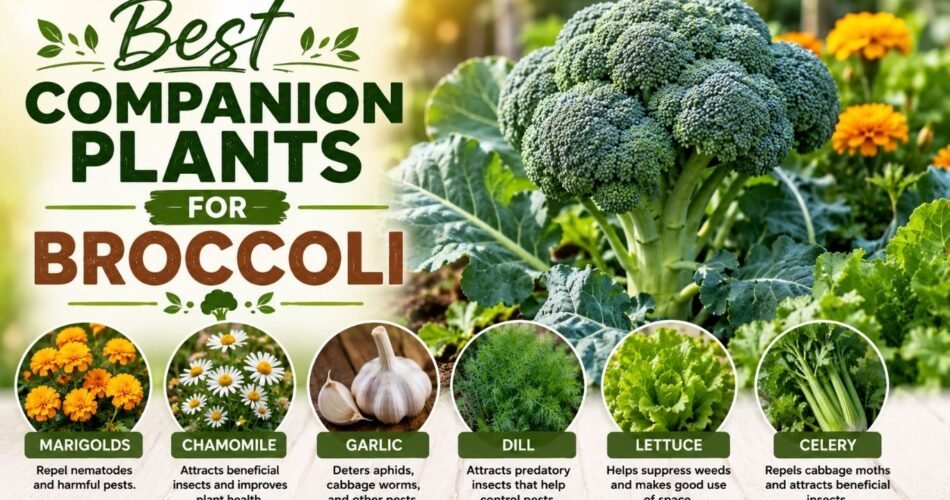
Broccoli is one of those vegetables that rewards patient gardeners. It grows slowly, demands a fair bit of nutrients, and attracts a frustrating lineup of pests — from cabbage worms to aphids. But here’s the thing: when you grow broccoli alongside the right plants, many of those challenges become a whole lot easier to manage.
Companion planting isn’t a magic trick. It’s a practical, time-tested approach that experienced gardeners use to create a healthier growing environment naturally. The right neighbors can repel insects, attract beneficial bugs, improve soil, and even help your broccoli heads develop more fully.
In this guide, I’ll walk you through the best companion plants for broccoli, explain exactly why each one works, and give you real planting advice you can actually use — not just vague suggestions. Whether you’re growing in raised beds, containers, or open ground, this information applies to you.
Why Companion Planting Matters for Broccoli
Before we get into specific plants, it’s worth understanding why broccoli benefits so much from thoughtful companion planting.
Broccoli belongs to the Brassica family — the same family as cabbage, kale, cauliflower, and Brussels sprouts. Brassicas are heavy feeders that pull lots of nitrogen and other nutrients from the soil. They’re also a favorite target of pests like:
- Cabbage loopers (Trichoplusia ni)
- Imported cabbageworms (Pieris rapae)
- Aphids
- Flea beetles
- Harlequin bugs
Good companion plants address these problems in a few key ways:
- Pest repulsion — certain scents confuse or drive away insects
- Beneficial insect attraction — flowers and herbs draw in predators like ladybugs and parasitic wasps
- Physical barriers — tall or dense plants block pest access
- Soil improvement — some plants fix nitrogen or loosen compacted soil
- Trap cropping — some companions lure pests away from your broccoli
Now let’s look at the plants that actually deliver on these benefits.
The Best Companion Plants for Broccoli
1. Dill (Anethum graveolens)
Dill is probably the most underrated companion plant in the vegetable garden. Most people grow it for cooking — but its impact on broccoli goes far beyond the kitchen.
Why It Works
Dill produces small, umbrella-shaped flower clusters called umbels. These flowers are irresistible to beneficial insects, especially:
- Parasitic wasps that lay their eggs inside cabbage worm larvae
- Lacewings that feed on aphids
- Hoverflies whose larvae consume garden pests
These insects become your natural pest control team. When they’re present in your garden, cabbage worm populations drop significantly.
Dill also produces a strong scent that can confuse pest insects trying to locate your broccoli. It doesn’t completely deter them, but it adds another layer of protection.
Planting Tips
- Sow dill seeds directly in the ground — it doesn’t transplant well
- Plant dill about 3–4 weeks after your broccoli transplants go in
- Let it flower — this is when it becomes most useful as a companion
- Avoid planting dill right next to broccoli seedlings, as it can slightly inhibit early growth
Spacing Considerations
Keep dill at least 12–18 inches away from young broccoli plants. Once both are established, they coexist well. Plant dill in clusters of 3–5 seeds spaced about 6 inches apart within each cluster.
Common Mistakes
- Pulling dill before it flowers. The flowers are the whole point for companion planting purposes.
- Planting it too close too soon. Young broccoli seedlings can be sensitive. Give them a head start first.
- Planting dill near fennel. These two herbs don’t get along — keep them separate in your garden.
2. Marigolds (Tagetes spp.)
If you’ve read anything about companion planting, you’ve seen marigolds mentioned. There’s a good reason for that — they genuinely work. And for broccoli specifically, they’re one of the top choices.
Why It Works
Marigolds, especially the French marigold (Tagetes patula) variety, produce a compound called alpha-terthienyl in their roots. This substance is toxic to nematodes — microscopic soil organisms that attack plant roots. If your soil has a nematode problem, marigolds planted alongside broccoli can significantly reduce that threat over a season.
Their strong scent also confuses flying insects. Whiteflies, aphids, and thrips all struggle to navigate through the olfactory interference that marigolds create. It’s not 100% protection, but it meaningfully reduces pest pressure.
Marigolds also attract pollinators and predatory insects like hoverflies and parasitic wasps — the same beneficial insects that help manage cabbageworms on broccoli.
Planting Tips
- Use French marigolds (Tagetes patula) rather than African marigolds for the best root chemistry
- Plant marigolds at the border of your broccoli beds and between individual plants
- Start seeds indoors 6–8 weeks before your last frost date, or buy transplants
- Let them bloom continuously — deadheading keeps them flowering longer
Spacing Considerations
Plant marigolds 6–12 inches apart depending on the variety. For border planting around a broccoli bed, a single row of French marigolds spaced 8 inches apart works well.
Common Mistakes
- Using the wrong type. African marigolds are beautiful but don’t offer the same pest protection as French marigolds.
- Pulling them up at the end of the season before their roots have had time to work. For nematode control, marigolds need to grow through a full season.
- Letting them get too tall and shading broccoli. Choose compact varieties if space is tight.
3. Nasturtiums (Tropaeolum majus)
Nasturtiums are a cheerful addition to any vegetable garden, and they pull their weight as a companion plant in a very specific way: they act as a trap crop.
Why It Works
Aphids absolutely love nasturtiums. And when aphids have something they love nearby, they tend to stay on it rather than spreading to other plants. This is exactly what you want — keep the aphids on the nasturtiums and away from your broccoli.
Once aphids cluster on nasturtiums, they also attract predators. Ladybugs, lacewings, and parasitic wasps will show up to feed on those aphids. You’ve essentially set up a beneficial insect buffet right next to your broccoli.
Some gardeners also report that the peppery scent of nasturtium leaves deters aphids and whiteflies from surrounding plants — though the trap crop function is the more reliable benefit.
As a bonus, nasturtium flowers and leaves are edible, making them a lovely addition to salads.
Planting Tips
- Direct sow nasturtium seeds about 1 inch deep, ½ inch apart
- They prefer lean soil — don’t add compost or fertilizer where you plant them
- Rich soil causes them to produce more leaves than flowers
- Plant them in sunny spots around the perimeter of your broccoli area
Spacing Considerations
Space nasturtiums 10–12 inches apart. They spread as they grow, so give them room. Plant them a foot or two away from broccoli plants so they act as a perimeter border.
Common Mistakes
- Fertilizing nasturtiums. This causes leafy growth at the expense of flowers, reducing their effectiveness as a trap crop.
- Removing infested nasturtiums too quickly. If you see aphids on them, that’s them working as intended. Only remove heavily infested plants when they start dying back.
- Planting them in shade. Nasturtiums need full sun to bloom well.
4. Celery (Apium graveolens)
Celery and broccoli make excellent garden neighbors for a few practical reasons that many gardeners don’t know about.
Why It Works
Celery produces a distinctive, strong scent that many pest insects find disorienting. Specifically, it’s been observed to deter the white cabbage butterfly (Pieris rapae) — the adult butterfly that lays the eggs that become those destructive cabbageworms.
By planting celery near broccoli, you’re essentially creating an aromatic barrier that makes it harder for female butterflies to identify and land on your broccoli plants.
Additionally, celery and broccoli have complementary root depths. Broccoli roots tend to spread wide and moderately deep. Celery roots are shallower and more fibrous. They don’t compete heavily for the same soil zones.
Planting Tips
- Celery is a slow grower — start it indoors 10–12 weeks before transplanting outside
- It needs consistent moisture and doesn’t like to dry out
- Transplant celery around the same time you transplant broccoli starts
- Celery likes fertile, well-draining soil with plenty of compost
Spacing Considerations
Space celery plants 12 inches apart. Plant them 12–18 inches from broccoli plants. They work best when interplanted in alternating rows.
Common Mistakes
- Letting celery dry out. It needs consistent watering — more than broccoli does.
- Planting it too late. By the time celery is mature enough to produce a strong scent, the pest pressure might already be high.
- Planting celery in nutrient-poor soil. It’s also a heavy feeder, so make sure your soil is well-amended before planting either crop.
5. Herbs: Rosemary, Thyme, and Sage
These three herbs are often lumped together because they share similar growth habits and companion planting benefits. Used together or individually, they form a powerful pest-repelling perimeter around broccoli.
Why It Works
Rosemary (Salvia rosmarinus) produces volatile oils — specifically camphor and 1,8-cineole — that strongly repel aphids, cabbage moths, and bean beetles. Its woody, aromatic presence near brassicas has been used in traditional cottage gardens for generations.
Thyme (Thymus vulgaris) is particularly effective against cabbage loopers and whiteflies. Research has shown that thyme extracts can deter feeding by various Lepidoptera larvae — the caterpillars that devastate broccoli leaves.
Sage (Salvia officinalis) produces strong aromatic compounds that confuse and deter cabbage moths and carrot flies. It also attracts pollinators when in flower.
All three herbs are perennials in most climates, meaning once established, they’ll come back year after year and continue providing protection to whatever brassicas you plant nearby.
Planting Tips
- Plant as transplants rather than from seed — they establish faster
- Place them around the perimeter of broccoli beds or between broccoli rows
- Don’t let them grow too large and shade out the broccoli
- Prune regularly to keep them compact and producing fresh aromatic growth
Spacing Considerations
- Rosemary: 18–24 inches from broccoli (it can get large)
- Thyme: 12 inches from broccoli plants
- Sage: 18 inches from broccoli, as it spreads
Common Mistakes
- Overwatering herbs. Rosemary, thyme, and sage prefer drier conditions than broccoli. Plant them at the edges of beds where they get good drainage.
- Letting them bolt and shade out broccoli. Regular trimming keeps them manageable.
- Planting only one herb. Using all three together creates a multi-layered aromatic barrier that’s far more effective than any single herb alone.
6. Bush Beans (Phaseolus vulgaris)
Bush beans and broccoli might seem like an odd pairing, but they work surprisingly well together — particularly when it comes to soil health.
Why It Works
Beans are nitrogen fixers. They form a symbiotic relationship with Rhizobium bacteria in the soil, pulling atmospheric nitrogen into root nodules where it becomes available to surrounding plants. Since broccoli is a heavy nitrogen feeder, having beans nearby means a steady supply of one of the nutrients broccoli craves most.
Bush beans specifically (as opposed to pole beans) work better here because they stay low, don’t shade out broccoli, and don’t compete as aggressively for water and light.
Bush beans also provide light ground cover that helps retain moisture in the soil — a benefit for broccoli, which doesn’t like to dry out completely.
Planting Tips
- Direct sow bush beans 1 inch deep, 3 inches apart in rows
- Plant them after your broccoli transplants are established
- Don’t plant too close — beans will crowd broccoli if space is tight
- Avoid adding nitrogen fertilizer where beans are growing — they make their own
Spacing Considerations
Leave at least 12–18 inches between bean rows and broccoli plants. Plant beans on the south or east side of broccoli to avoid shading.
Common Mistakes
- Using pole beans instead of bush beans. Pole beans grow tall and can shade out broccoli significantly.
- Digging up bean roots at the end of the season. Leave them in the ground — the nitrogen stays in the soil as the roots decompose.
- Planting beans in the same spot as other legumes every year. Rotate crops to prevent disease buildup.
7. Spinach and Lettuce
Leafy greens like spinach and lettuce aren’t just passive garden neighbors — they actively contribute to a healthier broccoli growing environment through what’s called living mulch.
Why It Works
Broccoli plants grow tall with large leaves, but there’s a lot of bare soil underneath and between plants. That bare soil is vulnerable to moisture loss, weed growth, and temperature swings.
Spinach and lettuce grow low and fill in those gaps. They:
- Suppress weeds by shading the soil surface
- Retain moisture by reducing evaporation
- Cool the soil during warm spells, which benefits broccoli roots
- Harvest quickly, clearing space as broccoli grows larger
These greens also have shallow root systems that don’t compete with broccoli’s deeper roots, making them ideal space-fillers.
Speaking of lettuce companions, if you want to learn which plants do the same job for your lettuce beds, check out this helpful guide on 6 Plants That Help Lettuce Thrive — many of the same principles apply to both crops.
Planting Tips
- Sow spinach and lettuce seeds directly between broccoli transplants
- Aim for 3–4 inches between lettuce and spinach seedlings
- Harvest outer lettuce leaves as you go — continuous harvesting keeps the plant productive
- Choose bolt-resistant varieties if your springs warm up quickly
Spacing Considerations
Plant spinach or lettuce 8–12 inches from each broccoli plant. They’ll spread to fill the space but won’t compete for the same root zone.
Common Mistakes
- Letting lettuce bolt. Once it flowers, it tastes bitter and stops being useful as a living mulch.
- Planting too densely. Overcrowded lettuce and spinach are prone to fungal issues.
- Forgetting to water them. These greens need more consistent moisture than some other companions.
8. Onions and Garlic
Alliums — the plant family that includes onions, garlic, and chives — are among the most widely recommended companion plants in vegetable gardening. Alongside broccoli, they offer several genuine benefits.
Why It Works
Alliums produce sulfur compounds that many pests find irritating or disorienting. Specifically, they’ve been shown to deter:
- Aphids
- Cabbage loopers
- Japanese beetles
- Some species of thrips
The scent essentially makes it harder for pests to locate and identify the broccoli plants growing nearby. It’s similar in principle to how aromatic herbs work, but alliums are more cold-hardy and can be planted earlier.
Garlic also has mild antifungal properties that may benefit the overall soil health around broccoli plants.
Planting Tips
- Plant garlic cloves in fall for a summer harvest, or in early spring alongside broccoli
- Onion sets can go in early spring at the same time as broccoli transplants
- Plant chives (a perennial allium) as a permanent border around broccoli beds
Spacing Considerations
Space garlic cloves 6 inches apart and 6 inches from broccoli plants. Onions can be planted 4–5 inches apart in rows 12 inches from broccoli.
Common Mistakes
- Planting alliums too close to beans. Onions and garlic inhibit bean growth — keep them separated in your garden.
- Not watering garlic enough. Garlic needs decent moisture during bulb formation.
- Planting alliums in clusters instead of rows. Spreading them throughout the broccoli area gives better pest coverage.
Plants to Avoid Growing Near Broccoli
Knowing what not to plant is just as important as knowing what to plant. Some plants actively harm broccoli or compete too aggressively.
Other Brassicas
This might seem counterintuitive, but avoid clustering multiple brassica crops together. Broccoli, cabbage, kale, cauliflower, and Brussels sprouts all attract the same pests and diseases. Grouping them gives pests a concentrated, easy target.
Tomatoes
Tomatoes and broccoli are not good neighbors. Both are heavy feeders, and they compete aggressively for nutrients. Tomatoes also release compounds from their roots that can inhibit brassica growth.
Strawberries
Some sources suggest planting strawberries with broccoli, but in practice, they compete for ground space and moisture. Strawberries can also spread quickly and crowd out slower-growing broccoli.
Corn
Corn is a very heavy feeder that will deplete the soil quickly alongside broccoli. They’re both hungry crops that struggle when grown in close proximity.
Fennel
Fennel is allelopathic — it releases compounds that inhibit the growth of most vegetables, including broccoli. Keep fennel in its own dedicated spot in the garden, away from everything else.
Soil and Watering Tips for Broccoli Companion Gardens
Getting companion planting right is only part of the puzzle. The soil and watering conditions you create matter just as much.
Soil Preparation
Broccoli performs best in:
- pH between 6.0 and 7.0 — slightly acidic to neutral
- Well-draining soil with plenty of organic matter
- Soil amended with compost (2–3 inches worked in before planting)
- Consistent fertility — side-dress with compost or a balanced fertilizer when heads start to form
When companion planting, consider the needs of all plants you’re mixing together. For example, if you’re growing herbs alongside broccoli, remember that most herbs prefer leaner, drier conditions than broccoli does. Place herbs at bed edges where drainage is better.
Watering
Broccoli needs about 1–1.5 inches of water per week. Inconsistent watering causes heads to form unevenly or encourages bolting.
Practical tips:
- Use drip irrigation or soaker hoses rather than overhead watering to reduce fungal issues
- Water in the morning so foliage dries before evening
- Mulch around plants with 2–3 inches of straw or wood chips to retain moisture
- Adjust watering based on rainfall — overwatering is as harmful as underwatering
Natural Pest Control Strategies to Use Alongside Companion Plants
Even with the best companion planting setup, you may still encounter pest pressure. Here’s how to handle it without reaching for chemicals:
Row covers: Lightweight floating row covers physically block cabbage moths and other flying insects from reaching your broccoli. Remove them when flowers start to form (if any companion plants are blooming inside the covers) to allow pollinator access.
Bacillus thuringiensis (Bt): A naturally occurring soil bacterium that, when applied to leaves, kills caterpillars (including cabbageworms and loopers) that ingest it. It’s harmless to birds, mammals, and beneficial insects. Apply it every 7–10 days during peak caterpillar season.
Neem oil: Effective against aphids, whiteflies, and mites. Dilute according to label instructions and spray in the early morning or evening to avoid harming bees.
Hand picking: Time-consuming but highly effective for cabbageworms. Check the undersides of leaves daily and remove eggs and larvae by hand. Drop them in soapy water.
Encourage ground beetles: These predators eat cabbage root fly larvae. Keep ground-level habitat intact — a layer of mulch or some low-growing ground cover encourages them.