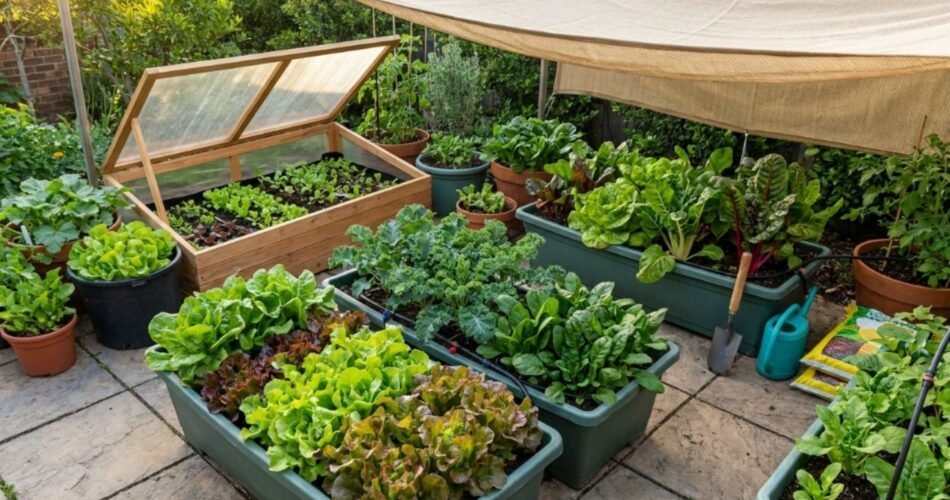
There is something deeply satisfying about walking to my patio, snipping a handful of fresh lettuce leaves, and dropping them straight into a salad bowl. No grocery store run, no wilted bags, no plastic packaging — just crisp, clean greens grown in simple containers right outside my door.
Over the years, I have grown lettuce on a cramped apartment balcony, a sunny kitchen windowsill, a small raised bed, and now a modest patio setup. Each space taught me something new. And while I use the phrase “year-round” loosely, I want to be upfront: how I grow fresh lettuce all year round in containers works because I adapt my methods to match each season. Where I live — USDA Hardiness Zone 7 — I can grow outdoors most of the year with some cold-weather protection. But if you are in Zone 3 or Zone 10, your approach will look different, and that is completely okay.
This guide shares exactly what I do, season by season, from choosing the right varieties to harvesting with the cut-and-come-again method. Whether you have a balcony, a windowsill, or a small backyard patio, you can produce a surprising amount of lettuce if you plan thoughtfully.
Why Containers Are Perfect for Lettuce
Most people assume you need a big garden to grow food. Lettuce proved that wrong for me years ago.
Lettuce is naturally shallow-rooted, fast-growing, and comfortable in tight spaces. It does not need deep soil or acres of space. A 6-inch pot on a windowsill can genuinely feed one person extra greens every week if managed well.
Containers also give you control that in-ground gardens cannot match. You can move pots into shade during a summer heatwave. You can drag them inside before a frost. You can adjust drainage, soil quality, and sun exposure on the fly. For a crop as temperature-sensitive as lettuce, that flexibility is genuinely valuable.
If you are just getting started with edible gardening, lettuce is one of the best crops to begin with. I often recommend checking out 11 Fast-Growing Vegetables for Beginner Gardeners for an overview of crops that reward patience quickly — and lettuce is right at the top of that list.
Understanding the “Year-Round” Reality
Before we go further, I want to address the elephant in the room.
“Growing lettuce year-round” does not mean every gardener in every climate can harvest from outdoor containers in January without any help. That would be misleading.
Here is what year-round growing actually looks like in practice:
- Cool climates (Zones 3–5): Outdoor growing is possible spring through fall. Winter growing requires a heated greenhouse, grow lights indoors, or at minimum a well-insulated cold frame.
- Moderate climates (Zones 6–8): This is the sweet spot. You can grow outdoors nearly year-round with basic protection like cold frames, row covers, or moving containers indoors during hard freezes.
- Warm climates (Zones 9–11): Summer is the hard season, not winter. Lettuce bolts quickly in heat. You will grow outdoors comfortably from fall through spring and need shade cloth, indoor grow lights, or a cooled space during summer months.
My own setup in Zone 7 means I use cold frames in December and January, shade cloth and north-facing placement in July and August, and simple outdoor container growing the rest of the year. That seasonal strategy is what makes year-round harvests actually possible.
Choosing the Best Lettuce Varieties for Containers
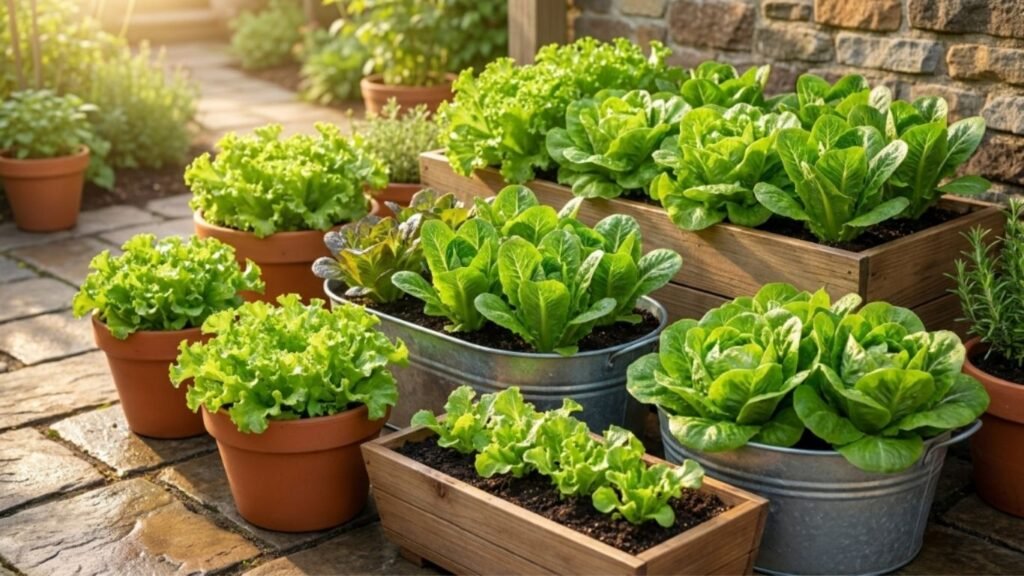
Not all lettuce performs equally in pots. Over the years, I have grown dozens of varieties, and some are simply better suited to container life than others.
Loose-Leaf Lettuce
This is the easiest type and the one I recommend to beginners without hesitation. Loose-leaf varieties do not form tight heads. Instead, they produce open rosettes of leaves you can harvest continuously.
Best picks:
- Oak Leaf – Deeply lobed, mild flavor, very slow to bolt
- Black Seeded Simpson – Classic green variety, reliable and fast
- Red Sails – Beautiful deep red color, good heat tolerance
- Salad Bowl – Compact, ideal for small pots
Romaine (Cos) Lettuce
Romaine forms upright, elongated heads with thick, crunchy leaves. It takes a bit longer to mature than loose-leaf types but holds up well in containers.
Best picks:
- Little Gem – A smaller romaine perfectly sized for containers
- Parris Island Cos – Heat-tolerant, classic romaine flavor
- Flashy Trout’s Back – Stunning speckled leaves, good bolt resistance
Butterhead Lettuce
Butterhead varieties produce soft, floppy heads with a buttery, mild flavor. They are slightly more sensitive to heat than loose-leaf types.
Best picks:
- Tom Thumb – Tiny, perfect for 4–6 inch pots
- Buttercrunch – One of the most popular home garden varieties for good reason
- Speckled Amish – Heirloom type with gorgeous speckled leaves
Crisphead Lettuce
Crisphead (iceberg-style) varieties are harder to grow in containers and need more space and consistent temperatures to head up properly. I grow them occasionally but do not prioritize them for small-space container setups.
Best picks for containers:
- Igloo – Compact crisphead suitable for larger pots
- Summertime – One of the more heat-tolerant crisphead types
Selecting the Right Containers
Choosing the right container matters more than most beginners expect.
What I Look for in a Lettuce Container
Depth: Lettuce roots reach about 6–8 inches deep. I prefer containers at least 6 inches deep, ideally 8–10 inches for romaine and butterhead types. Going deeper does not hurt.
Width: Wider is generally better because it lets you grow more plants per container and retain moisture more evenly. My favorite containers for patio growing are 12–16 inch wide window boxes.
Drainage: This is non-negotiable. Every container I use has at least two drainage holes. Lettuce roots sitting in soggy soil will rot fast, and I learned that lesson the hard way with a pot that had a single tiny drainage hole.
Material: I use a mix of materials.
- Plastic pots are lightweight and retain moisture well — great for hot weather.
- Terracotta pots breathe and drain faster — better for wet climates or overwatered plants.
- Fabric grow bags work surprisingly well for lettuce and promote excellent air circulation around roots.
- Window boxes are my go-to for balconies because they use space efficiently and look tidy.
Containers for Specific Spaces
- Windowsill: 4–6 inch pots or a long, narrow window box
- Balcony: Window boxes, stacked vertical planters, or a row of 10-inch round pots
- Patio: Larger 14–18 inch containers, half-barrel planters, or raised beds
- Kitchen: A single 6-inch pot under a grow light, rotated weekly
Preparing a Nutrient-Rich Potting Mix
Garden soil pulled from outside is the worst thing you can put in a container. I say that from experience — I tried it as a beginner and ended up with compacted, draining-poorly, unhappy lettuce. Do not do it.
My Go-To Container Mix
I mix my own potting blend using roughly:
- 60% high-quality commercial potting mix (I look for peat-based or coir-based blends)
- 20% compost (homemade or bagged — this is where most of the nutrition comes from)
- 10% perlite (improves drainage and prevents compaction)
- 10% worm castings (slow-release, gentle nutrition that lettuce loves)
This mix is light, airy, drains well, and holds enough moisture to keep lettuce happy between waterings.
pH Matters
Lettuce grows best in soil with a pH between 6.0 and 7.0. I test my soil a couple of times a year with a simple pH meter. If it dips below 6.0, I add a small amount of lime to bring it up. Above 7.0, I work in a bit of sulfur or switch to a slightly acidic compost.
Sowing Seeds vs. Transplanting Starts
I grow lettuce both ways depending on the season.
Sowing Seeds Directly
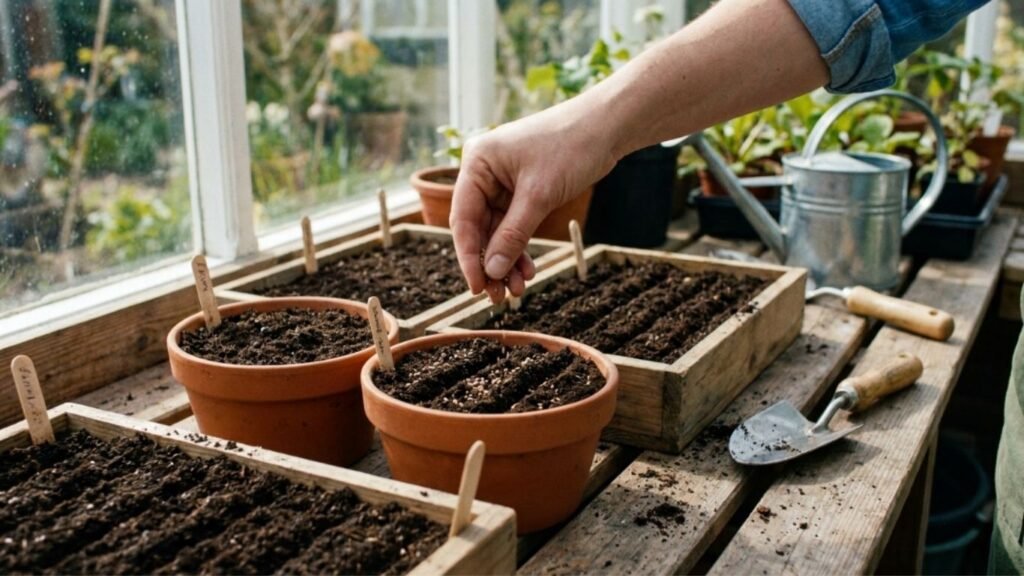
Direct sowing is my preference for most of the year. Lettuce seeds are tiny and easy to scatter. I press them lightly into moist potting mix — no more than ¼ inch deep — and mist the surface gently. I keep the container in a spot where temperatures are between 60–70°F.
Seeds usually germinate in 2–8 days under good conditions. I have had seeds sprout in as little as 36 hours during warm spring weather, which never stops being exciting.
Once seedlings are about 1–2 inches tall, I thin them to proper spacing. This is the part beginners struggle with emotionally — pulling out perfectly good seedlings feels wasteful. But crowded lettuce is stressed lettuce. Eat the thinnings in a salad and space the remaining plants properly.
Using Transplants
In winter and early spring, I often start seeds indoors under grow lights 3–4 weeks before I plan to move containers outside or into a cold frame. Transplants give me a head start on the season and protect young seedlings from unpredictable weather.
When transplanting, I handle seedlings gently by their leaves, not their stems. I plant them at the same depth they were growing in the seed tray and water in well.
Sunlight Requirements Through the Seasons
Lettuce is a cool-season crop that prefers moderate sunlight — not the blazing full sun that tomatoes love. Managing light is a big part of growing lettuce well throughout the year.
Spring and Fall
In spring and fall, I give my lettuce containers 6 hours of direct sunlight daily. Most spots on my patio get this naturally. This is when lettuce is happiest and grows fastest.
Summer
During summer, direct afternoon sun above 80°F causes lettuce to bolt (go to seed) quickly and turns leaves bitter. I move my containers to a spot that gets morning sun and afternoon shade. On particularly hot days, I use a shade cloth rated at 30–40% shade reduction draped over the containers.
East-facing balconies are genuinely ideal for summer lettuce because they get morning light but are shaded from the harsh afternoon sun automatically.
Winter
In short-day winter months, lettuce needs as much light as possible. If growing outdoors in a cold frame, I position it to catch maximum southern exposure. Indoors, I use a full-spectrum LED grow light positioned 4–6 inches above the plants for 14–16 hours per day. This mimics the longer days that lettuce needs to grow productively.
Watering Schedule and Techniques
Consistent moisture is the key to crisp, tender lettuce leaves. Irregular watering causes bitter leaves, tip burn, and early bolting.
How Often I Water
- Spring and fall: Every 1–2 days, depending on rainfall and temperature
- Summer: Often daily, sometimes twice a day for small containers in full sun
- Winter (indoors or cold frame): Every 2–3 days, as growth slows and evaporation decreases
I always check the top inch of soil before watering. If it feels dry to the touch, I water. If it still feels damp, I wait another day.
How I Water
I water at the base of the plants, not overhead, to reduce the risk of fungal disease on leaves. I water slowly and thoroughly until I see water draining from the bottom of the container. Shallow watering encourages shallow roots and creates inconsistent moisture pockets in the container.
In hot weather, I water in the early morning. This gives leaves time to dry off and reduces mildew risk, while the water reaches roots before the heat of the day causes excessive evaporation.
Fertilizing Container Lettuce
Unlike in-ground gardens where roots can access nutrients from a larger soil volume, container plants depend almost entirely on what you put into the pot and what you add over time.
Starting Fertilizer
A good compost-rich potting mix gives lettuce a solid start. I do not fertilize for the first 2–3 weeks because the compost and worm castings provide enough nutrition during early growth.
Ongoing Feeding
After the first few weeks, I feed my container lettuce every 2–3 weeks with a balanced liquid fertilizer. I use a 10-10-10 or similar balanced formula diluted to half strength. Lettuce is a leafy green and benefits from nitrogen, but too much pushes leggy, weak growth rather than dense, flavorful leaves.
I switch to a formula slightly higher in nitrogen (like a 12-6-6) during active spring and fall growing periods when plants are putting on the most leaf growth.
One thing I avoid: Fertilizing stressed, wilted, or heat-stressed lettuce. I always fertilize after watering and only when plants look actively healthy and growing.
Succession Planting Every 2–3 Weeks
This is probably the single most important practice that allows me to harvest lettuce almost continuously throughout the year.
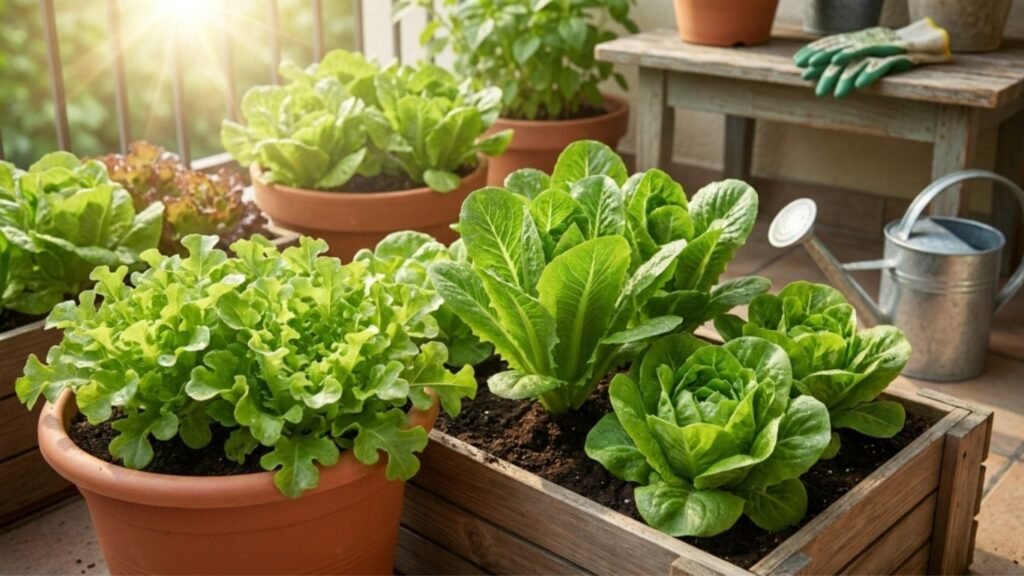
The idea is simple. Instead of planting all your lettuce at once and ending up with a huge harvest followed by nothing, you sow small batches every 2–3 weeks. As one container is being harvested, the next batch is growing, and another batch is just germinating.
I typically maintain three to four containers at different stages at any given time:
- Container A: Ready for harvest (cut-and-come-again stage)
- Container B: 4–5 weeks old, almost ready
- Container C: 2 weeks old, seedlings establishing
- Container D: Just seeded this week
When Container A is finished — usually after 3–4 cut-and-come-again harvests — I refresh the soil with fresh compost, let it rest for a week or two, and start a new batch. The rotation keeps me in lettuce almost constantly.
If you enjoy planning out what to grow and when, I find it helpful to think holistically about the edible garden. Looking at What Vegetables to Plant for a Successful Garden gives a good framework for building a garden calendar that works across multiple crops.
Temperature Management and Preventing Bolting
Bolting — when lettuce shifts from producing leaves to producing a flower stalk — is the gardener’s enemy. Once lettuce bolts, leaves become intensely bitter and the plant’s energy goes into reproduction rather than leaf production.
What Triggers Bolting
- High temperatures: Consistently above 75–80°F triggers bolting
- Long days: More than 14–16 hours of light signals bolting in many varieties
- Stress: Inconsistent watering, root-bound conditions, and low nutrients can speed bolting
How I Prevent Bolting
Choose slow-bolt varieties. This is the first line of defense. I look for seed packets or catalog descriptions that mention “slow to bolt,” “heat-tolerant,” or “bolt-resistant.”
Provide afternoon shade in summer. Moving containers to shadier spots in July and August slows bolting significantly.
Use shade cloth. A 30–40% shade cloth draped over containers during the hottest weeks extends the harvest by 2–3 weeks in my experience.
Harvest often. Regular harvesting of outer leaves reduces the plant’s impulse to bolt. The more you harvest, the longer the plant stays in leaf-production mode.
Time your plantings. In summer, I shift toward growing more heat-tolerant crops. If you enjoy growing warm-season vegetables and want to compare notes, I have found great ideas from articles like How to Grow Squash in a Home Garden — squash and lettuce can actually coexist nicely, with squash leaves providing some shade for lettuce containers underneath.
Keep soil consistently moist. Dry soil in hot weather is a fast track to bolting.
Harvesting with the Cut-and-Come-Again Method
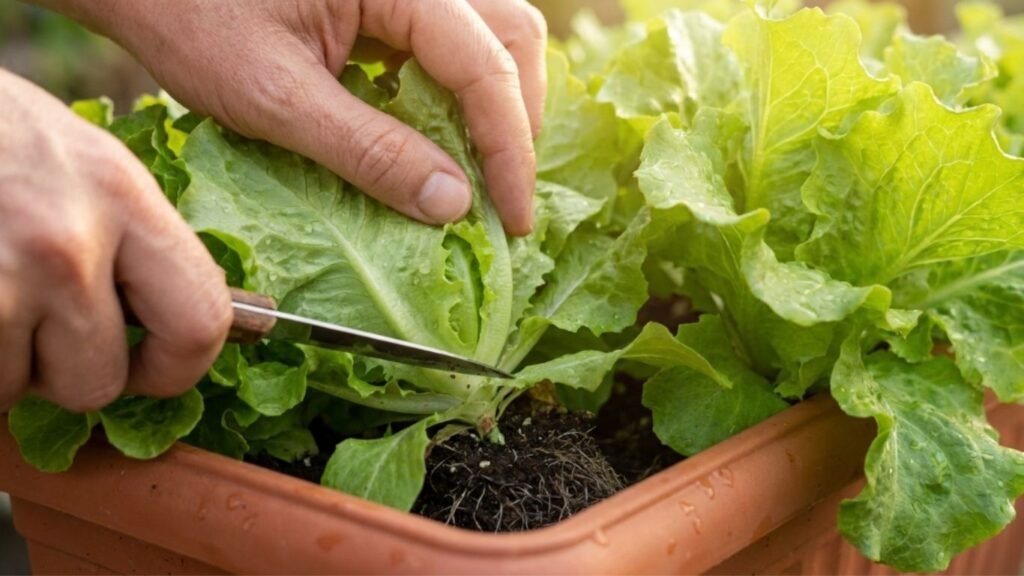
This harvesting technique is what makes small containers so productive. Instead of pulling up the entire plant, you harvest only the outer leaves, leaving the inner growing point intact to produce more leaves.
Step-by-Step Cut-and-Come-Again Harvesting
- Wait until leaves are 4–6 inches long — this is the sweet spot for flavor and texture.
- Use clean scissors or a sharp knife. Dirty or blunt cutting tools can spread disease.
- Cut leaves from the outside of the plant, working around the rosette. Leave at least 1 inch of growth above the soil.
- Never harvest more than one-third of the plant at a single time. Taking too much at once stresses the plant and slows regrowth.
- Give the plant 7–14 days to recover and regrow before harvesting again.
- Repeat 3–5 times per planting before flavor and growth quality begin to decline.
Loose-leaf varieties respond especially well to this method. Butterhead and romaine types can also be cut this way for baby leaf harvests, though they also reward full-head harvests when you let them mature completely.
Harvesting for Baby Greens
For a continuous supply of baby greens — those small, tender leaves that restaurant salads often feature — I scatter seeds densely in a wide, shallow container and harvest with scissors when leaves are 2–3 inches tall. I cut the whole surface about an inch above the soil, water and fertilize lightly, and the container regrows in about 10–14 days. I get 3–4 cuts from a single dense sowing this way.
Pest and Disease Prevention
I have not had catastrophic pest problems with container lettuce, but I do deal with occasional issues that are worth preparing for.
Common Pests
Aphids are my most common pest. They cluster on the undersides of leaves and cause distorted, curling growth. I knock them off with a strong stream of water or spray with insecticidal soap. Keeping containers away from aphid-infested plants nearby helps.
Slugs and snails can devastate lettuce seedlings overnight. I use copper tape around pot rims, hand-pick in the evening with a flashlight, or use iron phosphate-based slug bait, which is safe around pets and children.
Earwigs occasionally chew ragged holes in leaves. I trap them with rolled damp newspaper placed near pots at night and dispose of them in the morning.
Cabbage loopers and caterpillars are less common on container lettuce but do appear occasionally. I pick them off by hand or use Bt (Bacillus thuringiensis), a natural bacterial spray that is effective and safe for edible crops.
Common Diseases
Downy mildew shows as yellow patches on upper leaves and gray-white fuzzy growth underneath. It thrives in cool, humid conditions with poor air circulation. I prevent it by spacing plants properly, watering at the base, and avoiding overhead watering in the evening.
Tip burn causes brown, papery edges on inner leaves. It is not a disease but a calcium deficiency often triggered by inconsistent watering or high temperatures. Consistent watering and good air circulation usually solve it.
Bottom rot results from soggy soil. Good drainage and proper watering habits prevent it entirely.
Growing Lettuce Indoors Under Lights
When outdoor growing is not practical — deep winter in colder zones, or a heatwave with no shade option — growing lettuce indoors under grow lights is a genuinely effective solution.
Setting Up an Indoor Lettuce Garden
Choose the right light. I use a full-spectrum LED grow light. Look for lights with a color temperature between 4000K and 6500K, which supports leafy green growth well. Avoid cheap red-blue “blurple” panels — they work, but full-spectrum lights produce better-tasting, denser leaves in my experience.
Position the light correctly. LED panels should be 4–8 inches above the lettuce canopy. I adjust height as plants grow to maintain that distance.
Light duration. Lettuce needs 14–16 hours of artificial light per day indoors. I use a simple plug-in timer so I do not have to remember to turn it on and off.
Ventilation matters. A small fan set on low near indoor containers improves air circulation, strengthens plant stems, and reduces mildew risk.
Temperature. Most homes are heated to 65–72°F in winter — right in the comfortable range for lettuce. If your grow space gets warmer from the lights, watch for bolting and adjust.
Indoor lettuce under lights produces very well from November through March in my setup. I grow a row of window boxes on a wheeled cart under lights in my spare bedroom during the coldest months. It sounds intensive, but it takes about 10 minutes of care per day and keeps fresh greens on the table through the whole winter.
Seasonal Strategy by USDA Hardiness Zone
Here is a condensed breakdown of how I would approach year-round container lettuce in different climates:
Zones 3–5 (Short Growing Season, Cold Winters)
- Spring: Start indoors mid-February, move outside late April
- Summer: Grow freely outdoors with afternoon shade
- Fall: Continue outdoors with row cover protection until hard frost
- Winter: Grow exclusively indoors under lights or in a heated greenhouse
Zones 6–8 (Moderate Climate — My Setup)
- Spring: Direct sow outdoors late February or early March
- Summer: Use shade cloth, east-facing placement, heat-tolerant varieties
- Fall: Best growing season; direct sow September through November
- Winter: Cold frames or row covers for most of winter; indoors during hard freezes
Zones 9–11 (Warm Climate, Mild Winters)
- Spring: Grow outdoors through May; transition to shade setups as heat rises
- Summer: Rest outdoor lettuce; grow indoors under lights in air-conditioned space or use shade structure
- Fall: Resume outdoor growing from September
- Winter: Best growing season; grow freely outdoors through February
Overwintering Strategies
Even in cold climates, extending the growing season into and through winter is possible with a few protective tools.
Cold Frames
A cold frame is essentially a box with a transparent lid — usually an old window frame or polycarbonate panel — placed over containers or a raised bed. It acts as a mini greenhouse, trapping heat and protecting plants from frost.
I built a simple cold frame from scrap lumber and a salvaged storm window years ago. On a sunny winter day, even when outside temperatures drop to 25°F, the interior of my cold frame can reach 45–55°F — warm enough for lettuce to grow slowly but steadily.
On sunny days, I prop the lid open slightly to prevent overheating. At night, I close it completely and sometimes drape a layer of frost cloth over the outside for extra insulation.
Row Covers
Floating row covers (also called frost blankets or garden fleece) are inexpensive and easy to drape over individual containers. A single layer offers protection down to about 28–30°F. Doubled layers can protect to around 24°F.
I keep a roll of row cover fabric on my patio from October through March and pull it over containers on nights when frost is forecast.
Greenhouses
A small, inexpensive pop-up greenhouse or walk-in greenhouse can transform your container garden through winter. Even an unheated one provides several degrees of frost protection and maintains much more consistent temperatures than bare outdoor containers.
Common Mistakes I Have Made (And How to Avoid Them)
1. Planting Too Deep
Lettuce seeds are tiny and should be pressed no more than ¼ inch into soil. Deeper than that and germination rates drop significantly. I spent an entire spring wondering why germination was patchy before I figured this out.
2. Overwatering
Soggy soil kills lettuce faster than drought. Always check before watering and ensure containers drain freely.
3. Ignoring Succession Planting
I grew a full tray of lettuce once, harvested a huge bowl in week seven, and then had nothing for six weeks while I waited for the next batch. Succession planting every 2–3 weeks eliminates this feast-or-famine cycle.
4. Using Garden Soil in Containers
It compacts, drains poorly, and brings weed seeds and pathogens into your controlled growing space. Use a quality potting mix.
5. Leaving Bolted Plants in Place
Once a plant bolts, I pull it out immediately. Bolted plants release compounds that can inhibit nearby seedlings and take up space that productive plants could use.
6. Not Hardening Off Transplants
When moving seedlings from indoor grow lights to outdoor conditions, I spend 5–7 days gradually introducing them to outdoor light and temperatures. Skipping this step causes transplant shock and set-back growth.
7. Planting Heat-Sensitive Varieties in Full Summer Sun
Some varieties simply are not suited to summer heat regardless of how you manage them. Choosing the right variety for the right season makes a bigger difference than most beginners realize.
Practical Tips for Specific Growing Spaces
Balcony Lettuce Garden
- Use window boxes mounted on railings to maximize space
- East or north-facing balconies work best in summer
- Group containers to reduce moisture loss
- Invest in self-watering containers if you travel regularly
Patio Lettuce Garden
- Use a mix of container sizes to create different harvest windows
- Group containers by season — sun lovers vs. shade lovers
- Keep a small cart or dolly for moving pots as the season changes
- A patio is also a great place to grow companion crops. Expanding beyond lettuce to other high-performing vegetables is worth exploring — for inspiration, check out 10 High-Yield Tomato Varieties for Home Gardens if you want to add tomatoes alongside your container garden
Windowsill Lettuce
- Choose compact loose-leaf varieties (Tom Thumb, Salad Bowl)
- Use a full-spectrum grow light to supplement window light in winter
- Water more carefully — small containers dry out fast
- Rotate pots a quarter turn every few days for even light exposure
Small-Space and Raised Bed Growing
- Combine container lettuce with raised bed crops for variety
- Use vertical planters — stacked pocket planters work surprisingly well for lettuce
- Interplant with taller crops that provide natural shade in summer
- If you are planning a more comprehensive small-space food garden, thinking about what crops to prioritize is worth your time. Growing crops that sustain you through more challenging times is something I explore further in articles like 9 Survival Crops That Feed You Year-Round
FAQ: Growing Lettuce in Containers
How deep do containers need to be for growing lettuce?
Lettuce roots are shallow and typically reach 6–8 inches deep. A container at least 6 inches deep is sufficient for most loose-leaf varieties. For romaine or butterhead types that form fuller heads, I prefer containers 8–10 inches deep.
Can I really grow lettuce year-round in containers?
It depends on your climate and your willingness to use seasonal tools. In Zones 6–8, near year-round growing is genuinely achievable with cold frames in winter and shade cloth in summer. In colder zones, winter growing requires indoor grow lights or a heated greenhouse. In very warm zones (10–11), summer growing requires indoor or shaded setups. The honest answer is that with the right tools and strategies, most gardeners can extend their lettuce season far beyond what they might expect.
How often should I water lettuce in containers?
In spring and fall, every 1–2 days is typical. In summer heat, daily or even twice daily watering may be needed for small containers. In slow-growth winter months, every 2–3 days is usually fine. Always check the top inch of soil — if it is dry, water; if still moist, wait.
Why does my lettuce taste bitter?
The most common causes are heat stress and bolting. Lettuce in temperatures above 80°F produces more bitter compounds. Other causes include irregular watering, overly mature leaves left too long on the plant, and soil pH outside the 6.0–7.0 range. Harvesting leaves when they are young — at 4–6 inches — and maintaining consistent moisture greatly reduces bitterness.
How do I know when lettuce is ready to harvest?
For cut-and-come-again harvesting, outer leaves 4–6 inches long are ready. For baby greens, leaves 2–3 inches tall are ideal. For full heads (romaine, butterhead, crisphead), harvest when the head feels firm and dense but before the center starts to elongate — elongation is an early sign of bolting.
What is the best fertilizer for container lettuce?
A balanced, water-soluble fertilizer such as 10-10-10 diluted to half strength works well, applied every 2–3 weeks. Worm castings mixed into the potting medium provide excellent slow-release nutrition. During heavy leaf-production periods, a formula slightly higher in nitrogen is beneficial. Avoid over-fertilizing — it produces weak, watery growth.
Can I reuse potting soil from an old lettuce container?
Yes, but with some preparation. I mix in fresh compost to replenish nutrients, check drainage by watering and observing flow, and allow the soil to rest for 1–2 weeks between crops. If the previous crop had any disease issues, I replace the soil entirely to avoid carrying pathogens forward.
Key Takeaways
- Year-round lettuce growing is possible for most gardeners but requires climate-appropriate strategies — cold frames, grow lights, shade cloth, and succession planting depending on your zone.
- Loose-leaf varieties are the easiest and most productive for small containers and cut-and-come-again harvesting.
- Succession planting every 2–3 weeks is the most important practice for continuous harvests.
- Temperature management — protecting from frost in winter and heat in summer — determines how long your lettuce stays productive.
- The cut-and-come-again method multiplies your yield from every container significantly.
- Good potting mix, proper drainage, and consistent watering are the foundations of healthy container lettuce.
- Containers give you flexibility that in-ground gardens cannot — you can move, shade, shelter, and adjust your growing space to match conditions.
Conclusion
Learning how I grow fresh lettuce all year round in containers took several seasons of trial, error, and observation. There was no single breakthrough moment — it was a gradual accumulation of small lessons: moving a container a few feet to the east to escape afternoon heat, adding perlite to fix a soggy potting mix, finally committing to succession planting after one too many lettuce droughts.
What I know now is that container lettuce is one of the most rewarding crops you can grow at home. It is fast, forgiving of small mistakes, productive in tiny spaces, and satisfying in a very immediate way — from container to bowl in under a minute.
You do not need a large garden, expensive equipment, or a perfect climate. You need a few decent containers, a quality potting mix, good seeds, a sensible seasonal strategy, and the patience to check in on your plants regularly.
Start with one container of loose-leaf lettuce this week. Add a second container two weeks later. Keep that rotation going and adjust as you learn what your specific space, climate, and schedule can support. Within a couple of months, you will be harvesting fresh greens regularly — and wondering why you ever bought pre-bagged lettuce at all.