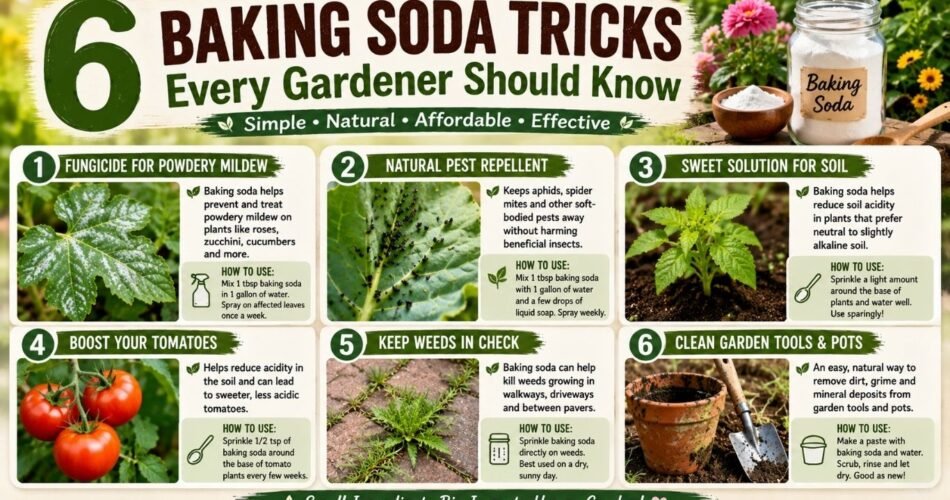
If you’ve spent any time in gardening forums or flipped through old-school homesteading guides, you’ve probably come across baking soda as some kind of wonder ingredient. And honestly? Some of those claims are legitimate. But plenty of them are wildly exaggerated, and using baking soda the wrong way can actually damage your plants, throw off your soil chemistry, and create more problems than you started with.
I’ve been growing vegetables, herbs, and flowers organically for over a decade, and I’ll be straight with you: baking soda is a useful tool in the garden — not a miracle cure. Think of it like a pocket knife. Handy in the right situation, but you wouldn’t use it to do surgery.
In this guide, I’m going to walk you through 6 baking soda tricks every gardener should know, covering what actually works, why it works, how to do it safely, and just as importantly — when you should skip it entirely and reach for something else.
Let’s get into it.
Before We Start: What Is Baking Soda, and Why Does It Matter in the Garden?
Baking soda is sodium bicarbonate (NaHCO₃), a naturally occurring alkaline compound with a pH of around 8.3. That alkalinity is the key to most of its gardening applications. It can alter surface pH on leaves, disrupt fungal cell environments, neutralize odors, and gently cut through grime — all without harsh chemicals.
However, that same alkalinity is also why you need to be careful. Applying too much baking soda to your soil can raise pH over time, potentially locking out nutrients your plants need. Spraying it too concentratedly on leaves can cause leaf burn. And it’s not a substitute for proper diagnosis, real soil testing, or proven fungicide treatments when you’re dealing with a serious disease outbreak.
Use it thoughtfully, and it earns its place in an organic gardening toolkit. Use it carelessly, and you’ll regret it.
6 Baking Soda Tricks Every Gardener Should Know
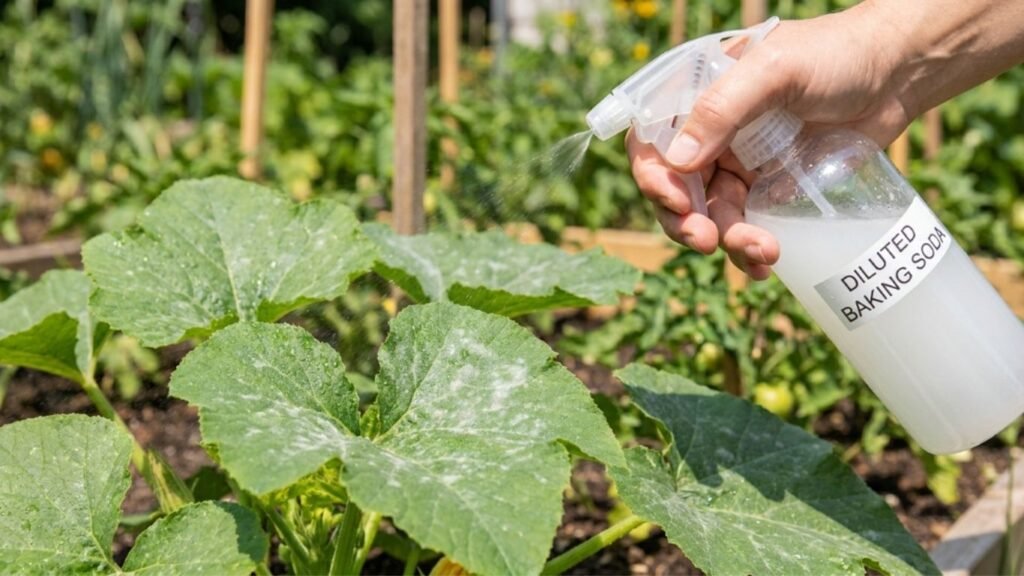
Trick #1: Managing Powdery Mildew on Susceptible Plants
What It Is
Powdery mildew is that chalky, white, dusty coating that shows up on leaves — especially on squash, cucumbers, zucchini, roses, and phlox. It’s caused by several species of fungal pathogens that thrive in warm, dry days combined with cool, humid nights.
A baking soda spray is one of the most commonly recommended organic approaches for managing (not eliminating) powdery mildew, and there’s actually some science behind it.
Why It Works
Baking soda raises the surface pH of leaves slightly, creating a more alkaline microenvironment. Most powdery mildew fungi struggle to grow in alkaline conditions. A 1994 study published in Plant Disease journal showed that sodium bicarbonate could suppress powdery mildew when used consistently as a preventive measure. It works better as a preventive than as a cure for advanced infections.
Which Plants Benefit Most
- Zucchini and summer squash
- Cucumbers
- Roses
- Pumpkins
- Phlox and bee balm
Note: If you’re growing squash and struggling with powdery mildew, this trick pairs well with proper spacing and airflow. Check out our guide on How to Grow Squash in a Home Garden for broader disease prevention strategies.
Step-by-Step Instructions
- Mix your spray solution (see dilution rate below)
- Apply in the early morning so leaves can dry before nightfall — wet leaves overnight invite more fungal issues
- Spray the tops and undersides of leaves thoroughly
- Reapply every 7–10 days as a preventive measure, or every 5–7 days if mildew is already present
- After a rain, reapply once the leaves are dry again
Proper Dilution Rate
Basic baking soda spray:
- 1 teaspoon baking soda per 1 quart (about 1 liter) of water
- Add 1/2 teaspoon of liquid castile soap or a few drops of neem oil to help the solution stick to leaves
Do not exceed 1 tablespoon per gallon. Higher concentrations increase the risk of leaf burn, especially in hot weather.
Advantages and Limitations
| Details | |
|---|---|
| Advantages | Inexpensive, widely available, safe for organic gardening |
| Limitations | Works best as a preventive; limited effectiveness on advanced infections; must be reapplied frequently |
Safety Precautions
- Always test on a small leaf section first and wait 48 hours before treating the whole plant
- Do not spray in direct midday sun — heat intensifies the risk of burning
- Avoid spraying on seedlings or young, delicate plants
- Never apply to drought-stressed plants
Common Mistakes to Avoid
- Using too high a concentration thinking “more is better” — it isn’t
- Applying in the evening when leaves won’t dry properly
- Expecting it to cure a severe, well-established mildew infection (at that point, you need a proper fungicide)
- Spraying every day, which can accumulate sodium in the soil over time
Trick #2: General Fungal Disease Suppression on Garden Plants
What It Is
Beyond powdery mildew, baking soda has been used by organic gardeners as a mild, preventive fungal disease management tool for other common fungal issues — including early signs of black spot on roses and some leaf spot diseases.
Why It Works
The alkaline properties of sodium bicarbonate disrupt the acidic conditions that many fungal pathogens prefer. When used early, before a disease takes serious hold, it can slow the spread. It’s worth noting that the addition of potassium bicarbonate (a close relative, available at brewing supply stores) has shown even stronger results in some research — so it’s worth knowing that alternative exists.
Which Plants Benefit Most
- Roses (black spot prevention)
- Tomatoes (early signs of leaf spot, not late blight)
- Grapes
- Fruit trees (as a supplementary preventive measure)
Step-by-Step Instructions
- Inspect plants regularly to catch early signs of disease
- Mix the solution: 1 teaspoon baking soda + 1 teaspoon horticultural oil or neem oil + 1 quart of water
- Shake well before each use
- Apply to leaves early in the morning, covering all surfaces
- Repeat every 7–14 days as a preventive measure through the growing season
Proper Dilution Rate
- 1 teaspoon baking soda per quart of water (preventive)
- Up to 1 tablespoon per gallon for more active suppression (use cautiously)
Advantages and Limitations
- Works best preventively — once a fungal disease is moderate to severe, you need something stronger
- Does not address root diseases or soil-borne pathogens
- Must be reapplied frequently to maintain any effect
Safety Precautions
- Do not apply to pepper plants — they can be particularly sensitive to leaf sprays
- Avoid applying to any plant showing heat or drought stress
- Do not rely on this alone for serious disease management — consult your local cooperative extension office if problems persist
Common Mistakes to Avoid
- Waiting until disease is severe before starting treatment
- Skipping the oil component — without a sticking agent, the spray beads off leaves quickly
- Using it on late blight in tomatoes — late blight is caused by Phytophthora infestans, a water mold, and baking soda has little to no effect on it
Trick #3: Deodorizing Your Compost Bin
What It Is
A smelly compost pile is usually a sign that something’s off — too much nitrogen, too little airflow, excess moisture, or anaerobic decomposition. Baking soda can help neutralize the immediate odor while you work on fixing the underlying issue.
Why It Works
Baking soda is a natural odor neutralizer because it reacts with acidic odor compounds (like those produced during anaerobic decomposition) and converts them into more neutral compounds. It’s the same reason people put it in their refrigerators.
Important caveat: Baking soda is not a fix for a poorly managed compost pile. Too much sodium bicarbonate can actually slow decomposition by killing off beneficial microbes and raising pH too high for optimal microbial activity.
Which Situations Benefit Most
- Compost bins that are temporarily too wet or have too much food waste
- Urban composting setups near neighbors or living spaces
- Small countertop composting containers
Step-by-Step Instructions
- Identify the cause of the odor (usually excess moisture, wrong green-to-brown ratio, or lack of turning)
- Sprinkle a light dusting of baking soda — about 1–2 tablespoons — over the top of the pile
- Immediately add dry brown material (shredded paper, dried leaves, cardboard) to absorb moisture
- Turn the pile to introduce oxygen
- Repeat only if necessary — do not make this a routine habit
Proper Application Rate
- No more than 2–3 tablespoons per full-size compost bin at a time
- Use sparingly and infrequently
Advantages and Limitations
- Quickly reduces odor in the short term
- Excessive use will harm your compost’s microbial community and slow decomposition significantly
- This is a temporary band-aid — fixing your compost management is always the real solution
Safety Precautions
- Do not use baking soda in worm bins (vermicomposting) — it can harm or kill your worms
- Do not use routinely — reserve for occasional odor emergencies only
Common Mistakes to Avoid
- Using it as a substitute for proper compost management
- Pouring large amounts directly into the pile hoping to speed things up — it will do the opposite
- Using it in a worm composter
Trick #4: Cleaning Garden Tools and Pots
What It Is
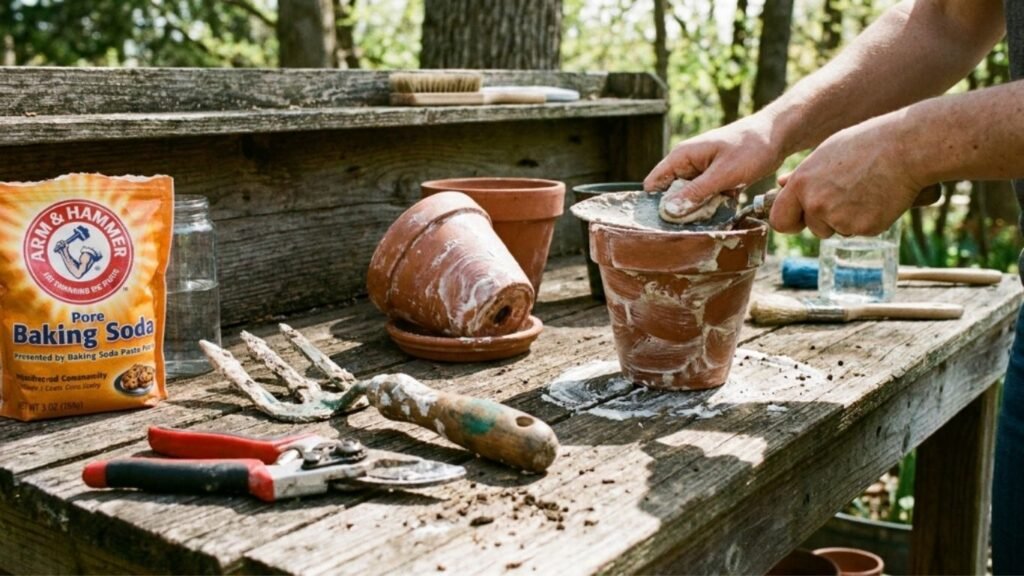
Baking soda is a mild abrasive and deodorizer that works well for scrubbing mineral deposits, soil buildup, and light residue off garden tools, terracotta pots, and plastic containers.
Why It Works
Its mild abrasive texture lifts grime and deposits without scratching most surfaces. Its alkalinity also helps break down organic residue and can neutralize some surface contaminants. It’s a safer and more eco-friendly alternative to harsh chemical cleaners, especially for containers that will be used for growing food.
Which Items Benefit Most
- Terracotta pots (removes white mineral deposits and salt buildup)
- Plastic seedling trays
- Hand trowels and pruning shears
- Watering cans with mineral scale buildup
Step-by-Step Instructions
For tools:
- Make a paste: mix baking soda with just enough water to create a thick consistency
- Apply the paste to the tool surface
- Scrub with an old brush or steel wool for stubborn rust spots
- Rinse thoroughly with water
- Dry completely before storing to prevent rust
For terracotta pots:
- Soak the pot in a solution of 1 tablespoon baking soda per gallon of water for 30–60 minutes
- Scrub with a stiff brush
- Rinse well and allow to air dry fully
- If reusing pots for seedlings, follow up with a dilute hydrogen peroxide rinse (1 part 3% hydrogen peroxide to 9 parts water) to sanitize
Proper Dilution Rate
- Paste: 3 tablespoons baking soda + water to consistency
- Soak solution: 1 tablespoon per gallon of water
Advantages and Limitations
- Completely non-toxic, no residue concerns for food-growing containers
- Won’t disinfect pots from fungal or bacterial pathogens — you still need a proper sanitizing step if the previous plant had a disease
- May not tackle heavy rust or severe mineral buildup alone
Safety Precautions
- Always rinse cleaned pots thoroughly before adding soil and plants
- Don’t use on aluminum tools — baking soda can react with aluminum and cause discoloration
Common Mistakes to Avoid
- Thinking that cleaning with baking soda also disinfects — it doesn’t kill pathogens reliably
- Not rinsing pots thoroughly, leaving a residue that could affect soil pH
While you’re thinking about smart, low-cost garden maintenance, you might enjoy 8 Natural Garden Hacks to Grow Healthier Plants With Everyday Household Items — a practical roundup of household items that genuinely help in the garden.
Trick #5: A Simple Home Soil Acidity Demonstration (Not a Real Soil Test)
What It Is
This is a classic and surprisingly useful quick visual demonstration to get a rough sense of whether your soil is highly acidic, neutral, or alkaline. It is not a replacement for a proper soil pH test — I want to be very clear about that.
Think of it as a ballpark check, like checking the weather by looking at the sky versus checking a meteorological forecast.
Why It Works
When you add baking soda (alkaline) to acidic soil, the acid-base reaction produces carbon dioxide gas, causing visible fizzing or bubbling. If you see strong fizzing, your soil is likely quite acidic (below pH 6). No fizzing means neutral to alkaline soil. For comparison, you can test the same soil with vinegar — if vinegar causes fizzing, your soil is alkaline.
Which Situations Benefit Most
- Getting a general idea before buying a proper test kit
- Educational demonstrations for kids or beginner gardeners
- Quick checking of container or raised bed mixes
Step-by-Step Instructions
- Collect a small soil sample — about 2 tablespoons — from a few inches deep in your garden bed
- Place it in a clean glass or bowl
- Add about 1/4 cup of water and stir to create a slurry
- Add 1–2 teaspoons of baking soda to the slurry
- Observe:
- Active fizzing/bubbling → soil is likely acidic (roughly below pH 6)
- No reaction → soil is likely neutral or alkaline
Proper Application Rate
- This is a demonstration, not a soil amendment — you’re not putting baking soda into your garden bed
- Dispose of the test slurry, not in the garden
Advantages and Limitations
- Free, fast, and requires no special equipment
- Very imprecise — you cannot determine a specific pH number
- Should always be followed up with a proper digital soil pH meter or a laboratory soil test for accurate results
- Environmental factors can affect results
Safety Precautions
- Never use the fizz test as a basis for adding amendments to your soil without a proper test
- Adding lime or sulfur to adjust pH without knowing the actual number can seriously harm your garden
Common Mistakes to Avoid
- Taking the result as a precise pH reading — it’s not
- Adding baking soda to your soil directly based on this test
- Skipping the real soil test when you actually need accurate information for planting decisions
Speaking of understanding what works in the garden and what doesn’t — if you’re curious about other common household items and their effects on plants, the debate around Coffee Grounds for Your Garden: Good or Bad? is a great follow-up read.
Trick #6: Cleaning Residue Off Harvested Vegetables
What It Is
After harvesting, especially from soil-heavy gardens or after using any kind of sprays, a light baking soda wash can help remove surface residue, pesticide traces, and waxy coatings from fruits and vegetables more effectively than plain water alone.
Why It Works
A 2017 study published in the Journal of Agricultural and Food Chemistry found that a baking soda solution was more effective than plain water or bleach at removing pesticide residues from the surface of apples. The alkaline solution helps break down certain surface pesticides and makes it easier to physically remove residue with gentle scrubbing.
It’s worth noting: this works for surface residues only. Systemic pesticides that have been absorbed into the plant tissue cannot be washed off regardless of what you use.
Which Situations Benefit Most
- Homegrown produce from gardens where any sprays were used (even organic ones like neem oil)
- Root vegetables pulled directly from soil
- Cucumbers, apples, and other produce with waxy surfaces
- Farmers market produce where spray history may be unknown
Step-by-Step Instructions
- Fill a clean bowl or your kitchen sink with cold water
- Add 1 teaspoon of baking soda per 2 cups of water (roughly 1 tablespoon per gallon)
- Submerge the vegetables or fruit
- Let soak for 12–15 minutes
- Gently scrub with a clean vegetable brush
- Rinse thoroughly with clean water before eating or storing
Proper Dilution Rate
- 1 teaspoon per 2 cups of water for a light soak
- Do not use higher concentrations — it can affect the flavor of some produce
Advantages and Limitations
- Inexpensive, food-safe, and effective for surface residue removal
- Cannot remove systemic pesticides absorbed into plant tissue
- Best used promptly — do not soak produce and then refrigerate without rinsing; excess moisture leads to spoilage
Safety Precautions
- Always rinse produce thoroughly after the baking soda soak — you don’t want a soapy flavor on your vegetables
- Don’t use on berries or delicate produce that absorbs liquid easily (it can affect texture)
- Mushrooms should be wiped, not soaked, regardless of method
Common Mistakes to Avoid
- Soaking berries, mushrooms, or other delicate produce — the soak is best for firm vegetables and fruits
- Not rinsing after the soak and tasting the baking soda residue on your food
- Assuming a baking soda soak makes conventionally sprayed produce “organic” or completely pesticide-free — it doesn’t
Looking for more unconventional garden techniques that actually hold up to scrutiny? Check out 8 Weird Garden Tricks That Actually Work for some genuinely surprising and useful gardening methods.
Expert Tips for Safe, Organic Gardening
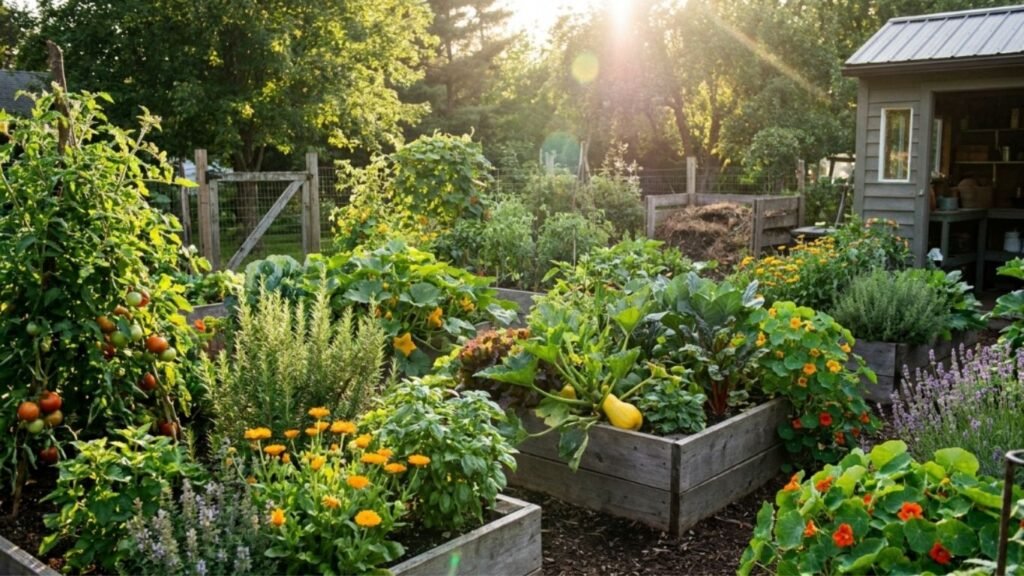
Preventing Fungal Diseases Naturally (Without Relying on Baking Soda)
Baking soda is a tool, not a system. The most effective approach to fungal disease management in an organic garden involves:
- Proper plant spacing — good airflow between plants reduces the humid microenvironment that fungi love
- Watering at the base, not overhead — wet foliage is a fungal disease invitation
- Crop rotation — don’t plant the same plant family in the same bed year after year
- Choosing resistant varieties — many modern tomato, squash, and rose varieties are bred for disease resistance
- Removing infected plant material promptly — don’t let diseased leaves sit on the ground and spread spores
When to Choose Something Else Instead
Baking soda has real limitations. Choose a different approach in these situations:
- Severe or rapidly spreading fungal infections — use potassium bicarbonate (more effective) or copper-based organic fungicides
- Root rot or soil-borne diseases — baking soda cannot reach the root zone effectively
- Insect pest problems — baking soda has no pest-deterring properties; look at neem oil, insecticidal soap, or beneficial insects
- Significant pH imbalance — use properly dosed garden lime or sulfur based on a real soil test, not a baking soda guess
- Serious disease outbreaks — contact your local cooperative extension service for region-specific advice
FAQ: Baking Soda in the Garden
1. Can I sprinkle baking soda directly around my plants to prevent fungal disease?
No — and this is a common mistake. Sprinkling baking soda directly on soil regularly will accumulate sodium, raise soil pH, and can damage plant roots and disrupt beneficial soil microbes. If you’re using baking soda for fungal management, apply it as a diluted foliar spray to leaves only, and even then, keep it away from the soil as much as possible.
2. How often should I spray baking soda on plants?
As a preventive spray for powdery mildew or early fungal issues, every 7–10 days is a reasonable schedule. For active suppression of early disease, every 5–7 days may be appropriate. Always reapply after rain. Do not spray daily — over-application causes leaf burn and can negatively affect soil chemistry over time.
3. Will baking soda harm my plants?
Used correctly at proper dilution rates (1 teaspoon per quart of water), baking soda is unlikely to harm most established plants. However, it can cause leaf burn if applied in concentrations that are too high, in direct midday sun, or on plants that are already stressed from heat or drought. Always do a patch test first.
4. Is baking soda safe to use in organic gardening?
Yes, baking soda (sodium bicarbonate) is considered acceptable for use in organic gardening. However, check your specific organic certification standards if you’re a certified grower — some programs have guidelines about inputs even when naturally derived.
5. Can baking soda replace a proper soil test?
Absolutely not. The fizz test is a fun, rough visual demonstration, but it cannot give you a pH number or tell you anything about your soil’s nutrient content, texture, or other critical factors. Always use a proper soil test — either a quality home pH meter or a professional lab test — before making any soil amendments.
6. Why isn’t baking soda working on my powdery mildew?
A few possible reasons: the infection may already be too advanced for baking soda to make a meaningful difference; you may not be applying it frequently enough; you may be missing the undersides of leaves; or the concentration may be too low or too high. For serious infections, consider potassium bicarbonate (a more effective alternative) or an approved organic fungicide.
7. Can I use baking soda on all vegetable plants?
Most established vegetable plants tolerate diluted baking soda sprays well, but some are more sensitive than others. Pepper plants, seedlings, and any stressed or drought-affected plants should be avoided. Always do a test spray on a small section of foliage and wait 48 hours before treating the whole plant.
Key Takeaways
- Baking soda is a useful garden tool, not a miracle solution. Treat it accordingly.
- It works best for powdery mildew prevention, cleaning garden tools and pots, deodorizing compost temporarily, and washing harvested produce.
- Always use proper dilution rates — 1 teaspoon per quart of water for foliar sprays.
- Never apply baking soda directly to soil regularly — sodium buildup and pH disruption can damage your garden over time.
- The fizz test is not a soil pH test — it’s a demonstration only.
- Prevention and good cultural practices (spacing, watering at the base, crop rotation) will always outperform any spray treatment.
- When problems are serious, choose proven organic solutions or seek advice from your local extension service — don’t rely on baking soda alone.
Conclusion
After years of growing food and flowers organically, I’ve come to appreciate that the best garden tools are the ones that work with nature rather than against it — and that includes knowing when a simple household ingredient is genuinely helpful and when it isn’t.
Baking soda earns its place in a smart, organic gardener’s toolkit for a handful of specific, well-defined jobs. Used with care, at the right dilution, and with realistic expectations, these 6 baking soda tricks every gardener should know can genuinely make your gardening life a little easier and more eco-friendly.
But please — don’t oversell it to yourself or to your garden. Read the limitations as carefully as the instructions. Combine baking soda tricks with good gardening fundamentals, pay attention to how your specific plants respond, and you’ll find it’s a genuinely handy thing to have around.
And if you want to keep exploring practical, evidence-based organic gardening techniques, there’s always more to learn. Your garden will thank you for the effort.