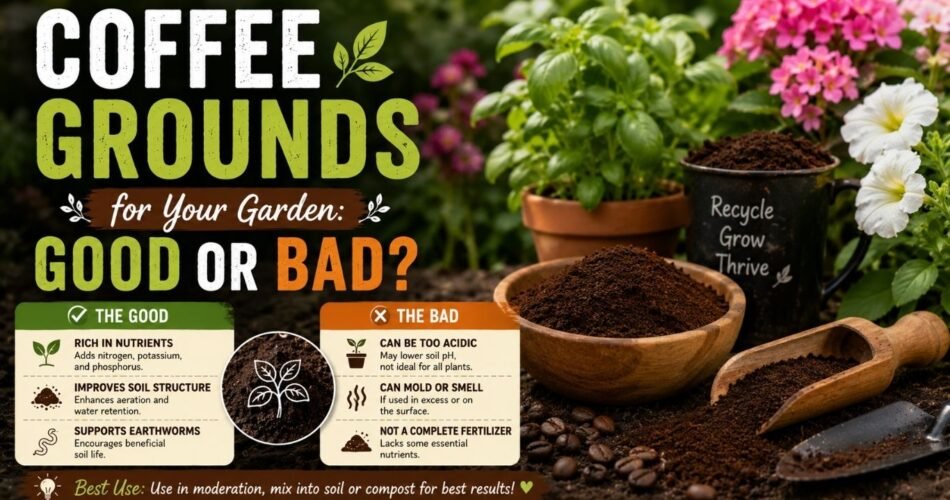
If you’re a coffee drinker, you’ve probably wondered whether those used grounds sitting in your filter could do something useful in the garden. It’s one of the most common questions I hear from fellow gardeners, and honestly, the answer isn’t as simple as a quick yes or no.
The short answer? Coffee grounds can be a genuinely useful garden amendment — but only when used correctly and in the right situations. Like most things in gardening, the details matter a lot. Too much of a good thing can backfire, and what works beautifully for one plant can cause real problems for another.
In this guide, I’m going to walk you through everything you need to know about using coffee grounds in the garden — what the science actually says, what the myths are, which plants respond well, and how to avoid the mistakes that trip up so many gardeners.
What Do Coffee Grounds Actually Contain?
Before deciding whether coffee grounds belong in your garden, it helps to understand what you’re actually working with.
Used coffee grounds are an organic material made up of:
- Nitrogen: Roughly 2% nitrogen by weight, which makes them a slow-release nitrogen source
- Potassium: Present in small but meaningful amounts
- Phosphorus: Low levels, but still contributes
- Magnesium and copper: Trace micronutrients that support plant health
- Carbon: Coffee grounds have a carbon-to-nitrogen ratio of around 20:1, which is useful in composting
- Organic matter: Improves soil structure over time as it breaks down
One thing worth clarifying right away is the pH question, because there’s a lot of confusion here. Many people assume coffee grounds are highly acidic because brewed coffee is acidic. But used coffee grounds are actually close to pH neutral — typically ranging from 6.5 to 6.8. The acidity largely leaches into the brewed coffee you drink. This matters a lot when we get to the myths section.
Benefits of Using Coffee Grounds in the Garden
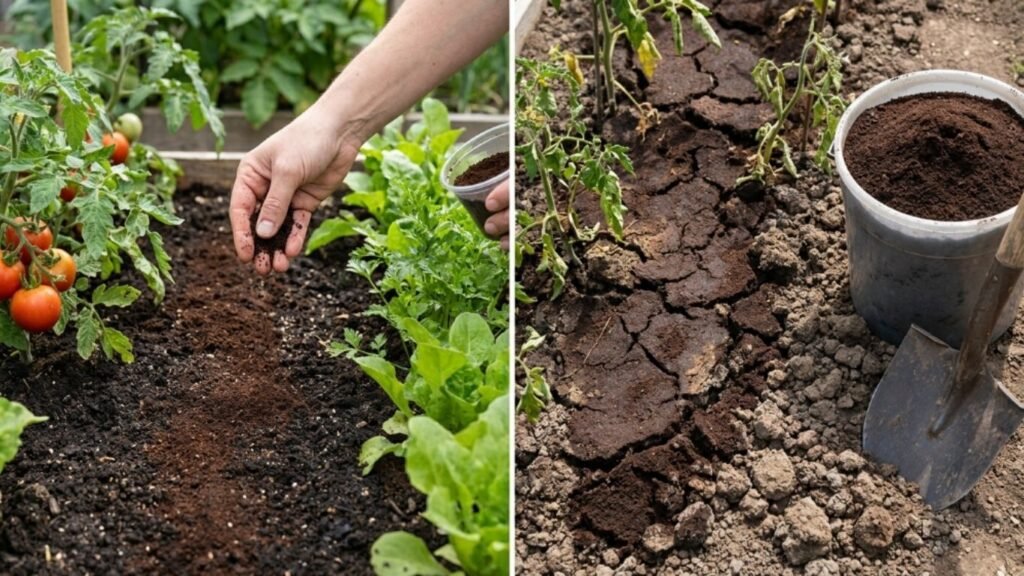
When applied thoughtfully, coffee grounds do offer some real benefits. Here’s what the evidence actually supports.
1. Slow-Release Nitrogen Source
Nitrogen is one of the three big macronutrients plants need, and coffee grounds release it slowly as they decompose. This means you won’t get a dramatic burst of growth, but over time, the nitrogen becomes available to plants in a more sustained way. Think of it like a slow-drip rather than a flood.
2. Improved Soil Structure
When mixed into soil, coffee grounds add organic matter that improves drainage in heavy clay soils and helps sandy soils hold moisture a little better. This isn’t magic — it takes time and consistent addition — but it’s a legitimate benefit of many organic amendments.
3. Feeding Soil Microorganisms
Coffee grounds have been shown in several studies to support the growth of beneficial soil microbes, including certain bacteria and fungi that help break down organic matter and make nutrients available to plants. Healthy soil biology is the foundation of a productive garden.
4. Earthworm Activity
Many gardeners (and research) have noted that earthworms seem to be attracted to areas where coffee grounds have been applied in moderate amounts. Since earthworms are tremendous allies in the garden — improving aeration, drainage, and nutrient cycling — this is a meaningful benefit.
5. Potential Suppression of Some Soil Pathogens
Some laboratory research has suggested that coffee grounds may suppress certain fungal pathogens like Fusarium and Pythium. However, it’s worth noting this research is preliminary, and results in real garden conditions are more variable. Don’t count on coffee grounds as a fungal disease treatment, but it may be a secondary perk.
Potential Drawbacks and Risks
This is where things get more nuanced, and where a lot of gardening content falls short by only presenting the positives.
1. They Can Compact and Form a Barrier
This is probably the most common real-world problem gardeners run into. Used coffee grounds clump together and can form a dense crust on the soil surface that actually repels water rather than letting it through. I’ve seen this happen in my own garden when I piled them on too thick as mulch. The fix is simple — thin layers and regular mixing — but it’s important to know about.
2. Excessive Application Can Harm Plants
A study published in the journal Urban Forestry & Urban Greening found that applying coffee grounds at high rates significantly suppressed plant growth in some species. When applied in large quantities, the caffeine and other compounds in coffee grounds can actually inhibit seed germination and root development. More is definitely not better here.
3. They’re Not Significantly Acidic
Because used coffee grounds are nearly neutral in pH, using them specifically to “acidify” your soil isn’t going to give you dramatic results. If a plant really needs acidic conditions, you’ll need a more targeted approach like sulfur amendments or acidic fertilizers. Relying on coffee grounds for this purpose is likely to disappoint.
4. Risk of Mold
If coffee grounds sit in a moist pile for too long without being worked into the soil or compost, they can develop mold. Some of that mold is harmless, but it’s not ideal. Work them in rather than leaving them in a heap.
5. Caffeine Can Inhibit Some Plants
Caffeine is a naturally occurring compound in coffee that evolved partly as a defense mechanism for the coffee plant. In higher concentrations, it can inhibit the growth of some other plants. This is one reason applying too much — especially with fresh grounds — can cause problems.
Advantages vs. Disadvantages: Quick Comparison Table
| Advantages | Disadvantages |
|---|---|
| Slow-release nitrogen source | Can compact and crust if applied thickly |
| Adds organic matter to soil | Excessive use may suppress plant growth |
| Encourages earthworm activity | Caffeine can inhibit some plants |
| Supports beneficial soil microbes | Not effective as a significant soil acidifier |
| Free and widely available | Can develop mold if left in a pile |
| Useful carbon-nitrogen ratio in compost | Limited nutrient content compared to balanced fertilizers |
| May suppress some soil pathogens (preliminary evidence) | May deter some beneficial insects if overused |
| Reduces kitchen waste going to landfill | Fresh grounds have higher caffeine and acid levels |
Which Plants Benefit from Coffee Grounds?
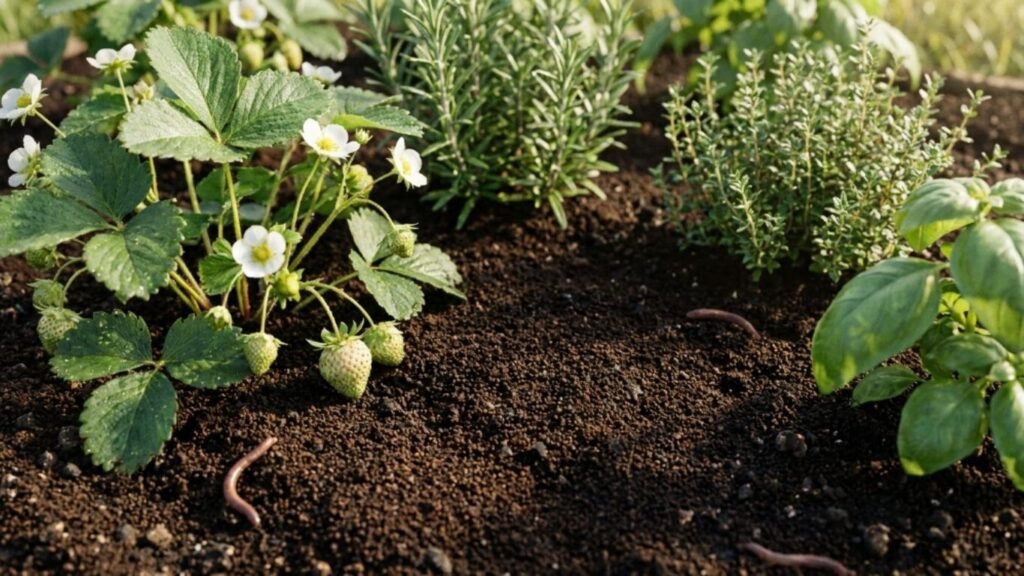
Coffee grounds work best for plants that thrive in slightly acidic to neutral soil conditions and benefit from a gentle nitrogen boost. Plants that are heavy feeders or prefer well-draining, organically rich soil tend to do well.
Plants That Generally Respond Well
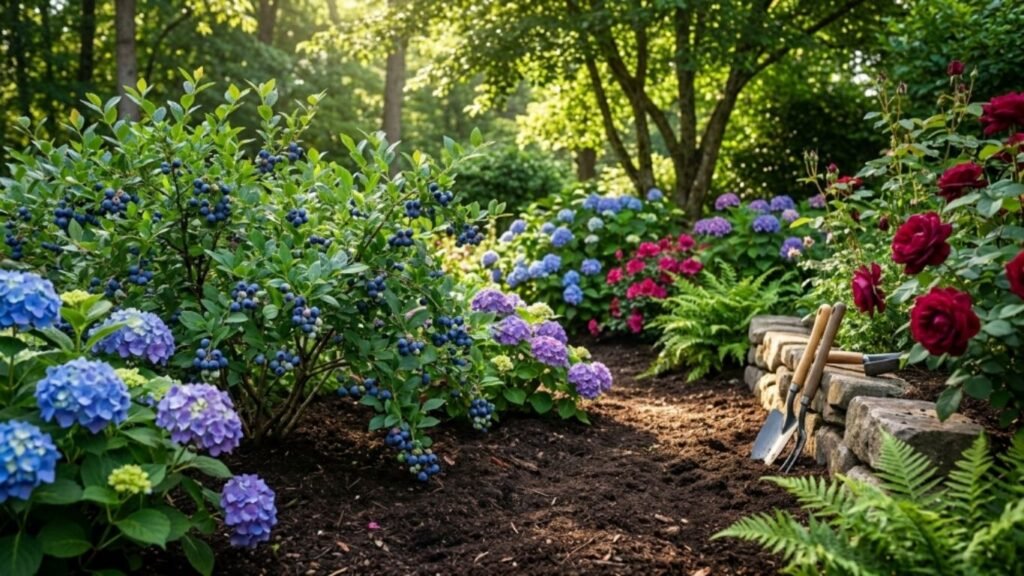
- Blueberries — prefer acidic soil (though you’ll still need more targeted amendments for strong acidification)
- Azaleas and rhododendrons — acid-loving shrubs that appreciate organic matter
- Roses — benefit from the slow-release nitrogen
- Tomatoes — heavy nitrogen feeders during the vegetative stage
- Peppers — similar to tomatoes, respond well to nitrogen and organic matter
- Carrots — do well with loose, organic-rich soil
- Radishes — short-season crops that can use the nitrogen boost
- Hydrangeas — already in slightly acidic soil, coffee grounds can support overall soil health
- Ferns — prefer moist, organically rich conditions
- Camellias — another acid-preferring ornamental
Strawberries are another excellent candidate. They thrive in slightly acidic, well-draining soil with consistent nitrogen. If you’re growing strawberries and want to get the most out of your garden, check out our guide on How to Plant & Grow the Perfect Strawberries for detailed advice on soil preparation and care.
Which Plants May Not Respond Well?
Some plants either prefer alkaline soil, are sensitive to excess nitrogen, or may react poorly to the compounds in coffee grounds.
Plants to Be Cautious With
- Lavender — prefers alkaline, well-drained soil; coffee grounds can work against it
- Rosemary — similar to lavender, prefers lean, alkaline conditions
- Tomato seedlings — young seedlings can be stunted by caffeine; use with caution on transplants
- Clover — nitrogen-fixing plants don’t need extra nitrogen and can be disrupted
- Geraniums — some gardeners report poor responses; evidence is largely anecdotal but worth being cautious
- Asparagus — some research suggests coffee grounds may inhibit asparagus growth
- Orchids — very specific growing conditions; coffee grounds are too unpredictable for these delicate plants
Plants That Benefit vs. Plants to Use Coffee Grounds Sparingly With
| Plants That Generally Benefit | Plants to Use Coffee Grounds Sparingly With or Avoid |
|---|---|
| Blueberries | Lavender |
| Roses | Rosemary |
| Tomatoes | Geraniums |
| Peppers | Orchids |
| Azaleas | Asparagus |
| Rhododendrons | Clover and legumes |
| Strawberries | Tomato seedlings (young transplants) |
| Hydrangeas | Alfalfa |
| Ferns | Most succulents and cacti |
| Camellias | Sage |
| Radishes | Most herbs preferring alkaline conditions |
| Carrots | Thyme |
Fresh vs. Used Coffee Grounds: What’s the Difference?
This distinction matters more than most people realize.
Fresh (unused) coffee grounds are more acidic and have a higher caffeine concentration. They’re generally more likely to inhibit plant growth if applied directly around plants and should be composted first or used very sparingly.
Used (spent) coffee grounds — the ones left after brewing — are what most gardening advice refers to. They’ve had much of their acidity and caffeine extracted into the liquid coffee. They’re closer to pH neutral and are safer for direct soil application in moderate amounts.
The practical takeaway: Always use spent grounds when applying directly to your garden. If you have access to fresh unbrewed grounds (for example, from a café that provides them), compost them before using rather than applying them straight to your beds.
Coffee Grounds in Compost
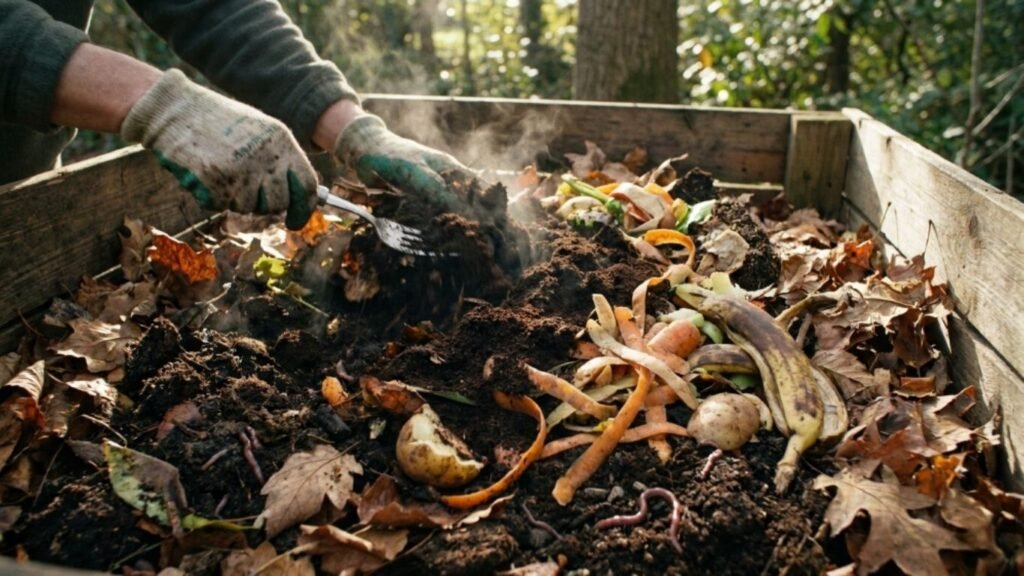
Composting is arguably the best way to use coffee grounds in the garden. Here’s why: the composting process neutralizes any remaining acidity, breaks down the caffeine, and transforms the grounds into a balanced, stable form of organic matter that’s safer and more universally beneficial.
In compost terms, coffee grounds count as a “green” (nitrogen-rich) material. They should be balanced with plenty of “brown” (carbon-rich) materials like dried leaves, cardboard, or straw to keep your compost pile healthy.
Tips for Composting Coffee Grounds
- Don’t add more than about 20–25% coffee grounds by volume to your compost pile
- Mix them in rather than layering them; they clump easily and a thick layer can block airflow
- Include the paper coffee filter — it’s a brown material and composts well
- Turn your pile regularly to help with decomposition and prevent mold
The compost you produce will be a well-rounded soil amendment that benefits a wide range of garden plants without the risks of direct application.
Using Coffee Grounds as Mulch
Can you use coffee grounds as mulch? Technically yes — but with important caveats.
The problem: Coffee grounds compact and form a water-repellent crust when applied in a thick layer. I once made this mistake early in my gardening years, thinking I was doing something clever by spreading a generous layer of grounds around my tomato plants. A week later, water was beading right off the surface like it was coated in wax. The plants were actually getting less water, not more.
The solution: If you want to use coffee grounds as part of your mulch layer, mix them with other organic mulch materials like wood chips, straw, or shredded bark. This prevents compaction and lets water and air move freely.
A good ratio to aim for is no more than one part coffee grounds to four parts other mulch material. Apply this mix in a layer of 2–3 inches, and keep it a few inches away from plant stems to prevent rot.
Coffee Grounds for Worm Bins (Vermicomposting)
Worms love coffee grounds — in moderation. If you’re running a worm bin, adding small amounts of used coffee grounds is a great way to feed your worms and divert kitchen waste.
Why worms like them: Coffee grounds are moist, soft, and easy for worms to eat. The fine texture means worms can process them quickly, and the organic matter supports a healthy, active worm population.
The important limit: Don’t go overboard. Coffee grounds should make up no more than about 25% of the food volume you add to your worm bin. Too much can make the bin too acidic for the worms’ comfort and may actually slow down their activity or drive them to the edges of the bin.
Practical tip: Add coffee grounds a little at a time, mixed in with other food scraps like vegetable peels and fruit cores. Always bury them under the bedding rather than leaving them on top.
How Much Coffee Grounds Should You Use?
This is where specifics really help, and where many guides leave readers hanging. Here’s a simple, practical application guide based on evidence and real gardening experience.
Application Guide: Amounts and Frequency
| Application Method | Recommended Amount | Frequency |
|---|---|---|
| Direct soil incorporation | ½ inch layer worked 4–6 inches deep | Once per season (spring or fall) |
| Mulch blending | Mix 1 part grounds with 4 parts other mulch | Refresh mulch layer 1–2 times per year |
| Compost addition | Up to 20–25% of total compost volume | Add gradually throughout the season |
| Liquid fertilizer (steeped grounds) | 1–2 tablespoons per gallon of water | Every 2–4 weeks during growing season |
| Worm bin | Up to 25% of total food volume | Add in small batches weekly |
| Around established shrubs | Sprinkle ½–1 cup per plant | Once per month during growing season |
General rule: When in doubt, use less than you think you need. Coffee grounds are most effective as a supplement to other soil amendments, not as a primary fertilizer.
Common Mistakes to Avoid
Even experienced gardeners make these errors. Here’s what to watch out for.
1. Applying thick layers directly to soil
As mentioned, coffee grounds compact and form a barrier. Always apply thin layers and work them in.
2. Using coffee grounds as the only fertilizer
Coffee grounds don’t contain everything plants need. They’re a supplement, not a replacement for a balanced fertilizer or good compost.
3. Thinking they’ll dramatically acidify your soil
Used grounds are nearly neutral. If you need to lower soil pH significantly, you’ll need to use sulfur, acidic mulches like pine needles, or pH-specific fertilizers.
4. Adding too much to a worm bin at once
Overwhelming your worms with coffee grounds can disrupt the bin’s balance. Gradually and consistently is the right approach.
5. Applying directly around seedlings
Young plants are more sensitive to caffeine and other compounds. Wait until plants are more established before applying coffee grounds nearby.
6. Ignoring the rest of your soil health
Coffee grounds work best as part of a broader soil improvement strategy. They’re most effective when your soil already has decent organic matter and structure. If you’re working on building up a new garden or propagating new plants to fill your space, our guide on How to Start Plants from Cuttings is a great complement to soil preparation work.
What Does the Science Say? Expert Recommendations
Let’s look at what actual research and horticultural experts say, because gardening advice is too often passed down as folklore rather than fact.
Key Research Findings
- A study in Urban Forestry & Urban Greening (Chalker-Scott, Linda — Washington State University Extension) found that high rates of coffee grounds application suppressed plant growth and reduced soil microbial diversity in some conditions, contradicting the popular idea that more is better.
- Research from Oregon State University showed that coffee grounds can suppress some fungal pathogens in controlled conditions, including damping-off diseases, but results varied widely in actual garden settings.
- Studies on vermicomposting consistently show earthworms process coffee grounds readily, supporting their use in worm bins at moderate levels.
- The composting research community generally agrees that coffee grounds are a useful nitrogen source in compost when balanced with adequate carbon materials.
What Extension Services Recommend
University extension services — which are some of the most reliable sources of evidence-based gardening advice — generally recommend:
- Using coffee grounds in moderation as a soil amendment or compost ingredient
- Avoiding applying them thickly as a standalone mulch
- Not relying on them to acidify soil
- Composting them when possible for the broadest benefit
Myths vs. Facts About Coffee Grounds in Gardening
Let’s clear up some of the most persistent misconceptions floating around gardening communities.
Myth 1: Coffee grounds are highly acidic and will acidify your soil
Fact: Used coffee grounds are nearly pH neutral (around 6.5–6.8). While fresh, unbrewed grounds are acidic, the brewing process extracts most of that acidity. Using spent grounds to acidify soil will have minimal effect.
Myth 2: Coffee grounds repel slugs and snails
Fact: This is one of the most popular gardening claims about coffee grounds, but research doesn’t support it well. A study published in Crop Protection did show caffeine solutions deter slugs, but the concentration needed is far higher than what’s present in coffee grounds sprinkled on the soil. The real-world effect is minimal at best.
Myth 3: Coffee grounds repel cats from the garden
Fact: Anecdotal reports abound, but there’s no reliable scientific evidence that coffee grounds effectively deter cats from gardens. It may work temporarily, but it’s not a dependable method.
Myth 4: You can use as much coffee grounds as you want — more is better
Fact: As research clearly shows, excessive amounts of coffee grounds can actually suppress plant growth and harm soil health. Moderation is key.
Myth 5: Coffee grounds are great fertilizer on their own
Fact: Coffee grounds contain nitrogen but are not a complete fertilizer. They lack balanced levels of phosphorus, potassium, and other essential nutrients. They work best as a supplement to — not a replacement for — proper fertilization.
Myth 6: All plants love coffee grounds
Fact: Plants vary significantly in their nutrient needs and preferred soil conditions. Alkaline-preferring plants like lavender, rosemary, and some herbs don’t respond well to coffee grounds at all.
Quick Takeaways
Before we get to the FAQ, here’s a summary of the most important points:
✅ Used coffee grounds are nearly neutral in pH — not highly acidic as commonly believed
✅ They’re a moderate source of nitrogen and add useful organic matter
✅ Best used in compost, mixed into soil, or blended with other mulch — not applied thickly on their own
✅ Great for worm bins in moderation — worms process them readily
✅ Beneficial for nitrogen-hungry and acid-tolerant plants like blueberries, roses, tomatoes, and strawberries
✅ Not ideal for alkaline-preferring plants like lavender, rosemary, and most culinary herbs
✅ Excessive application can suppress plant growth — less is more
✅ Most common claims about pest repellency are not strongly supported by research
Frequently Asked Questions (FAQ)
1. Are coffee grounds good or bad for garden soil?
Coffee grounds can be good for garden soil when used in moderation. They add organic matter, slow-release nitrogen, and support beneficial soil microorganisms. However, excessive application can compact soil, inhibit plant growth, and cause imbalances. The key is using them as one part of a broader soil improvement approach, not as a standalone solution.
2. Do coffee grounds acidify soil?
No, not meaningfully. Used coffee grounds are close to pH neutral (around 6.5–6.8) because the brewing process extracts most of the acidity into your cup of coffee. If you need to significantly lower your soil’s pH, elemental sulfur or acidic organic mulches are much more effective options.
3. Can I put coffee grounds directly on plants?
You can sprinkle small amounts of used coffee grounds around established plants, but avoid applying thick layers. The grounds compact and can repel water. It’s better to work them lightly into the top few inches of soil or add them to compost. Never apply them directly to seedlings or young transplants.
4. How often should I add coffee grounds to my garden?
For direct soil application, once or twice a season is plenty. For compost, you can add small amounts regularly. For worm bins, add a little each week as part of a varied mix of food scraps. The goal is consistency in small amounts, not large periodic additions.
5. Do coffee grounds keep pests away?
The evidence is weak. While caffeine in high concentrations has been shown to deter some pests, the amount present in spent coffee grounds applied to soil is unlikely to have a meaningful pest-deterrent effect. Don’t rely on coffee grounds as a pest control strategy.
6. Can I use coffee grounds with herbs?
It depends on the herb. Herbs that prefer slightly acidic soil and consistent moisture — like basil and parsley — can tolerate coffee grounds in small amounts. Herbs that prefer dry, alkaline conditions — like lavender, rosemary, thyme, and sage — should not have coffee grounds applied. For herbs in general, consider whether your harvest requires special preservation; our guide on How to Dry and Preserve Herbs covers the best methods for keeping your harvest.
7. Are coffee grounds better in compost or applied directly to the garden?
In most cases, composting is the better option. Composting neutralizes any remaining caffeine, stabilizes the nutrients, and produces a balanced amendment that’s safe for a wider range of plants. Direct application works fine in small amounts, but compost is more versatile and lower risk.
Final Thoughts
So, are coffee grounds good or bad for your garden? The honest answer is: it depends on how you use them.
Used thoughtfully — in moderate amounts, composted when possible, blended with other materials, and matched to appropriate plants — coffee grounds are a genuinely useful, free, and sustainable garden amendment. They add nitrogen and organic matter, support soil life, and help divert kitchen waste from the landfill.
But applied carelessly — in thick layers, to the wrong plants, or in the belief that more is always better — they can compact soil, inhibit growth, and disappoint you with results that don’t match the hype.
My honest recommendation: start small, observe how your plants respond, compost whenever you can, and think of coffee grounds as one useful tool in a well-stocked gardening kit — not a miracle amendment. The best gardens I’ve seen are built on diverse, balanced soil care, and coffee grounds can be a small but worthwhile part of that picture.
Happy gardening — and enjoy your morning cup knowing those grounds have a second life ahead of them.