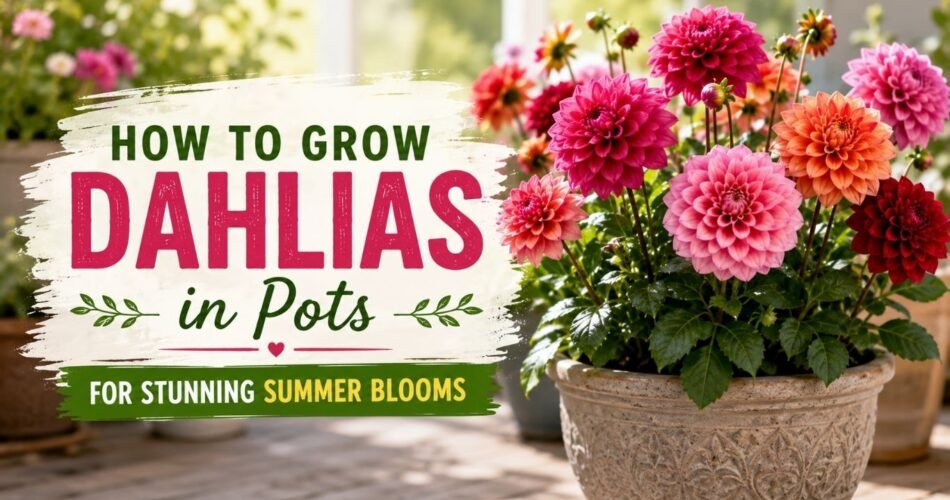
There’s something almost magical about watching a dahlia bloom. One day you’ve got a pot of soil sitting on your patio, and a few weeks later, you’re looking at dinner-plate-sized flowers in shades of burgundy, coral, hot pink, and creamy white. Growing dahlias in containers is one of the most rewarding things you can do as a gardener — and it’s a lot more straightforward than most people think.
I’ll be honest with you: I spent two summers killing dahlias before I figured out what they actually needed. Too little sun, the wrong pot size, and completely ignoring fertilizer were my biggest mistakes. Once I corrected those three things, my container dahlias absolutely exploded with blooms from July right through to the first frost.
Whether you’re working with a small balcony, a patio, or just a sunny corner of your yard, this guide will walk you through everything you need to know to grow dahlias successfully in pots. No guesswork, no vague advice — just practical, experience-based guidance that actually works.
Best Dahlia Varieties for Growing in Containers
Not every dahlia is built for pot life. The tall, sprawling varieties that look spectacular in garden borders can become a frustrating mess in a container — flopping over, using too much energy on foliage, and generally being difficult to manage.
Here are the varieties that actually perform well in pots:
Compact and Dwarf Varieties (Best for Small Pots)
Gallery series — These are probably the best all-around container dahlias available. They stay compact at 12–16 inches, produce double flowers in a wide range of colors, and don’t need much staking. I’ve grown ‘Gallery Art Deco’ in a 12-inch pot and it bloomed continuously from June to October.
Mystic series — Known for their striking dark bronze foliage combined with bright flowers. ‘Mystic Illusion’ produces cheerful yellow blooms against near-black leaves. A real showstopper on a patio.
Topmix series — Shorter than most dahlias at around 16 inches, prolific bloomers, and extremely weather-tolerant. Good for beginners because they’re forgiving.
Karma series (semi-dwarf) — These push the limit at 24–30 inches, but they’re worth it. The flowers are large and long-lasting on the stem, making them excellent for cutting too.
Medium Varieties (Good for Larger Containers)
Bishop of Llandaff — A classic with semi-double red flowers and dark foliage. Grows to about 3 feet and does well in a 15-inch pot with proper support. It’s been around since 1927, and there’s a reason gardeners still love it.
Café au Lait — This creamy blush variety is massively popular, and for good reason — the flowers are huge and the color works with everything. It reaches 3–4 feet, so you’ll need a 15–20-inch container and a sturdy stake.
Thomas Edison — A deep purple dinner-plate dahlia with huge, dramatic flowers. Similar size requirements to Café au Lait. Not a beginner variety for pots, but absolutely worth trying once you have the basics down.
Quick tip: If you’re just starting out, choose a compact variety from the Gallery or Topmix series. Once you understand how dahlias grow and what they need, you can move up to the larger, more spectacular varieties.
Choosing the Right Container for Dahlias
Container size is one of the most critical decisions you’ll make, and most beginners go too small. Dahlias develop large tuber systems underground, and if the roots get cramped, you’ll get weak growth and disappointing blooms.
Size Recommendations by Variety Type
Dwarf/compact varieties (12–18 inches tall):
Use a container that’s at least 12 inches in diameter and 12 inches deep. A 5-gallon pot works well here. You can fit two or three compact dahlias in a 15-inch pot if you space them well.
Medium varieties (18–36 inches tall):
Go with a 15-inch diameter pot that’s at least 15 inches deep. A 10-gallon container is ideal. One tuber per pot is the safest approach.
Tall varieties (over 3 feet):
You need a container that’s at least 16–20 inches wide and equally deep. A 15–20-gallon pot gives the roots enough room to develop properly. Don’t try to squeeze a tall dahlia into a small pot — you’ll be disappointed.
Material Matters Too
Plastic pots — Lightweight, affordable, and retain moisture better than terracotta. Good choice if you’re in a hot, dry climate. The downside is they can tip over in wind if not weighted down.
Terracotta pots — Breathable and attractive, but they dry out quickly. If you go with terracotta, be prepared to water more frequently. In hot weather, terracotta pots can stress roots by getting too warm on the surface.
Fabric grow bags — Surprisingly excellent for dahlias. They air-prune the roots (preventing root-bound issues) and drain beautifully. A 10–15-gallon fabric bag is a solid choice for medium varieties. They’re not the prettiest option for a formal patio setup, but they work extremely well.
Self-watering containers — Worth considering if you travel frequently or have a tendency to forget watering. The built-in reservoir keeps moisture levels more consistent.
One important note: Whatever pot you choose, make sure it has adequate drainage holes. Dahlias absolutely hate sitting in waterlogged soil. If your decorative pot doesn’t have drainage holes, use it as a cachepot — drop a plain pot with drainage inside it.
The Right Potting Mix for Container Dahlias
Garden soil doesn’t belong in pots. It compacts quickly in containers, doesn’t drain well, and can introduce pests and diseases. Dahlias need a light, well-draining mix that still holds enough moisture and nutrients to support their growth.
Building Your Ideal Dahlia Potting Mix
A good mix for container dahlias should be:
- Well-draining — Dahlia tubers rot easily in wet, soggy soil
- Slightly acidic — pH between 6.0 and 7.0
- Nutrient-rich — But not overly high in nitrogen, which encourages leaves over flowers
My go-to recipe:
- 60% high-quality potting mix (not garden soil)
- 20% perlite or coarse sand (for drainage and aeration)
- 20% well-aged compost or worm castings (for nutrients)
If you want to keep it simple, a quality all-purpose potting mix with added perlite works just fine. I’d avoid mixes labeled “moisture-retaining” — they tend to stay too wet for dahlias.
Adding a slow-release fertilizer to the mix at planting time gives your tubers a gentle nutrient boost as they establish. Osmocote or a similar balanced slow-release product works well for the first few weeks.
Planting Dahlia Tubers in Containers
Timing your planting correctly makes a real difference. Dahlia tubers need warm soil to wake up and sprout, and planting too early in cold soil often leads to rot rather than growth.
When to Plant
Outdoors: Wait until nighttime temperatures are consistently above 50°F (10°C) and all frost risk has passed. In most parts of the US, that means late April through mid-May, depending on your zone.
Indoors (for a head start): You can start tubers indoors in pots about 4–6 weeks before your last frost date. Keep them in a warm location (65–70°F) and move them outdoors once the weather warms up. This gives you blooms 2–3 weeks earlier than direct outdoor planting.
How to Plant Dahlia Tubers Step by Step
1. Inspect your tubers
Before planting, check each tuber carefully. A healthy tuber is firm, plump, and has at least one visible “eye” (a small pink or cream-colored bud at the crown). Soft, shriveled, or moldy tubers should be discarded or have the damaged parts cut away with a clean knife.
2. Prepare your container
Fill the bottom third of your pot with your prepared potting mix. Don’t add water yet — you want relatively dry soil at the start to prevent rot before the roots establish.
3. Position the tuber
Place the tuber horizontally in the pot with the eye facing upward. The eye is the most important part — it’s where the stem will emerge. If you can’t identify the eye clearly, place the tuber at a slight angle.
4. Planting depth
Cover the tuber with about 2–3 inches of potting mix. For compact varieties, plant a bit shallower; for larger varieties, you can go slightly deeper. Don’t pack the soil down too firmly.
5. Don’t water heavily yet
This is where many beginners go wrong. Give the pot just a light watering when you plant — enough to moisten the soil without soaking it. Overwatering before the roots develop is the fastest way to rot your tuber. Wait until you see the first signs of green growth before watering more regularly.
6. Add a stake now
If you’re growing a tall variety, insert your stake at planting time rather than later. Trying to stake a fully-grown dahlia risks damaging the tuber and established roots. A bamboo stake or a single metal rod works well for single stems. For bushier varieties, use three or four stakes arranged in a triangle around the plant with garden twine.
Sunlight Requirements for Container Dahlias
Dahlias are sun worshippers. They need a minimum of 6 hours of direct sunlight daily, and 8 hours is even better. This is non-negotiable — there’s no variety of dahlia that does well in shade.
The advantage of container growing is that you can move your pots to follow the sun. If part of your patio gets shade in the afternoon, position your dahlias where they’ll catch morning and midday sun.
A few things to watch:
- Extreme afternoon heat in very hot climates (Zones 9–11) can scorch dahlia foliage. A bit of protection from the harshest late-afternoon sun (after 4 PM) in these zones actually helps rather than hurts. Morning sun is most valuable.
- Reflected heat from walls and pavements can be intense in summer. If your pots are against a south-facing wall, check them daily and water more frequently.
- Too much shade produces tall, leggy plants with few flowers and an increased risk of powdery mildew. If your plant is reaching toward the light and producing lots of leaves but few buds, lack of sun is likely the problem.
If you’re interested in plants that can thrive with less light, check out this guide to 10 Indoor Plants That Flower All Year Round — some of them make beautiful companions for a shaded corner of your patio while your dahlias claim the sunny spots.
Watering Container Dahlias the Right Way
Watering is where most container dahlia failures happen — and it goes both ways. Too much water rots the tubers. Too little water during active growth stresses the plant and reduces blooming.
The General Rule
Before sprouting: Water sparingly, just enough to keep the soil lightly moist. The goal is to avoid rot while the tuber wakes up.
After sprouting: Water regularly but let the top inch of soil dry out between waterings. Stick your finger an inch into the soil — if it feels dry, water thoroughly.
During active blooming (peak summer): This is when dahlias are thirstiest. In hot weather, container dahlias may need watering every day. Water until it runs out the drainage holes, ensuring the entire root zone is moistened.
As temperatures cool in fall: Reduce watering gradually as growth slows. Overwatering in cooler weather is a common cause of tuber rot before overwintering.
Practical Watering Tips
- Water at the base of the plant, not overhead. Wet foliage promotes fungal disease.
- Water in the morning when possible — any moisture that splashes on leaves has time to dry during the day.
- Mulch the top of your pot with a 1–2 inch layer of compost or bark mulch to slow moisture evaporation. This is especially helpful for terracotta pots in hot climates.
- Check containers more often than you think you need to. Pots dry out much faster than garden beds, and dahlias in full bloom during a summer heatwave can deplete a container’s moisture quickly.
- Avoid letting the pot sit in standing water in a saucer. Empty saucers after heavy rain or watering.
Fertilizing Dahlias in Pots
Dahlias are heavy feeders, and because container plants can’t access nutrients in the surrounding soil the way garden plants can, regular fertilizing is essential for good blooms.
Understanding Nitrogen vs. Phosphorus
Here’s something a lot of beginners get wrong: using a high-nitrogen fertilizer on dahlias. Nitrogen encourages lush green growth — which sounds good, but for dahlias, it comes at the cost of flowering. You’ll end up with a beautiful, bushy, leaf-heavy plant that produces disappointingly few blooms.
What dahlias need for flowering is phosphorus, which supports root development and flower production. Look for fertilizers with a higher middle number (like 5-10-10 or 3-12-12) or use a fertilizer specifically labeled for flowering plants.
Fertilizing Schedule
At planting: Mix a slow-release, balanced fertilizer (like Osmocote 14-14-14) into the potting mix. This provides gentle background nutrition for the first 2–3 months.
During early growth (before buds appear): Feed every 2–3 weeks with a balanced liquid fertilizer like 10-10-10 or a half-strength general-purpose feed.
Once buds form and through blooming: Switch to a low-nitrogen, phosphorus-rich liquid fertilizer. Tomato feed (which is typically high in potassium and phosphorus) works really well at this stage. Apply every 2 weeks.
Stop fertilizing when plants begin to die back naturally in autumn. You want the tubers to harden off properly before you lift and store them.
Practical tip: Liquid fertilizers work faster than granular ones and are easier to control in containers. Dilute them to half the recommended strength and apply more frequently — it’s gentler on the roots and gives you better control over results.
Staking Taller Dahlia Varieties
If you’re growing medium or tall dahlia varieties, staking isn’t optional — it’s essential. Dahlia stems, especially those carrying large dinner-plate blooms, can snap in wind or simply collapse under their own weight.
When to Stake
As mentioned earlier, the best practice is to put your stakes in at planting time when the tuber goes into the pot. This prevents root damage later.
Staking Methods
Single bamboo stake: Works for single-stemmed varieties or when plants are trained to one main stem. Tie the main stem loosely to the stake every 6–8 inches as it grows, using soft garden twine or fabric tie strips. Never use wire directly against the stem.
Three-stake cage: Arrange three bamboo canes in a triangle around the tuber and connect them with loops of twine at increasing heights as the plant grows. Good for bushy, multi-stemmed varieties.
Tomato cage: A large tomato cage works surprisingly well for medium dahlias. The plant grows up through it naturally without needing frequent tying. Just make sure the cage is tall enough and weighted properly in the pot.
Wire ring supports: These circular supports with legs can be pushed into the soil and work well for sprawling, multi-stemmed compact varieties that don’t need height so much as general support.
When tying stems, leave a little slack — stems need room to move and thicken as they grow. A tie that’s too tight will girdle the stem and cause damage.
Deadheading and Pruning for More Blooms
This is one of the most important things you can do to maximize flower production, and it takes only a few minutes each week.
Deadheading
Deadheading means removing spent flowers before they can set seed. When a dahlia is allowed to go to seed, it signals to the plant that its reproductive work is done — and flowering slows dramatically.
How to deadhead properly: Trace the spent flower stem back to where it meets a set of leaves or a fork, and cut just above that junction. Don’t just snap off the flower head — remove the whole stem segment. New growth with new buds will emerge from the remaining stem.
Deadhead every 2–3 days during peak season. Once you get into the habit, it takes about 5 minutes per plant and the difference in bloom quantity is significant.
Pinching for Bushier Plants
When your dahlia is about 12 inches tall with three to four pairs of leaves, pinch out the central growing tip. This seems counterintuitive (you’re removing growth!), but it redirects the plant’s energy into producing multiple side shoots rather than one main stem.
The result: a bushier plant with far more flower-bearing stems. One unpinched plant might give you 5–10 flowers all season. A pinched plant can give you 30 or more. It’s one of the best things you can do.
Simply use clean fingers or scissors to remove the top set of leaves and the central bud at the growing tip.
Cutting Flowers for Vases
Cutting dahlias for indoor display is essentially the same as deadheading — it encourages more blooms. Cut stems in the early morning when the plant is well-hydrated, choosing flowers that have just opened. Use clean, sharp scissors or pruning shears, and place stems immediately in water.
Tips for Achieving Abundant Summer Blooms
Everything discussed so far contributes to better blooming, but here’s a consolidated list of the highest-impact actions:
- Choose the right variety for your pot size — compact dahlias in smaller pots will always outperform oversized varieties crammed into undersized containers.
- Give them maximum sun — every extra hour of sunlight is reflected in flower count.
- Pinch plants at 12 inches to encourage branching.
- Feed consistently with a bloom-boosting fertilizer once buds appear.
- Deadhead every 2–3 days — don’t let spent flowers linger.
- Water deeply and consistently during peak summer heat.
- Keep an eye out for pests and deal with them early before populations explode.
- Group pots together — clusters of dahlia pots create a microclimate that retains humidity and makes care more efficient.
If you’re also planning a flowering balcony garden or indoor display to complement your outdoor dahlias, the 7 Hibiscus Flower Care Tips That You Need to Know guide covers another spectacular flowering plant that also thrives in containers — and the care requirements overlap nicely with dahlias.
Seasonal Care Timeline
Early spring (March–April):
Check stored tubers for rot. Inspect pots and clean them with diluted bleach solution if reusing. Prepare potting mix. Order or purchase tubers if you haven’t already.
Late spring (April–May):
Plant tubers once nighttime temperatures are consistently above 50°F. Water sparingly until sprouting. Insert stakes at planting.
Early summer (June):
Growth accelerates. Begin regular watering and biweekly feeding. Pinch plants at 12 inches if you haven’t already.
Mid-summer (July–August):
Peak growth and early blooms appear. Switch to bloom fertilizer. Begin deadheading. Watch for pests during hot, dry stretches.
Late summer to early fall (September–October):
Peak blooming period. Continue deadheading and watering. Feed until buds stop forming. This is when dahlias truly earn their keep.
Fall (October–November):
Reduce watering as temperatures drop. After first frost blackens foliage, cut stems, lift tubers, and prepare for storage.
Winter (December–February):
Check stored tubers monthly. Rest and plan for next season. Order any new varieties you want to try.
Conclusion
Growing dahlias in pots is genuinely one of the most satisfying things you can do with a container garden. There’s a certain pride in watching those first buds emerge, and the payoff when they open into stunning, colorful blooms is hard to beat.
The good news is that dahlias aren’t finicky — they just have a few non-negotiable requirements. Give them enough sun, choose a pot that’s roomy enough, avoid waterlogging their roots, pinch and deadhead consistently, and feed them the right fertilizer. Do those things, and you’ll have an impressive display from midsummer right through until the first frost.
Start with a compact variety if you’re new to this. Get confident with the basics. Then next season, try a dinner-plate dahlia in a big pot and experience just how dramatic a container plant can be.
Your patio, balcony, or garden deserves it.